
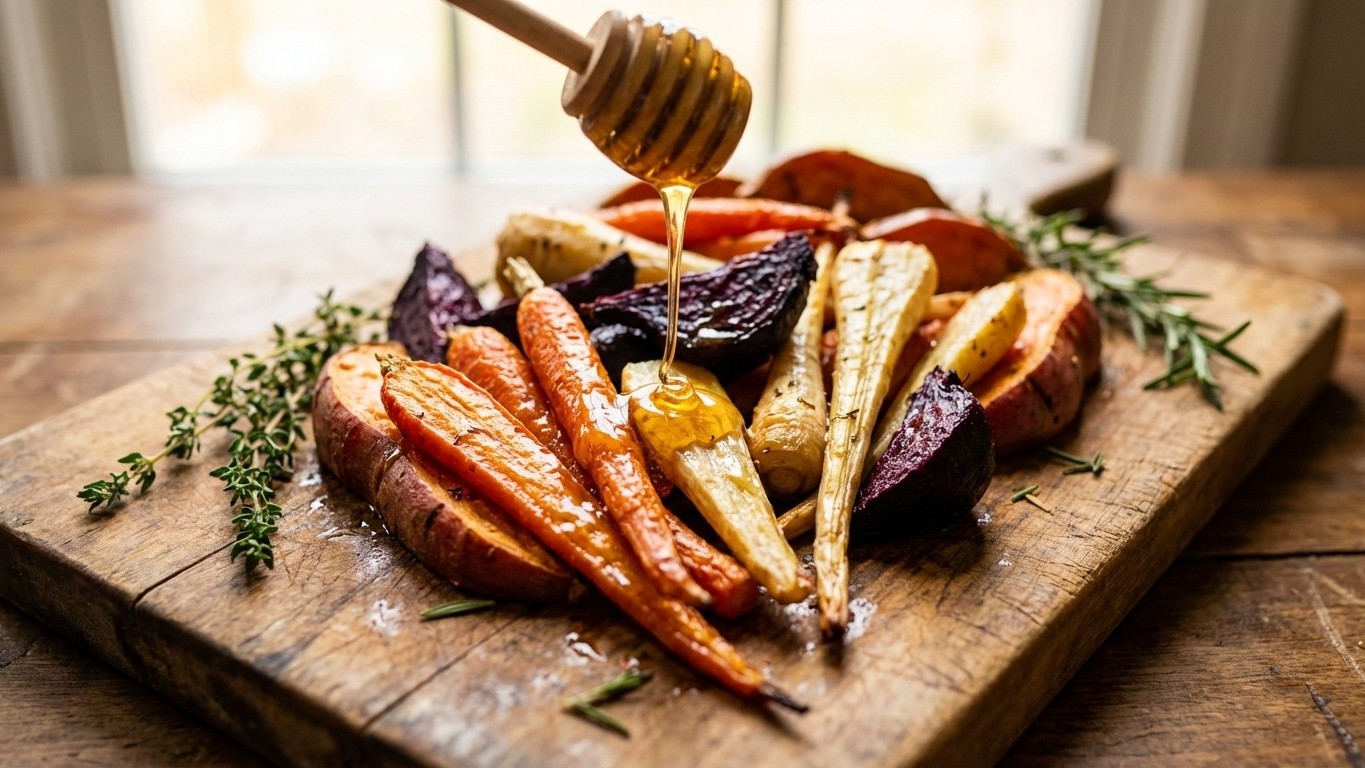
Walk into any food-savvy kitchen these days, and you’ll likely witness a culinary transformation happening right Before your eyes. Home cooks Everywhere are abandoning their usual olive oil routine and reaching instead for a bottle of liquid gold that’s revolutionizing the way root vegetables taste, look, and satisfy our deepest comfort food cravings. That golden elixir? Pure, unfiltered honey.
This isn’t just another fleeting food trend born from social media whims. The marriage of honey and roasted root vegetables represents a fundamental shift in how we approach home cooking, combining Everything-in-30-seconds”>Ancient-trick-defrogs-windows-in-seconds”>Ancient culinary wisdom with our modern desire for dishes that deliver both nutrition and pure, unadulterated flavor. The results are nothing short of magical: vegetables that emerge from the oven with glossy, caramelized exteriors and tender, sweet interiors that make even the most dedicated carnivores reach for seconds.
The Science Behind the Sweet Revolution
The transformation that occurs when honey meets high heat isn’t mere kitchen alchemy—it’s pure chemistry at work. Unlike refined sugars that simply burn at high temperatures, honey contains a complex blend of fructose, glucose, and trace minerals that create what food scientists call the Maillard reaction on steroids. As root vegetables roast, the honey’s natural sugars caramelize gradually, forming a protective glaze that locks in Moisture while developing those coveted crispy edges we all crave.
But honey brings more than just sweetness to the party. Its slightly acidic pH helps break down tough Vegetable fibers, resulting in root vegetables that cook more evenly and develop deeper, more complex flavors. The natural enzymes present in raw honey continue working even at moderate oven temperatures, essentially pre-digesting some of the vegetables’ starches and creating that melt-in-your-mouth texture that makes roasted carrots, parsnips, and sweet potatoes irresistible.
Perhaps most importantly, honey’s hygroscopic properties—its ability to attract and retain moisture—prevent the dry, stringy texture that often plagues roasted vegetables. Instead of shriveling and becoming tough, honey-glazed root vegetables maintain their structural integrity while developing concentrated, intensified flavors that make every bite a revelation.
Beyond Basic Sweetness: The Flavor Complexity Factor
What sets honey apart from other sweeteners in the roasting game isn’t just its superior caramelization properties—it’s the incredible flavor complexity that different varieties bring to the table. Wildflower honey imparts subtle floral notes that pair beautifully with earthy beets and turnips, while robust buckwheat honey adds deep, molasses-like undertones that Transform humble potatoes into restaurant-worthy sides.
Smart home cooks are discovering that matching honey varieties to specific vegetables creates flavor profiles that would make professional chefs jealous. Clover honey’s mild sweetness lets the natural flavors of butternut squash and acorn squash shine through, while orange blossom honey brings bright citrus notes that elevate roasted carrots to new heights. These aren’t accidental pairings—they’re deliberate flavor decisions that reflect a more sophisticated approach to vegetable cookery.
The beauty of this technique lies in its simplicity and versatility. A light drizzle of honey over rough-chopped root vegetables, a sprinkle of coarse salt, perhaps a few sprigs of fresh thyme or rosemary, and twenty to thirty Minutes in a hot oven produces results that consistently surprise and delight. The vegetables caramelize beautifully, developing those sought-after crispy edges while maintaining tender centers that practically dissolve on the tongue.
The Health Halo Effect
Beyond the obvious flavor benefits, the honey-roasting trend speaks to our Growing awareness of ingredient quality and nutritional value. Unlike processed sweeteners, raw honey retains beneficial antioxidants, enzymes, and trace minerals that complement the impressive nutritional profiles of root vegetables. While the quantities are modest, these compounds work synergistically with the vegetables’ natural phytonutrients, creating dishes that feel as good as they taste.
The psychological aspect cannot be ignored either. There’s something deeply satisfying about using a single, natural ingredient to transform ordinary vegetables into something extraordinary. Honey feels wholesome, traditional, and authentic in ways that processed ingredients simply cannot match. When home cooks drizzle that golden stream over their carefully arranged vegetables, they’re participating in a cooking method that spans cultures and centuries.
Root vegetables themselves are experiencing a renaissance as home cooks rediscover their versatility, affordability, and impressive nutritional density. Paired with honey’s natural enhancement properties, these humble ingredients are proving that sophisticated flavors don’t require complicated techniques or exotic ingredients. Sometimes, the most profound culinary revelations come from the simplest combinations.
Making the Golden Standard Your Own
The most exciting aspect of this honey-roasting movement is how easily it adapts to individual tastes and seasonal availability. Whether you’re working with classic combinations like honey-roasted carrots with Simple-jar-trick”>Fresh Herbs, or experimenting with more adventurous pairings like honey-glazed turnips with warming spices, the technique remains fundamentally the same while offering infinite possibilities for personalization.
The key lies in understanding Proportions and timing. Start with roughly one tablespoon of honey per pound of vegetables, adjusting Based on the natural sweetness of your chosen varieties and your personal preference. Toss Everything together before roasting, allowing the honey to coat every surface evenly, then let the oven work its magic at around 425 degrees Fahrenheit.
This golden ingredient revolution represents more than just a cooking technique—it’s a return to ingredient-driven cooking that celebrates simplicity, quality, and the transformative power of time-Tested combinations. As more home cooks discover the incredible results that honey brings to their roasted vegetables, this sweet secret is becoming an Essential part of the modern kitchen repertoire, proving that sometimes The best innovations are actually rediscovered traditions.