
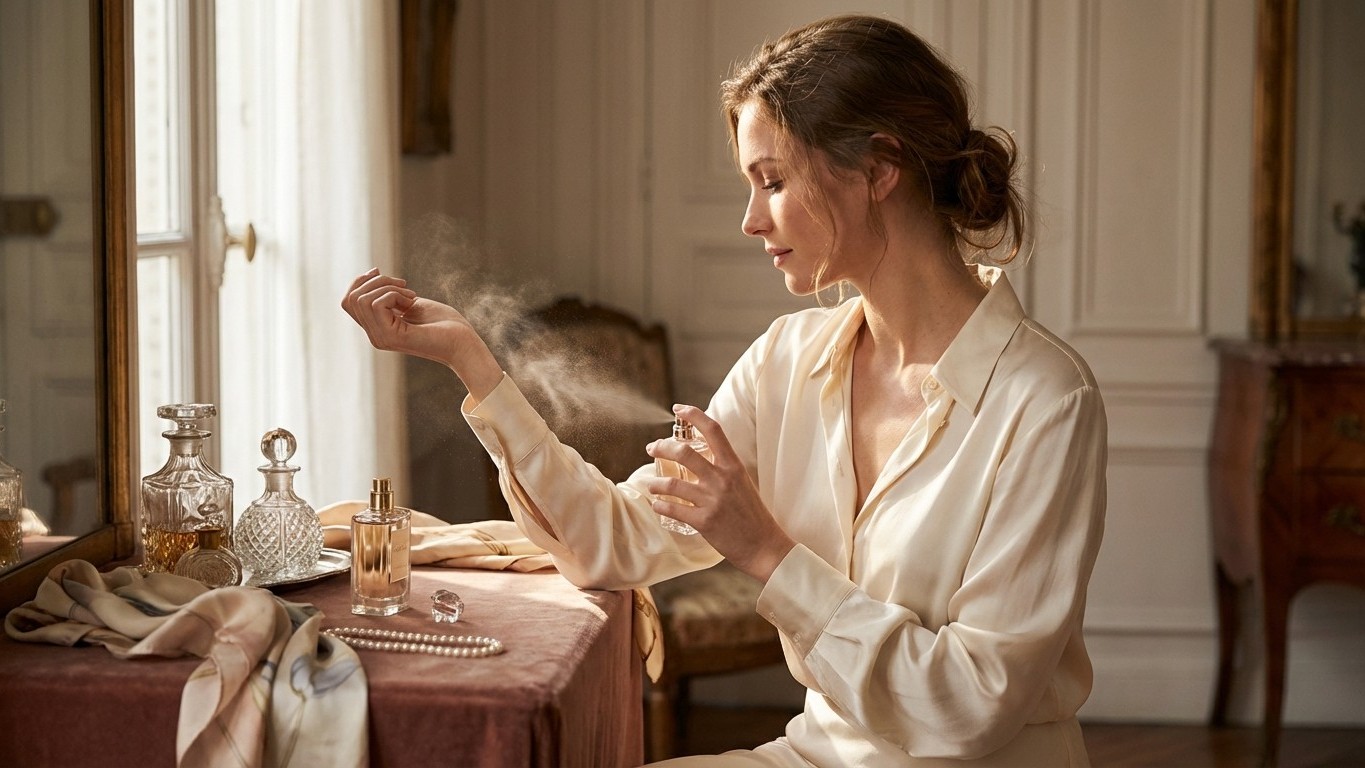
The first spritz is always intoxicating. A whiff of bergamot, a razor slice of tuberose, that subtle sandalwood lingering behind every conversation. But twenty Minutes later—nothing. Just skin doing its dreary job, holding Secrets rather than scent. Perfume, glorious for a moment, faded by lunchtime. Frustration incarnate, especially when the bottle cost as much as a plane ticket to Lisbon.
For years, I blamed it on my skin. “Fragrance just doesn’t stick to me,” I’d sigh, conspiratorially, as if I had been born with a rare olfactory curse. But frankly, that’s nonsense. Ever notice how some women still carry that aura of vetiver eight hours into a stuffy office day, while your own presence has silently evaporated? The difference isn’t genetics. Turns out, I was making the most basic scent Everything-wrong-this-Mistake-ruining-your-baking-the-vegan-hack-chefs-swear-by”>Mistake-everyone-makes-when-choosing-a-sofa-bed”>Mistake-has-been-ruining-your-french-onion-soup-forever”>Mistake of all—one most of us repeat daily, out of habit, not ignorance.
Key takeaways
- Why the beloved ‘wrist rub’ is wrecking your perfume’s lifespan.
- French-Inspired application tips that amplify fragrance longevity.
- The hidden role of skin prep and layering for a scent that truly lasts.
The Myth of the ‘Wrist Rub’
Picture the ritual: spraying the inner wrists, pressing them together, then dabbing at the neck—a choreography inherited from mothers and perfume counters everywhere. It feels almost sacred, the gesture itself a promise of glamour. Yet it’s ruinous for the fragrance you just invested in.
When you rub your wrists together, you’re not just ‘setting’ the scent. You’re breaking it. Friction, warmth, pressure—these disrupt the fragile structure of perfume, crushing the top notes and distorting the evolution of the scent. It’s the olfactory equivalent of listening to Debussy on blown-out speakers. Why buy niche scent if you’re going to sabotage it at the source?
Scientific studies back this up. Fragrance is a complex interplay of volatile molecules, designed to unfold—top, heart, base—in a specific sequence. Rubbing heats the skin, accelerates evaporation, and essentially mangles that careful architecture. And yet almost everyone I know—stylists, magazine editors, even perfumers themselves—fell into the same habit. It’s no wonder so many high-end perfumes seemed so underwhelming by midday. A simple change, almost embarrassing in its obviousness, altered everything for me.
Layered Like a Parisian: Applying Perfume for Longevity
The revelation feels almost quaint. Instead of rubbing, I started spraying—purposefully, directly—onto pulse points, then simply letting the droplets rest. No touch, no pressure. The perfume absorbed on its own, developing on the skin as intended. The result. Profound difference.
Pulse points are classic for a reason—the warmth amplifies diffusion. But I went further, exploring scent ‘layering’ as the French do. Here are the points that, over months, proved transformative in holding scent:
- Inside elbows
- Behind knees
- Under the jawline
These spots—less exposed, more protected from handwashing and sun—preserve fragrance longer than wrists and neck. I also started spraying a single mist through my hair, avoiding direct contact with strands (perfume can dry them out). The sillage, that invisible trail, suddenly lasted well past suppertime. Curious friends actually Stopped me mid-street to ask what I was wearing. That had never happened when I followed conventional wisdom. Sometimes the French win on subtlety. Sometimes they just know their way around musk.
Building a Foundation: The Role of Skin Prep
Moisturized skin clings to scent like silk craves dye. On arid days, fragrance evaporates before it can meld with your body’s chemistry. The answer isn’t more perfume, but better prep. Unscented lotion applied first (think lightweight, non-greasy) creates a hydrated canvas. Oil-based balms work like magic under heavier parfums—think of it as priming before painting. No, not petroleum jelly slathered on pulse points—a rookie move with disastrous consequences for delicate fabrics. Instead, lightweight, fast-absorbing formulas. After weeks following this principle, I realized that lasting scent is rarely about volume. More about surface chemistry. A single spritz suffices, provided the skin doesn’t drink it up in seconds.
One Paris-based nose once told me she never applies perfume to newly-washed skin—wait at least fifteen minutes post-shower, when natural oils begin to return. Apparently, freshly scrubbed skin is too “naked” for scent to grip. Who knew longevity could hinge on such a tiny window?
Forget Clothes—But Don’t Ignore the Clothes
The danger with perfume is overcorrecting. Over-spraying on fabric, chasing an elusive all-day projection. Sure, scent lingers on cotton or cashmere, sometimes longer than on skin. But fragrance on fabric evolves differently—less dynamic, less true to its original form. And let’s be honest: not every perfume wants to live in a silk blouse or wool scarf. I’ve seen enough ruined collars and ghostly patchouli stains to caution restraint.
Still, a clever trick: a wisp of scent on the inside hem of jackets or the lining of a favorite tote. Never basted right on top. The effect is softer, a background hum rather than a declaration. At a dinner in Venice, my trench coat gave off a faint, elusive echo of iris, long after the meal was over. Ambiance, not assault.
Here’s where intuition trumps habit. No need to drown yourself in expensive mist—or wince when luxury seems fleeting. With patience and practice, fragrance becomes architecture: constructed, unfolding, meant to last.
Ritual Over Routine—And Why Longevity Isn’t Always the Point
Since giving up that fateful wrist rub, my bottles last longer—yet, paradoxically, feel more precious. Each application is a small act of mindfulness—letting scent bloom, tracing the day’s mood, building memory rather than masking. Longevity, yes. But also intention.
Fragrance is memory. Sillage is presence. But perhaps the real pleasure hides in those fleeting top notes, the swirl of something ephemeral. Maybe what matters most isn’t how long the scent endures, but noticing its departure, its shimmering aftermath. Perfume, after all, was never meant to be a tattoo—just a whisper that lingers, if you let it.