
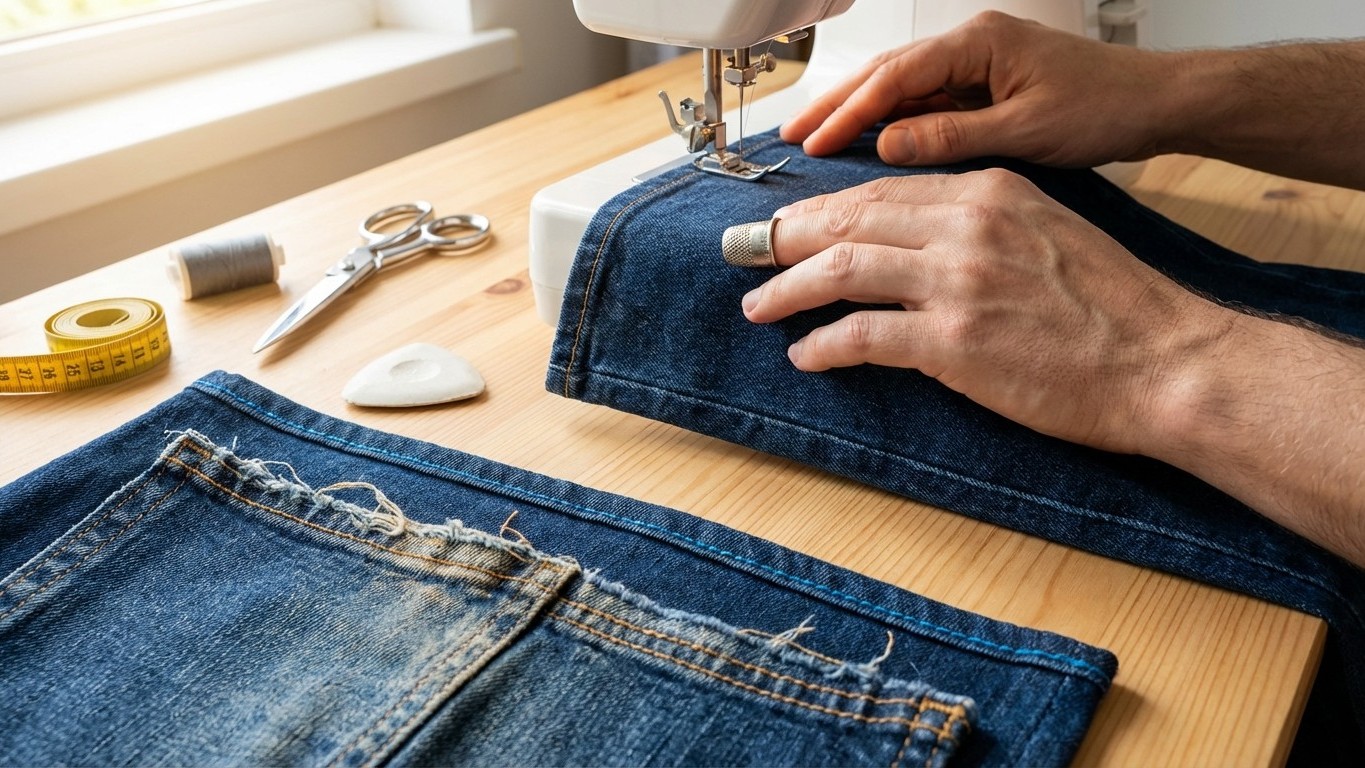
After years of butchering perfectly good denim with amateur hemming attempts, I finally discovered what professional tailors Have Known all along. There’s a way to shorten your jeans that preserves that coveted original factory hem—the one with the perfectly weathered stitching, authentic fade lines, and that impossible-to-replicate worn finish that makes vintage denim so desirable.
The revelation came during a conversation with a master tailor who’d spent decades working with premium denim brands. She watched me describe my usual hemming disasters—the stiff new stitching that screamed “altered,” the lost character of the original hem, the way shortened jeans never quite looked right again. Her response was simple: “You’re cutting off the wrong end.”
The Original Hem Method That Changes Everything
Traditional hemming removes fabric from the bottom, creating a new hem with fresh stitching. But there’s another approach that flips the entire process: remove excess length from the top of the jean leg, near the crotch area, while keeping that precious original hem completely intact. This technique, often called “shortening from the inseam,” requires more skill but delivers dramatically superior results.
The process involves carefully opening the inseam, removing the calculated amount of fabric from the upper portion of the leg, then restitching the inseam back together. The original hem remains untouched, preserving all its authentic details—the specific thread color that matches the jean’s vintage, the particular stitch pattern used by the manufacturer, and crucially, any natural wear patterns or fading that have developed over time.
What makes this technique so effective is how it maintains the jean’s proportional integrity. When you remove length from the bottom, you’re not just cutting off fabric—you’re disrupting the carefully calculated taper and silhouette that designers spent months perfecting. The original hem represents the intended endpoint of the jean’s shape, and preserving it maintains the garment’s authentic proportions.
Why This Method Produces Superior Results
Premium denim enthusiasts have long understood that the original hem carries irreplaceable value. Vintage jeans from coveted eras feature hem details that simply cannot be replicated with modern techniques. The thread aging, the subtle variations in stitching tension, and the way the fabric has settled into its final form all contribute to the jean’s character and authenticity.
Beyond aesthetics, there are practical advantages to this approach. Original hems are typically more durable than replacement hems because they were created with industrial machinery and techniques not available to typical alteration services. The factory finish often includes specialized edge treatments and reinforcements designed to prevent fraying and extend the garment’s lifespan.
This method also works exceptionally well with raw denim, where preserving the original construction details is paramount for serious collectors and enthusiasts. Raw denim develops unique wear patterns over time, and maintaining the original hem ensures these patterns can continue evolving naturally without interruption.
When to Choose Professional Execution
While the concept is straightforward, execution requires genuine skill and experience. Altering the inseam affects the overall fit and shape of the jean in ways that novice sewers often underestimate. The technique demands precise measurements, understanding of how different denim weights behave, and expertise in matching thread colors and stitch patterns when rejoining the inseam.
Professional tailors who specialize in denim understand these nuances and can evaluate whether this method suits your particular jeans. Some vintage or heavily structured denim may present challenges that require additional techniques or modifications to achieve optimal results. Additionally, jeans with complex inseam details, like contrast stitching or decorative elements, may require specialized approaches.
The investment in professional alteration typically proves worthwhile when working with premium or sentimental denim. High-end jeans often cost several hundred dollars, making the additional alteration expense a logical choice for preserving their value and appearance. Similarly, vintage pieces with irreplaceable original details deserve the careful attention this method provides.
Transforming Your Denim Game
Discovering this technique fundamentally changed how I approach jean alterations. Instead of accepting that hemming meant sacrificing authenticity, I learned to view alterations as an opportunity to enhance fit while preserving character. The difference in final appearance is remarkable—altered jeans that maintain their original hem look intentional and authentic rather than obviously modified.
This approach works particularly well for inherited or vintage pieces where maintaining historical accuracy matters. It’s also invaluable for expensive designer denim where preserving resale value is important, or for perfectly broken-in jeans where you’ve finally achieved that ideal fade and wear pattern you don’t want to disrupt.
The next time you’re facing a hemming decision, consider the long-term value of that original finish. Sometimes the best alterations are the ones that work so seamlessly, they become invisible—leaving you with perfectly fitting jeans that retain all their original character and authenticity. Your denim deserves techniques that honor its craftsmanship rather than compromise it.