
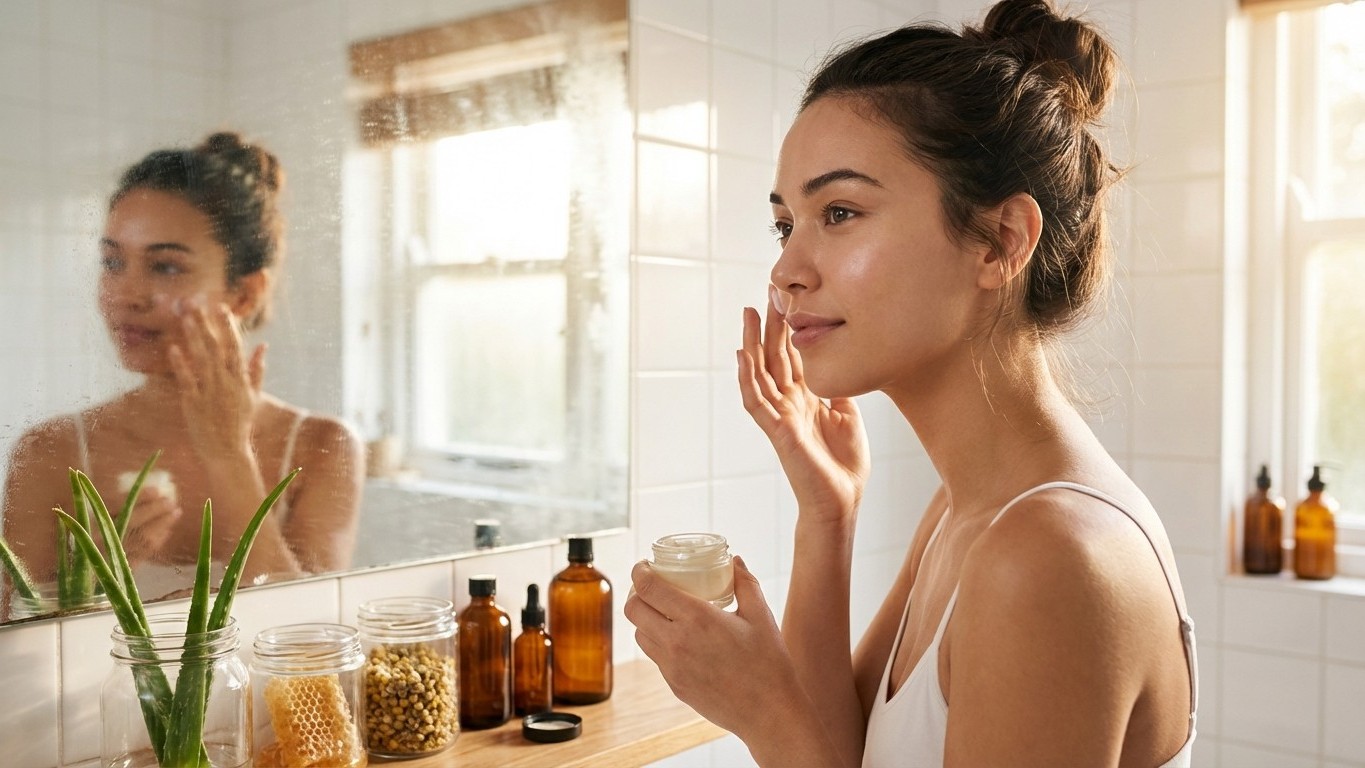
Steam fogs the bathroom mirror, your fingertips hover over a fresh breakout, and the temptation is immediate: scrub, dry it out, “kill the bacteria,” move on. That instinct is human, and it’s also one of the fastest ways to turn a few pimples into a long, exhausting cycle of irritation, oil rebound, and post-acne marks.
Natural acne care can work, but not in the way TikTok makes it look. The goal isn’t to “strip” your skin with lemon, baking soda, or undiluted essential oils. The goal is calmer inflammation, a stronger barrier, and fewer clogged pores, achieved with predictable steps and ingredients that play nicely together. That’s where natural skin care tips for acne become genuinely useful: not as DIY chaos, but as a pragmatic Routine-adaptee”>routine you can stick to.
Small moves. Consistency. A bit of science. The result. Clean, steady progress.
Why choose natural solutions for acne?
The limits of conventional treatments
Conventional acne treatments are often effective, and dermatology guidelines consistently support proven actives like topical benzoyl peroxide and topical retinoids, sometimes combined with topical or oral antibiotics for moderate to severe cases. The catch is that these options can come with dryness, irritation, photosensitivity, and a “purge” period that discourages people before results arrive.
Another reality: acne therapy takes time. Multiple clinical sources and guideline summaries repeat a similar window for visible improvement, often around 8 to 12 weeks, especially when you’re treating the whole acne-prone area rather than spot-treating only the visible pimples. If you’re switching products weekly, you’re basically never finishing a trial. Skincare roulette. Not a routine.
Advantages of natural ingredients
Natural ingredients can bring real benefits when they’re chosen for function, not for vibe. Think: soothing inflammation, supporting wound healing, reducing visible oil, and lowering the risk of barrier damage. In practice, a natural-leaning routine can be easier to tolerate long-term, especially for sensitive, reactive, or over-exfoliated skin.
Counter-intuition time: “natural” is not automatically gentler. Essential oils, harsh DIY acids, and abrasive scrubs can irritate acne-prone skin as aggressively as many synthetic formulas. The best natural approach is often the least theatrical one.
Understanding acne: causes and aggravating factors
The acne cycle and types of blemishes
Acne is an inflammatory condition of the pilosebaceous unit, your hair follicle and its oil gland. The classic chain reaction looks like this: excess sebum and sticky dead skin cells clog the follicle, a microcomedone forms, bacteria (C. acnes) and inflammation join the party, and you see blackheads, whiteheads, papules, pustules, and sometimes deeper nodules or cysts.
Different lesions respond to different strategies. Blackheads and whiteheads often need consistent unclogging and barrier support, while inflamed pimples benefit from anti-inflammatory care and gentler handling. Deep, painful nodules are their own category, and scarring risk climbs quickly, that’s where a dermatologist visit is smart, not dramatic.
Internal and external triggers
Acne is multi-factorial, and that’s why one “miracle oil” rarely solves it. Common aggravators include hormonal fluctuations, stress, sleep disruption, friction (masks, helmets, collars), comedogenic makeup or hair products, overly aggressive cleansing, and inconsistent routines. Diet is more individual, but some people notice flares with high-glycemic patterns and certain dairy intake, while others don’t.
What matters is pattern recognition. Your skin usually tells you the truth within a few weeks, if you stop changing five variables at once.
A natural anti-acne routine: the essential steps
The most effective routines are boring in the best way: gentle cleansing, smart hydration, targeted treatment, and daily sunscreen. If you want a broader framework, connect this page to the pillar guide that maps concerns beyond acne, use the internal reading path anchored as natural skin care tips for acne for the full “solutions by problem” overview.
Gentle cleansing for acne-prone skin
A “clean” feeling isn’t the goal. A calm, non-tight feeling is. Over-cleansing can disrupt the barrier, increase transepidermal water loss, and push skin into a rebound-oil cycle that looks like “my skin is so oily, I must cleanse more.” It’s a trap.
- Frequency: typically once at night, and optionally in the Secretly-draining-your-energy-and-how-to-fix-them”>Morning-routine-mistakes-that-secretly-drain-your-energy-and-how-to-fix-them”>Morning if you wake up oily or you used heavy occlusives.
- Texture: mild gel or cream cleanser, fragrance-free if you’re reactive.
- Technique: 20 to 30 seconds, lukewarm water, no scrubbing cloths, no cleansing brushes on inflamed acne.
If you wear sunscreen and makeup, a gentle first cleanse (oil or balm) followed by a mild water-based cleanser can help remove residue without turning your face into sandpaper.
Hydration without a comedogenic effect
Acne-prone skin still needs hydration. Dehydrated skin can feel tight, look shiny, and become more reactive to treatments. Choose lightweight, non-greasy textures, think gel-creams, fluid lotions, and emulsions that absorb quickly.
- Look for humectants (glycerin, panthenol, hyaluronic acid) plus barrier helpers (ceramides, cholesterol, fatty acids) when possible.
- Avoid heavy, highly occlusive layers if you clog easily, especially in humid weather.
- If you use drying spot treatments, moisturize first, then treat, for better tolerance.
Hydration is also how you make natural acne ingredients work. A calm barrier tolerates active care. An inflamed barrier turns Everything into a problem.
Targeted natural treatments (masks, powders, essential oils)
This is the fun part, and the part most people overdo. Keep it strategic: one targeted product, used predictably, with a clear purpose.
- Clay masks (kaolin, bentonite): helpful for visible oil and “congested” feel. Clinical research on clay-mask formulations in oily/acne-prone skin suggests improved sebum-related parameters and good tolerability when the formula is balanced and not overused.
- Honey (especially medical-grade or well-formulated honey products): can be soothing and supportive for barrier comfort; it’s not a standalone acne cure, but it can help the skin behave.
- Tea tree oil: has evidence suggesting potential benefit for acne in clinical trials, but it’s also a common irritant and can trigger contact dermatitis, especially when oxidized or used undiluted. Treat it like a potent active, not a “natural perfume.”
- Aloe vera: often used for soothing and comfort. It can be a supportive ingredient, especially if your skin is sensitized from over-treatment, but it’s rarely enough alone for persistent inflammatory acne.
Essential oils deserve a strict rule: if you can smell it strongly, your skin can probably “feel” it strongly too. If you insist on using tea tree, use a properly formulated leave-on product or dilute correctly, patch test, and stop at the first sign of burning, rash, or escalating redness. Oral ingestion is unsafe, and topical irritation is not “detox.”
Sun protection and natural products
Sunscreen is acne care, because UV exposure worsens inflammation, slows healing, and deepens the look of post-acne marks. If you’re acne-prone and sensitive, mineral sunscreens with zinc oxide and/or titanium dioxide are often better tolerated, though texture matters and some formulas can feel heavy.
- Choose broad-spectrum SPF 30+ for daily use.
- Apply enough product, then remove thoroughly at night with gentle cleansing.
- If sunscreen breaks you out, it’s usually the formula, the removal method, or layering issues, not the idea of sunscreen itself.
The best natural ingredients to include
Aloe vera, tea tree, clay, honey, and “light” plant oils
Natural acne-friendly ingredients work best when you match them to the job they’re actually good at.
Aloe vera: Think soothing, comfort, and barrier-friendly hydration. Useful when your skin feels raw from over-cleansing or active overload.
Tea tree (Melaleuca alternifolia): Potential antimicrobial and anti-inflammatory support, with real safety caveats. It’s not “gentle by default,” and irritation can mimic or worsen acne.
Kaolin and bentonite clays: These absorb oil and can temporarily reduce shine and the look of congestion. Use 1 to 2 times per week, and rinse before the mask fully cracks into a desert map. Over-drying is the classic Mistake.
Honey: Helpful for a soothing, cushiony feel, especially when your skin is inflamed and you want a gentle mask day. Choose well-formulated options if possible, because kitchen honey quality varies.
Light plant oils: This is where nuance matters. Some acne-prone skins tolerate squalane (technically skin-identical but often plant-derived) and a few lightweight oils well, while others break out from almost any oil. Patch test. Keep the layer thin. If you’re oily and congested, oils should be the exception, not the base of your routine.
Nominal truth: your skin doesn’t care if an ingredient is “clean.” It cares if it’s irritating, occlusive, or compatible.
Ingredients to avoid or use with caution
- Undiluted essential oils: high irritation and allergy risk, especially on compromised skin.
- Lemon juice, apple cider vinegar straight, DIY acids: unpredictable pH, burn risk, post-inflammatory hyperpigmentation risk.
- Baking soda: too alkaline for facial skin, can disrupt barrier function.
- Abrasive scrubs (coffee, sugar, crushed shells): micro-tears and inflammation, especially on inflamed acne.
- Heavy, comedogenic oils for some skins (e.g., very occlusive blends): not “bad,” just often a poor match for acne-prone faces.
If you want exfoliation in a natural-leaning routine, keep it gentle and infrequent, and never stack exfoliation with essential oils “for extra power.” That combo is how you get angry skin, not clear skin.
Common mistakes in a natural anti-acne routine
Over-cleansing, aggressive products, and risky DIY recipes
Franchement, this is the trend that keeps coming back like a bad song: “If I dry it out hard enough, it’ll disappear.” What really disappears is your barrier.
- Washing too often: more than twice daily usually backfires for acne-prone skin.
- Spot-treating everything, everywhere: acne often needs “field treatment” on the acne-prone area, plus a small number of spots treated more intensely.
- Switching products too fast: if you change your routine weekly, you’ll never learn what works.
- Picking and “DIY extractions”: increases inflammation and scar risk, and prolongs healing time.
- Layering too many actives: tea tree plus clay plus exfoliation plus astringent toner equals irritation, not progress.
One of the most misleading social trends is the “overnight fix.” Most acne improvements happen because inflammation calms and clogging reduces over weeks, not because a single mask “pulled out toxins.” Skin doesn’t detox that way.
A holistic approach: lifestyle, food, and stress
How daily life shows up on your face
Acne isn’t a morality test, but lifestyle can nudge it in either direction. Stress hormones can worsen inflammation; poor sleep makes skin more reactive; friction and sweat create the perfect environment for clogged pores. The goal is not perfection, it’s reducing friction in your system.
- Sleep: prioritize a consistent schedule, even if it’s not glamorous.
- Stress: low-tech tools work, walking, breathwork, journaling, anything that downshifts your nervous system.
- Hygiene habits: clean pillowcases, sanitize phone screens, keep hair products off the jawline and forehead.
- Food: if you suspect triggers, test one change for 3 to 4 weeks, don’t overhaul everything at once.
Counter-intuition again: “perfect diet” rarely fixes acne alone. But a calmer baseline, less sugar spikes, more fiber, better sleep, often makes your topical routine work better. It’s synergy, not salvation.
FAQ: what to know before changing your routine
How long until you see results?
Plan for a minimum of 6 to 8 weeks to judge meaningful change, and often closer to 8 to 12 weeks for consistent improvement, especially if your routine is focused on reducing inflammation and supporting barrier function rather than using strong medicated actives. If you’re breaking out more in the first 1 to 2 weeks, it may be irritation, not “purging,” particularly with essential oils and harsh DIY treatments.
Can you combine natural care with medical treatments?
Often, yes. A gentle, natural-leaning routine can support tolerance of dermatology-proven treatments by reducing dryness and barrier disruption. The key is compatibility and simplicity: keep your base routine calm (cleanser, moisturizer, sunscreen), then add your prescription or OTC treatment as directed.
If you’re on oral antibiotics, topical retinoids, benzoyl peroxide, or isotretinoin, ask your clinician before adding essential oils or strong “natural” actives. Irritation and dermatitis can complicate treatment, and antibiotic stewardship matters, systemic antibiotics should not be used alone and are typically time-limited.
Can you use essential oils if you have acne?
You can, but you may not want to. Tea tree oil is the most commonly discussed, and evidence suggests it may help some acne cases. Safety guidance also notes common side effects like stinging, burning, scaling, and contact dermatitis, particularly if the oil is oxidized or used in high concentrations. Patch testing is non-negotiable, and undiluted use is a frequent mistake.
How do you avoid making acne worse with DIY skincare?
- Skip low-pH/high-acid kitchen hacks like lemon or vinegar on facial skin.
- Avoid gritty exfoliation and aggressive scrubbing.
- Introduce one new product at a time, then wait 2 to 3 weeks before adding another.
- Do a patch test on a small area for several days, especially with essential oils.
- If you develop burning, swelling, or rash-like bumps, stop immediately and simplify.
Resources and internal reading paths
If acne is your main concern but you’re also dealing with the aftermath, the “what now?” issues, these next steps make your routine feel targeted rather than random:
- If you want a broader map of natural solutions by concern, start with the hub content anchored as natural skin care tips for acne.
- If your breakouts leave marks that linger, follow the reading path anchored as natural skincare tips for dark spots.
- If your main frustration is texture and visible pores, explore the guide anchored as natural skin care tips for large pores.
- If you suspect your routine structure is the real issue, layering too much, wrong order, inconsistent steps, go back to fundamentals with the page anchored as natural skincare routine skin care tips.
And if your acne is painful, nodular, scarring, or affecting your mental health, treat that as a valid reason to seek medical care alongside your natural routine. The strongest skincare move is knowing when your skin needs backup.
So here’s the question to leave on: if you stopped trying to “erase” acne overnight and instead built a routine you could repeat for 90 days, which single step would you make non-negotiable tonight?