
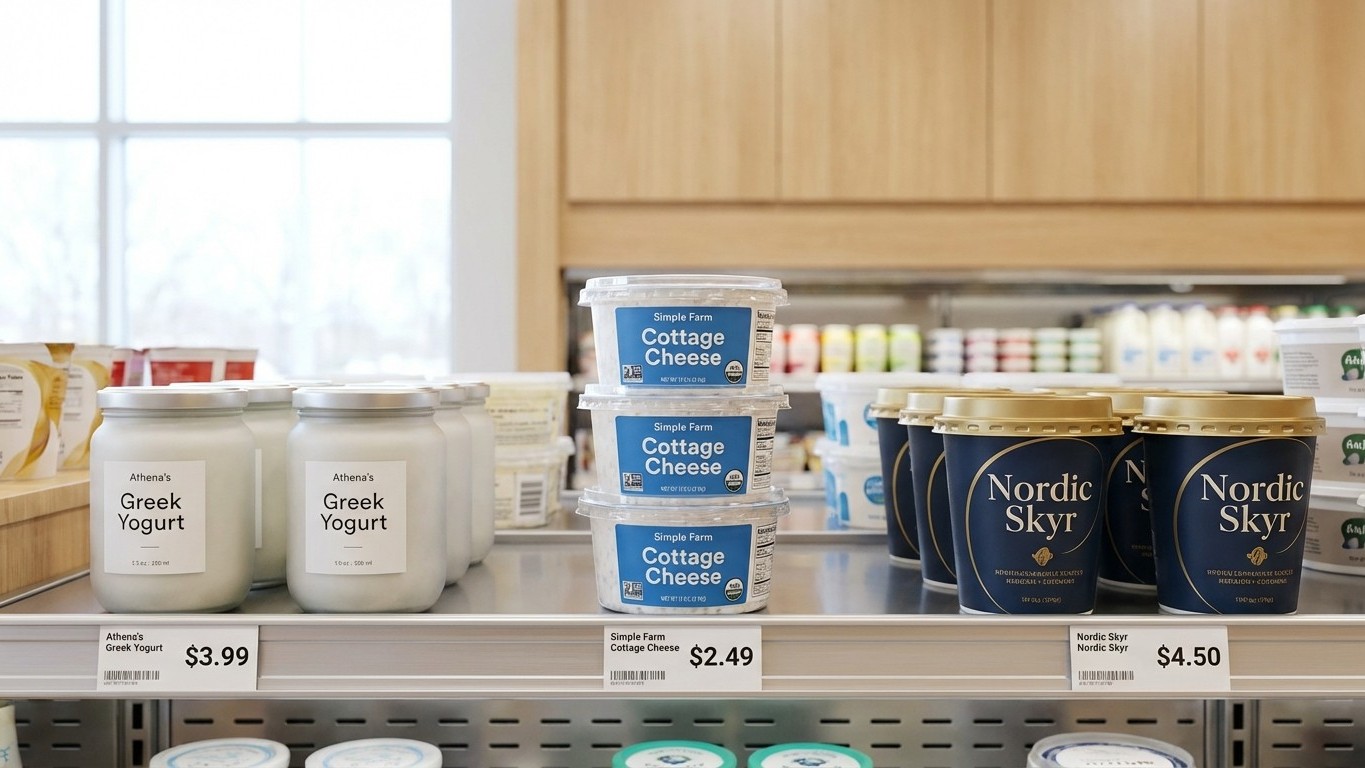
Walk down any grocery store dairy aisle today and you’ll be bombarded with high-protein promises from three heavyweight contenders: skyr, Greek yogurt, and cottage cheese. Each touts impressive nutritional credentials, yet their price tags tell dramatically different stories. While all three deliver substantial protein per serving, one of these trendy options is charging premium prices for benefits you can get elsewhere for half the cost.
The Great Protein Showdown
Let’s cut through the marketing noise and examine Actually-look”>Actually-flatters-every-body-type-according-to-stylists-and-why-it-s-not-what-you-think”>What You‘re actually getting for your money. Cottage cheese has been quietly delivering exceptional nutritional value for decades, typically containing 14-16 grams of protein per half-cup serving while maintaining the lowest price point among the trio. Greek yogurt stepped onto the scene with similar protein levels, usually ranging from 12-20 grams depending on the brand, but commanding a moderate premium over regular yogurt.
Then came skyr, the Icelandic sensation that has convinced countless health-conscious consumers to shell out premium prices for what is essentially strained yogurt with clever branding. While skyr does deliver impressive protein numbers – often 15-20 grams per serving – the cost per gram of protein frequently doubles or even triples that of cottage cheese, making it the luxury sports car of the dairy protein world.
The protein quality across all three options remains remarkably similar, as they’re all dairy-based and provide complete amino acid profiles. Your muscles can’t distinguish between protein from a $6 container of skyr and a $3 tub of cottage cheese. The biological value and digestibility are essentially identical, which raises serious questions about skyr’s premium positioning.
Beyond Protein: The Full Nutritional Picture
Examining the broader nutritional landscape reveals even more interesting disparities. Cottage cheese typically contains more calcium per serving than its competitors, alongside significant amounts of phosphorus and B vitamins. The sodium content is higher, which some consider a drawback, though it’s easily managed within a balanced diet.
Greek yogurt brings probiotics to the table, offering potential digestive benefits that cottage cheese and some skyr varieties lack. The live cultures in quality Greek yogurt can support gut health, adding genuine functional value beyond basic nutrition. However, not all Greek yogurts are created equal – some heavily processed versions contain minimal live cultures, effectively negating this advantage.
Skyr traditionally contains probiotics as well, though the straining process and commercial production methods can vary significantly between brands. Some maintain robust bacterial cultures, while others prioritize shelf stability over probiotic benefits. The inconsistency in probiotic content, combined with the premium pricing, makes skyr a questionable investment for those seeking functional benefits.
The texture and versatility factor also plays into the value equation. Cottage cheese’s unique texture makes it incredibly versatile – it works equally well in savory and sweet applications, from pasta dishes to smoothies. Greek yogurt offers creamy consistency that works beautifully in both cooking and standalone consumption. Skyr falls somewhere between the two but often lacks the distinct character that would justify its premium price point.
The Marketing Machine Behind Premium Pricing
The skyr phenomenon perfectly illustrates how effective marketing can transform a simple product into a premium commodity. By emphasizing its Icelandic heritage and traditional production methods, brands have positioned skyr as an exotic superfood rather than what it truly is: strained yogurt with a marketing budget.
This premium positioning relies heavily on the health halo effect, where consumers associate higher prices with superior nutrition. The reality is that skyr’s nutritional profile, while solid, doesn’t justify costs that often exceed Greek yogurt by 50-100% and cottage cheese by even more. You’re paying for storytelling and packaging design rather than meaningfully superior nutrition.
Greek yogurt has found a more reasonable middle ground, offering legitimate improvements over regular yogurt through its straining process while maintaining relatively accessible pricing. The protein concentration and probiotic benefits provide clear value propositions that justify moderate premium pricing.
Making the Smart Choice for Your Budget and Goals
For maximum protein per dollar, cottage cheese remains the undisputed champion. Its excellent amino acid profile, impressive calcium content, and rock-bottom pricing make it the practical choice for budget-conscious fitness enthusiasts and families alike. The slightly higher sodium content is easily managed and shouldn’t deter most healthy individuals.
Greek yogurt occupies the sensible middle ground, offering protein levels comparable to skyr with genuine probiotic benefits at reasonable prices. Choose varieties with live active cultures and minimal added sugars to maximize the health benefits. The creamy texture and versatility make it worth the modest premium over regular yogurt.
Skyr, despite its impressive marketing, represents poor value for most consumers. Unless you’re specifically drawn to its particular taste and texture and price isn’t a consideration, you’re Better served by either cottage cheese or quality Greek yogurt. The premium you pay for skyr could be better invested in other nutrient-dense foods that provide benefits you can’t get from more affordable dairy options.
The next time you’re standing in that dairy aisle, remember that the most expensive option isn’t necessarily the best choice. Sometimes the humble, unmarketed cottage cheese sitting quietly on the bottom shelf delivers everything you need without the premium price tag attached to trendier alternatives.