
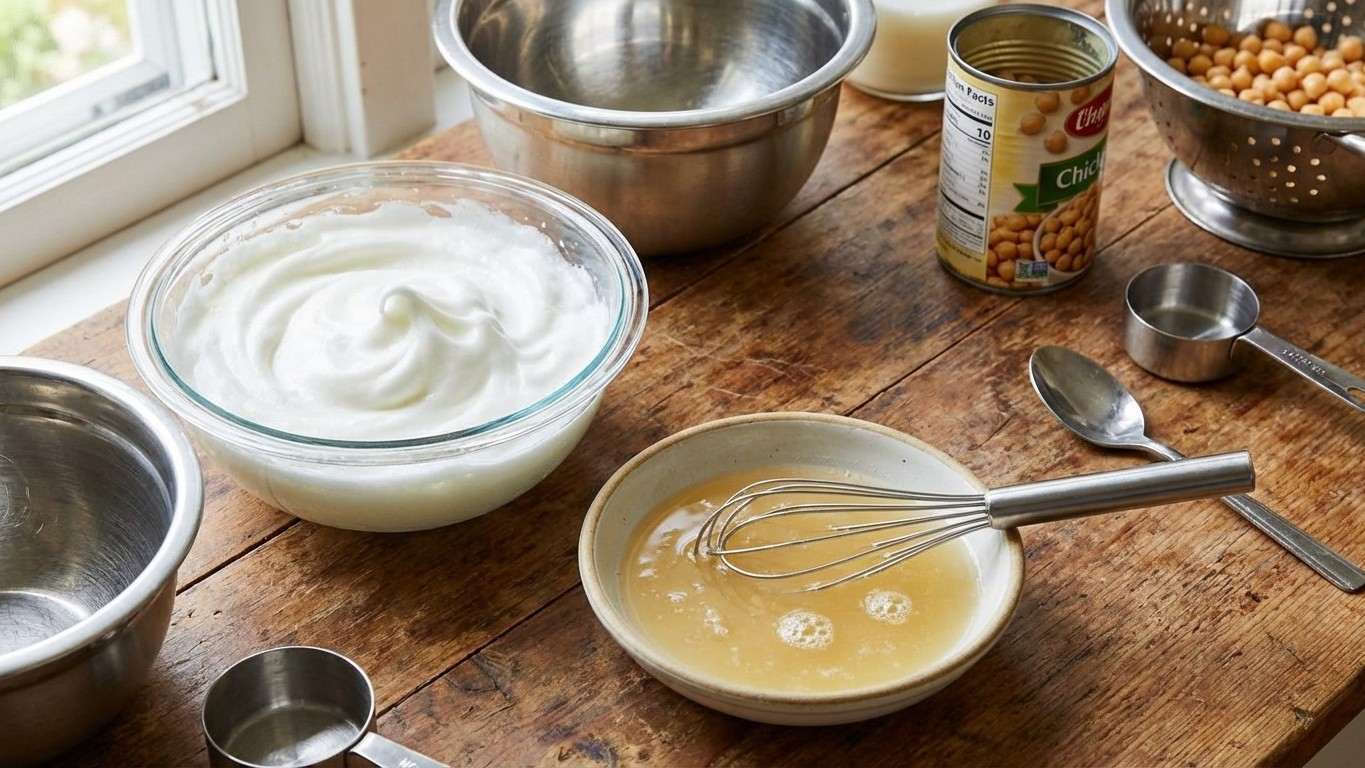
Soft peaks, glossy swirls, a bowl spun silver by meringue—baking with egg whites is a tactile pleasure, almost balletic. There’s anticipation in the tilt of the bowl, the hush before a soufflé blooms or a pavlova shatters at your fork. Yet, for all their elegance, egg whites behave like prima donnas: just one misstep and the airy drama collapses, leaving even the most experienced home baker with a puddle of regret instead of that promised cloud.
The single biggest mistake? It’s absurdly simple: trying to whip egg whites that have even the faintest trace of fat or yolk. One speck. That’s all it takes. The result: limp, unresponsive whites, no matter how valiantly your mixer labors. The difference between billowy magic and unsalvageable foam—so often hidden in the details most recipes barely mention.
Key takeaways
- Why even a trace of fat ruins whipped egg whites every time.
- The secret vegan ingredient transforming egg-free baking worldwide.
- How chefs obsessively perfect their technique to achieve baking magic.
Why Fat Is the Enemy (And Sneakier Than You Think)
Imagine a precision dance where every molecule has a partner. Egg whites rely on the fragile structure of proteins trapping air as you whisk. But fat—whether a careless drop of yolk, a smudge of butter, or the faint residue of last week’s pasta in your bowl—interrupts the choreography. Proteins slide off, refusing to form the delicate webbing needed for lift and stability. It’s sabotage masked as an “oops.”
Every chef I’ve interviewed—French patissiers, LA cake geniuses, even a self-declared “cookie whisperer” from New Jersey—tells the same story. Scrupulous separation. Meticulous cleaning. Utensils, bowls, fingers: Everything wiped down with vinegar or lemon juice, just in case. Older steel bowls, slightly scratched? Retire them for glass if you crave perfection. Glass and stainless steel, fat-free and squeaky clean, remain the gold standard.
Commercial kitchens take it further: they train junior bakers to sniff for residual odors, which can signal unseen grease. Absurd? Maybe. But the stakes—ethereal soufflé or leaden flop—justify the superstition. Frankly, it’s the sort of obsession that divides the accidental home cook from someone who truly wants to conquer the egg white arts.
The Vegan Hack: Aquafaba—Once a Joke, Now the Industry Secret
And yet, something wonderfully counter-intuitive happened in culinary circles: the ingredient that blew open the world of eggless baking looked, at first glance, positively unappetizing. Aquafaba—literally, chickpea water. The viscous brine you’d usually drain away from a can of beans.
A few passionate bakers, possibly out of desperation or an accidental spill, whisked up this beige liquid. The result: peaks that echo, almost uncannily, the behavior of egg whites. In blind taste tests, meringues made with aquafaba have stumped professionals—crisp shells, marshmallow interiors, not a chickpea note in sight. It’s become such a culinary darling that Parisian patisseries offer vegan macarons relying solely on this pantry castaway.
There’s even a hint of eco-agitprop to its ascendance. Why waste eggs, especially given production’s environmental footprint, when you can conjure the same texture from a waste product? Chefs I trust for their rigor (and candor) love aquafaba precisely because it upends the orthodoxy—no cholesterol, no animal product, zero risk of salmonella, and critically, no yolk worries.
Frustration—solved. An indulgence—made ethical. The transformation is staggering.
How to Nail Both: Insider Rituals and Cheffy Tweaks
Think you’ve mastered egg whites? Most bakers still develop rituals bordering on the mystical. Two eggs are never quite alike—ambient humidity, the hen’s mood (who knows?), the lunar calendar—each seems to toy with the result. Room temperature eggs loosen more easily (cold whites whip slower and risk weeping). A pinch of cream of tartar or a dash of acid? Essential, if barely explained in most cookbooks—think of it as insurance for those gossamer webs of protein.
But here’s what top vegan bakers whisper at pop-up patisserie counters: aquafaba, too, demands purity. Rinse the can top. Decant through a fine sieve. Whip on high with patience; it takes longer, but the payoff is dramatic. You can even flavor it boldly—vanilla, citrus zest, freeze-dried berries—because aquafaba’s taste, or lack thereof, is a blank canvas. Frustrated by flat vegan mousse or collapsed meringues in the past? Odds are, you poured in the sugar too early (or used unstrained aquafaba). Timing, as ever, is the arithmetic between alchemy and arithmetic.
The Real Question: Why Must We Obey These Rules?
There’s something charmingly radical about recipes that punish sloppiness. They demand attention, care, sometimes a little humility. No AI-powered appliance or clever shortcut overcomes the logic of protein chemistry. This is why some vintage cookbooks read more like manifestos than instructions: respect the ingredient, or else. With aquafaba, the invitation is even more democratic—a reminder that ingenuity and resourcefulness, not just access to perfect eggs, unlock these miracles.
Still, the deeper revelation might be this: Our Mistakes in the kitchen, whether caused by a rogue glob of yolk or an overzealous hand with the spatula, aren’t just human—they’re invitations to experiment. The next game-changing trend may be simmering away, unnoticed, in someone’s recycling bin or at the back of a grandmother’s cupboard. What rule, I wonder, is ready to be broken next?