
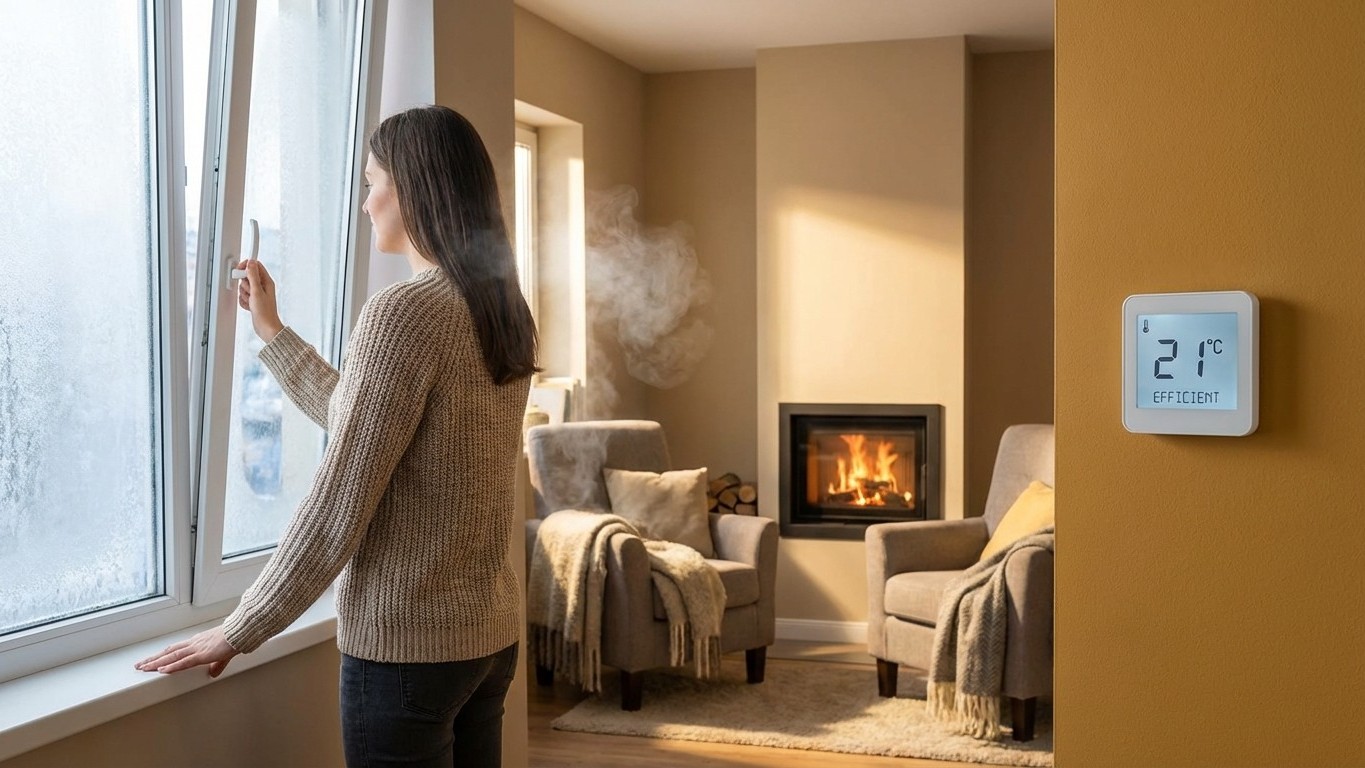
I thought I was being smart about winter ventilation. Every morning, I’d crack my bedroom window just a sliver to let in some fresh air, then leave it that way for hours while my Heating system worked overtime to keep the house warm. When my January heating bill arrived, I nearly fainted — It Was double what I’d paid the previous winter. That’s when I discovered I’d been making one of the costliest home maintenance mistakes possible.
The Expensive Truth About Leaving Windows Slightly Open
What I didn’t realize was that my well-intentioned “trickle ventilation” was creating the perfect storm for energy waste. About 30% of a home’s heating energy is lost through windows, according to the U.S. Department of Energy. But when you leave a window partially open for extended periods in winter, that percentage skyrockets dramatically.
Doing it improperly leads to heat loss and, consequently, increased heating costs. The continuous air leak forces your heating system to work constantly, trying to maintain your set temperature while warm air steadily escapes. Some experts estimate an open-window policy might even double your heating costs — which explained my shocking bill perfectly.
The problem gets worse when you consider where Most People place their thermostats. That could reduce the energy efficiency of your unit and raise your energy bill, especially if you leave a window open near the thermostat. Even if the thermostat is in another room, the cold air eventually reaches it, triggering your heating system to kick into overdrive.
The German Solution That Changed Everything
After researching energy-efficient ventilation methods, I discovered the German practice called “Stoßlüften” (pronounced SHTOSS-loof-ten), which translates to “shock ventilation” or “burst airing.” This centuries-old technique completely Transformed how I think about winter air exchange.
It’s brilliant in its simplicity: throw your windows wide open for just a few minutes to completely refresh your indoor air without losing the warmth stored in your walls and furniture. The science behind this method is fascinating. The magic happens because air itself holds very little thermal energy compared to the solid structures in your home. Once you close the windows, that fresh air warms up quickly from the heat radiating from your walls and furniture.
While opening windows for a short period might seem counterintuitive in winter, it’s actually a more energy-efficient way to ventilate than keeping windows slightly open for longer. Fully open windows allow for a quicker air exchange, minimizing heat loss from the walls.
The timing is crucial for maximum effectiveness. In the winter months, about 5 minutes is enough to provide our rooms with the right amount of fresh air. For cross-ventilation, you open your windows completely for three minutes if it’s windy, five to 10 minutes if it’s not, according to researchers at the University of Aachen and Cambridge.
How I Implemented the Proper Ventilation Method
Switching to shock ventilation required changing my entire approach. Instead of leaving windows cracked all day, I now practice strategic airing sessions. Morning: Open windows in the bedrooms after waking up. Before 4 pm: Ventilate rooms where people have spent extended time indoors. Before 11 pm: Ventilate bedrooms before going to sleep.
The key is preparation. Before opening the window, lower the heating temperature. Thermoelectric actuators, which are more and more often installed on radiators, allow you to maintain a comfortable room temperature at all times. I also turn off your heat during this time to conserve energy (particularly if you’re going to air out your home for longer periods of time).
For maximum efficiency, I create cross-drafts when possible. For maximum results, combine Stoßlüften with Querlüften, which means cross-ventilation; in other words, open all your windows in a way that creates a draft throughout your home. This technique completely refreshes the air in my entire house within minutes.
The results were immediate and dramatic. Not only did my next heating bill return to normal levels, but my home’s air quality improved noticeably. The practice of Stoßlüften is believed to prevent mold, reduce humidity, improve air quality, and enhance overall comfort and health. I sleep better, feel more alert during the day, and no longer worry about stuffiness or condensation on my windows.
Understanding proper winter ventilation has been a game-changer for both my comfort and my wallet. If you do desire some fresh air, opening the windows for a few minutes a day likely won’t make a major change in your heating bill, assuming you’re just opening a window a few inches. But the key is keeping those sessions brief and intense rather than continuous and wasteful. By adopting this simple German technique, you can enjoy fresh, healthy air all winter long without the shocking heating bills that come with improper ventilation habits.