
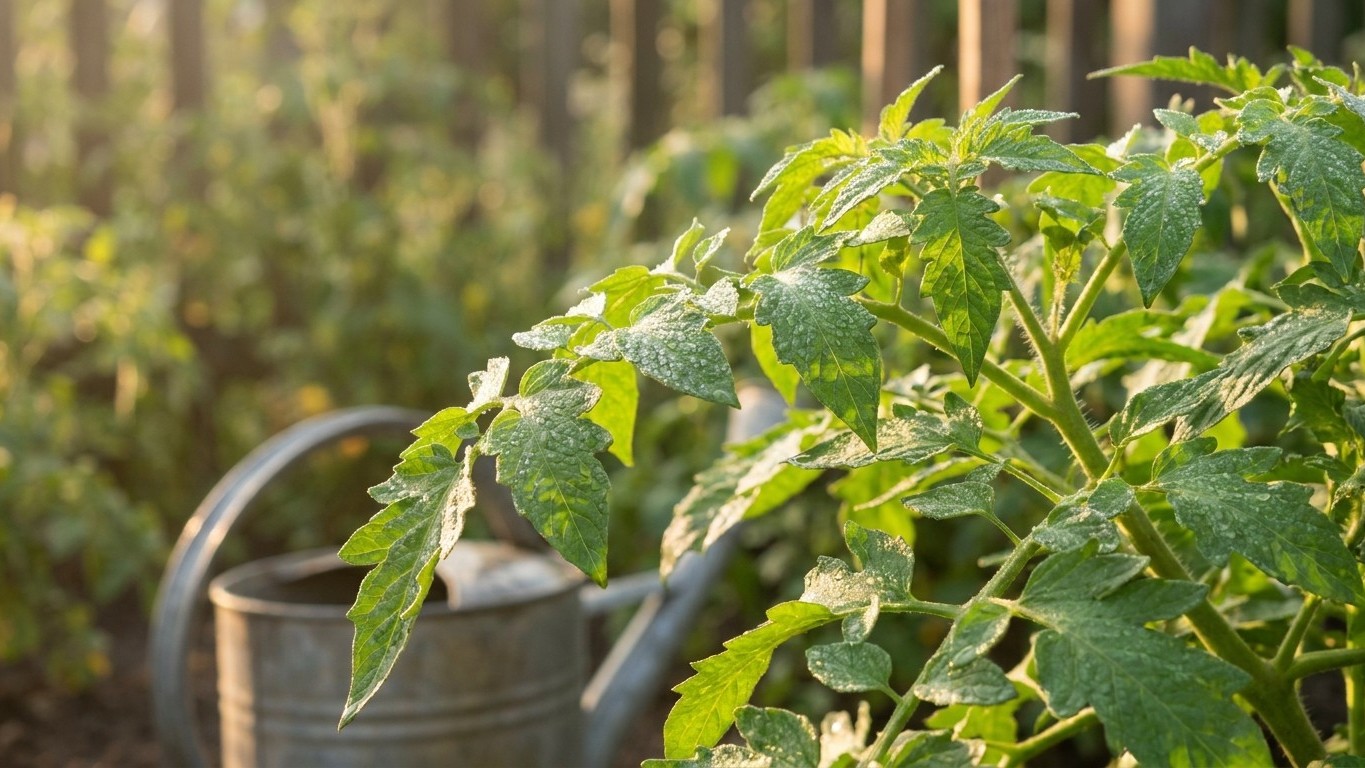
Every summer, my father would walk his tomato rows with a metal watering can at exactly 7 a.m., never a minute later than 9. If I showed up after dinner with a hose, ready to give the plants a drink before bed, he’d stop me at the gate. “Not now,” he’d say, like I was about to commit a crime. For years I thought it was superstition, some old-world habit passed down without reason. Turns out he was running a small, precise plant pathology lab in his backyard, and he never even knew the Latin names for what he was preventing.
The leaves, it turns out, were never about tradition. They were about timing, humidity, and the biology of fungal spores that don’t care how charming your garden looks at dusk.
Key takeaways
- A simple backyard watering rule was actually backed by decades of plant pathology science
- Wet leaves staying damp through the night create ideal conditions for fungal spores to germinate and spread
- Morning watering gives leaves time to dry before cool evening temperatures arrive—the key to preventing disease
Why Wet Leaves After Dark Are a Disaster Waiting to Happen
Fungal spores need two things to germinate: moisture and time. If leaves are wet for longer than 3 hours, they become prime targets for leaf-blighting and leaf-spotting fungi, so gardeners are advised to water tomatoes during the day. Water a tomato plant at sunset, and those leaves might stay damp for eight, ten, twelve hours straight, cooling right alongside the night air.
That combination is exactly what pathogens are waiting for. When you water in the evening, leaves stay wet throughout the night while temperatures cool and humidity rises, creating the perfect storm for fungal infections like early blight and powdery mildew. One extension horticulturist who has grown tomatoes since the 1980s put it bluntly: “the number one disease mistake I see, year after year, is evening watering in warm weather… You end up with wet leaves going into a warm night, and that is precisely the environment blight thrives in.”
Late blight, the disease that famously triggered the Irish potato famine and still devastates tomato patches today, is almost comically well-suited to nighttime moisture. The disease is favored by cool temperatures and humid, rainy or foggy conditions. Septoria leaf spot behaves the same way. Septoria leaf spot is a destructive foliar disease of tomato worldwide, and extended periods of wet and humid weather conditions are conducive for its development. My father never read a plant pathology textbook. He just noticed, decades before I did, that the tomatoes he watered at night were the ones covered in dark spots by August.
Morning Isn’t Just a Habit, It’s a Window
Here’s the part that surprised me most once I actually dug into it: the goal was never simply “avoid evening.” It’s about giving the leaves enough daylight to dry completely before the temperature drops. Morning watering allows foliage to dry quickly during daylight hours, eliminating the environment that fungal diseases love, since fungal spores germinate on wet leaves in warm, humid conditions. That drying window is the whole point, not an afterthought.
A Virginia Cooperative Extension coordinator frames it the same way experts across the country do. “The logic is simple: the water reaches the roots before the heat of the day drives evaporation, and crucially, the foliage has time to dry off completely before evening.” Before 10 a.m. is the general sweet spot most professionals recommend, according to gardening author Tony O’Neill, and watering as early in the morning as possible is especially important on hot, dry days when evaporation is more likely.
What genuinely reshuffled my assumptions, though, was learning that midday watering, while wasteful, isn’t the villain of the story either. Midday watering can waste water and result in accidentally underwatered plants due to evaporation, but it won’t scorch plants the way the old gardening myth suggests, and evening watering will cause damage that is difficult, if not impossible, to recover from. if you forget your morning routine, noon is a forgivable substitute. Dusk is not.
The Fix Has Nothing to Do With Willpower
The real trick isn’t discipline, it’s aiming the hose at the right target. Soil, not foliage. If you’re watering by hand, use a high volume, low pressure wand and water the soil, not the plant, and set up an automatic drip system or soaker hose at soil level if possible to avoid getting the leaves wet. Drip lines solve the timing anxiety entirely, since the water never touches a leaf in the first place. Water delivered directly to the roots via small drips or emitters keeps foliage completely dry, reducing disease risk because wet leaves invite fungal infections like early blight and septoria leaf spot. They’re efficient, too. A drip irrigation system uses roughly one-quarter the water of overhead watering while delivering more consistent moisture.
Consistency matters just as much as timing, oddly enough. Erratic watering, not just wet leaves, causes its own damage. If soil is allowed to get dry during a hot spell, the tomato plant can’t provide its ripening fruit with all the water it needs and the tomato will start to die from the blossom end, a condition called blossom end rot that is not curable, only preventable. My father’s obsession with a fixed morning schedule wasn’t just about leaves staying dry. It kept the soil moisture level from swinging wildly, which is its own quiet form of protection.
Somewhere between his stubbornness and my skepticism, there was actual agricultural science, playing out in raised beds nobody had ever surveyed. He never called it leaf wetness duration. He just called it common sense, and refused to argue about it after 9 a.m. I still don’t water after sunset, though I’ll admit I’ve started wondering what other backyard rules he never explained were quietly backed by peer-reviewed plant pathology the whole time.
Sources : tomsguide.com | aol.com