
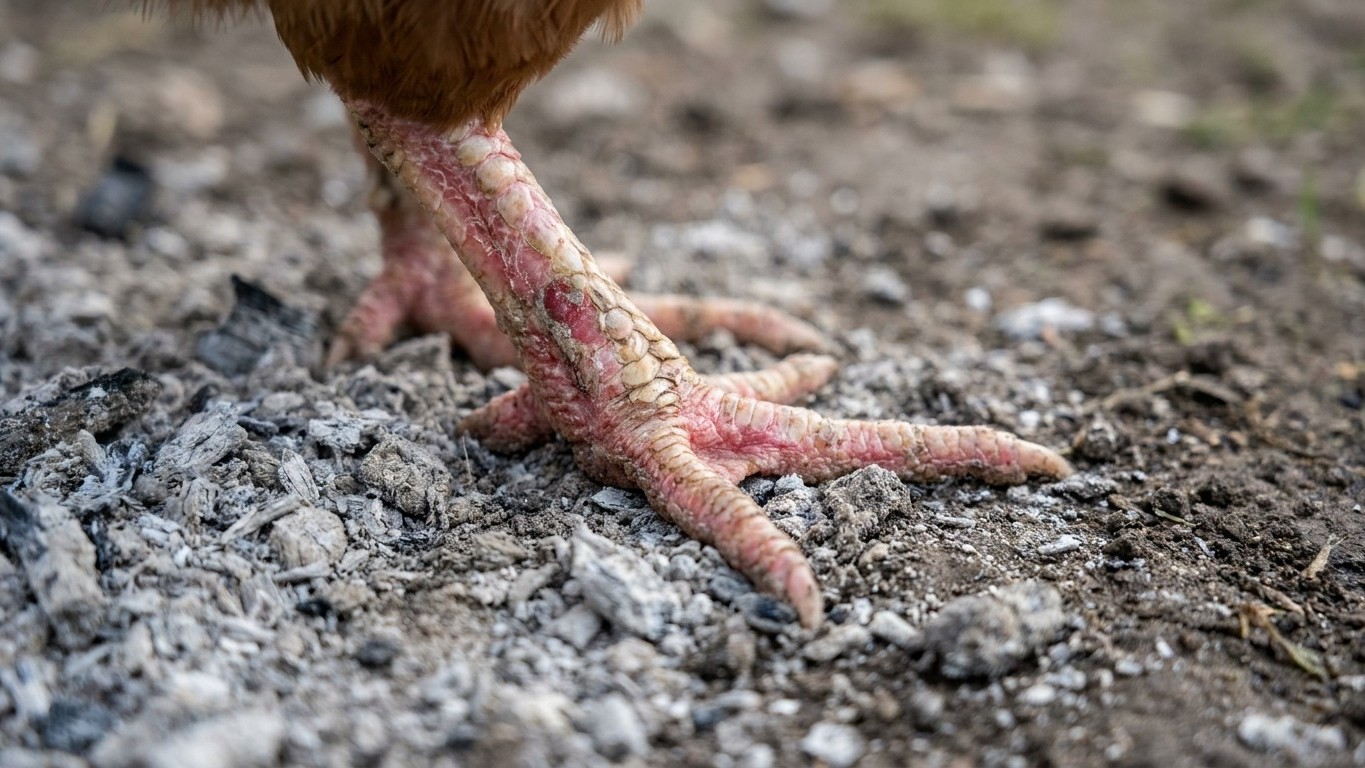
Wood ash turns into lye the moment it meets water. That’s the chemistry lesson I learned the hard way, standing in my chicken run after a summer storm, watching three of my hens hobble around on tiptoe like they’d walked across hot coals. They basically had.
I’d sprinkled a thick layer of ash from my wood stove across the coop floor two days earlier, following advice I’d read on half a dozen backyard chicken forums: red mites hate the stuff, it dries out their exoskeletons, it’s free, it’s natural. All true, sort of. What none of those cheerful blog posts mentioned clearly enough was what happens when that same ash gets rained on. Turns out I’d unknowingly built a thin layer of caustic soda right under my girls’ feet.
Key takeaways
- A common backyard remedy for chicken mites has a dangerous hidden property when it gets wet
- The chemical transformation happens faster than you’d think—even morning dew can trigger it
- What looked like safe, natural pest control nearly caused serious injury to three hens
Why Wood Ash Became My Go-To Mite Remedy
Red mites are miserable creatures. The red mite lives in cracks and crevices in the coop and is very difficult to eradicate, coming out at night to feed on its reluctant host, the chicken. They multiply fast, too: the red mite has a ten-day life cycle and is most active in spring, summer, and fall, and they can remain dormant for up to five months during the winter, which is exactly why an infestation you thought you’d beaten can come roaring back the following spring.
Wood ash has a real, if modest, place in fighting them. Wood ash is between 25 and 45 percent calcium carbonate, and it can work against chicken mites because it potentially smothers them. Chickens also just love rolling in the stuff during a dust bath, and plenty of longtime keepers swear by mixing it into sand or soil for exactly that purpose. But, and this is the part I wish someone had drilled into me before I grabbed a shovel — if you’re using this, make sure it is bone dry, because wet wood ash is caustic and will burn your chickens’ skin. Not “might irritate.” Will burn.
The Chemistry Nobody Warns You About
Here’s what’s actually happening under that pretty gray powder. Wood ash is primarily composed of alkaline metal carbonates and oxides, including potassium carbonate and calcium oxide, and when water is added to the ash, these compounds dissolve, undergoing a chemical reaction that significantly alters the water’s pH level. We’re not talking about a mild shift, either. Wood ash solution typically has a pH between 11 and 13, making it highly alkaline. For comparison, drain cleaner sits around 13 to 14. My hens weren’t walking through baby powder after that rainstorm; they were standing in something chemically closer to a diluted industrial degreaser.
This isn’t internet folklore or forum paranoia, either. Chemical burns are common injuries seen in emergency departments, but some potentially caustic agents are not obvious, and the ash residue that remains after wood is burned contains variable amounts of potassium hydroxide and potassium carbonate. Poison control centers have documented actual cases: researchers reported a skin exposure to wood ash and water that rapidly produced superficial burns in a toddler, after a poultice application of wood ash and water, which is touted as a folklore remedy for pain relief. If it can blister a child’s skin, it can absolutely blister the soft, unfeathered skin on a hen’s feet and legs, especially since chickens spend hours standing directly on the ground, no boots, no barrier.
The mechanism is the same one humans have used for centuries to make soap. When you run water through wood ash, it dissolves the potassium carbonate, and this creates a solution of potassium hydroxide, which is a type of lye. Soapmakers actually rely on this reaction on purpose, then refine it further. To push potassium carbonate toward potassium hydroxide, you need calcium hydroxide, also known as slaked lime or pickling lime, in a process called causticization. My coop floor didn’t need any extra lime to cause trouble. Rain alone did enough.
What I Do Differently Now
I still use wood ash, honestly, because it’s cheap and my hens genuinely enjoy tossing it around during their dust baths. But the rules changed completely. I only ever add it to a covered dust-bathing container, kept under an overhang or a scrap of plywood, never scattered loose across open ground where a downpour can turn it into a thin caustic slick. Several longtime keepers online mentioned the same fix I eventually landed on: sand is added because it helps to weigh down the ashes, keeping the mixture from blowing around or pooling in low spots where water collects.
If your coop floor is exposed to weather at all, treat wood ash the way you’d treat any dry chemical: store it dry, apply it dry, and get it under cover before the next front rolls in. A quick rinse of your hens’ feet with cool water helps if you catch a burn early; persistent limping, redness, or scabbing on the feet or legs warrants an actual vet visit, since untreated chemical burns on birds can crack and get infected fast. For genuine mite knockdown without the gamble, diatomaceous earth and regular coop cleanouts remain the more predictable route, ash or no ash.
One detail that surprised me most in all this: the caustic reaction doesn’t need a downpour to kick in. Morning dew settling on a thin layer of ash overnight carries enough moisture to start the same process, just more slowly, which means even keepers in drier climates aren’t automatically off the hook.
Sources : missouripoisoncenter.org | backyardchickens.com