
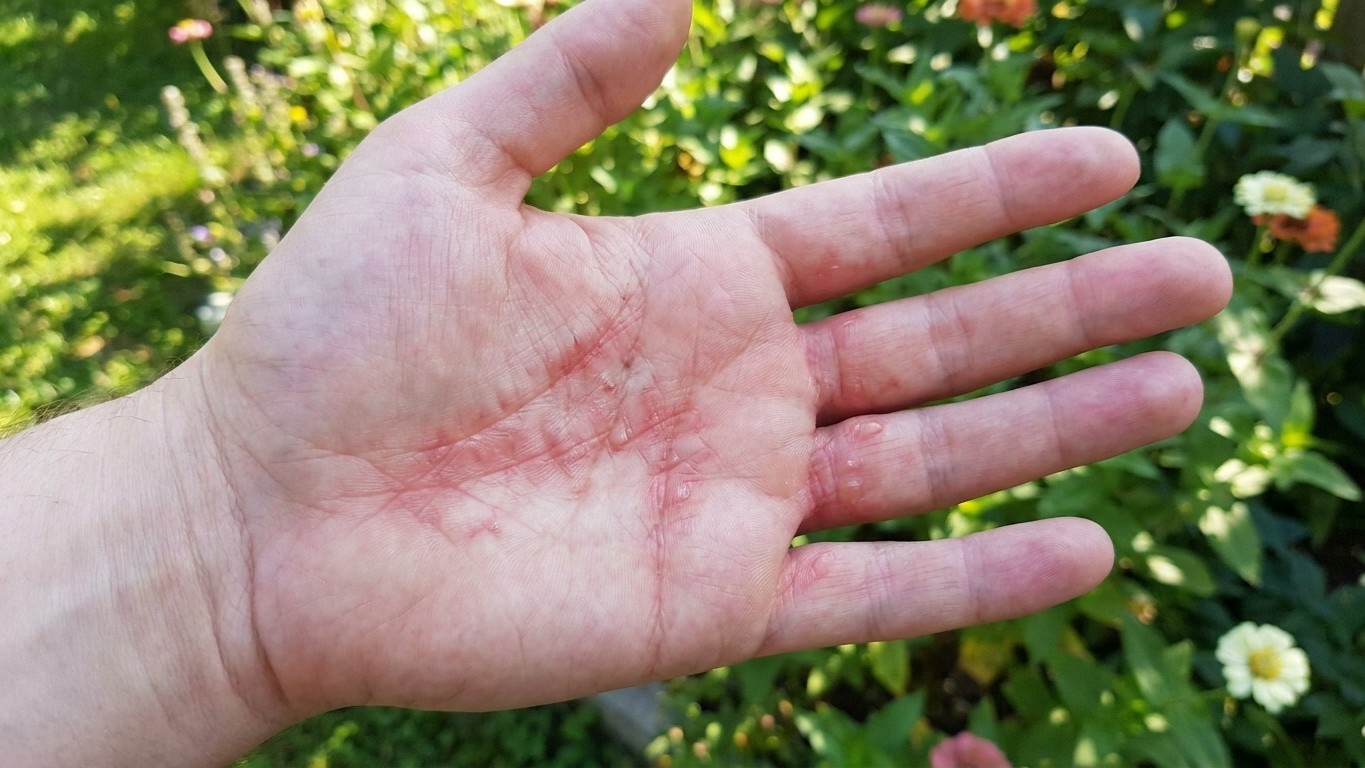
Two days. That’s how long it took for the streaks on this reader’s hands to go from “weird tan lines” to full-blown blisters. No allergic reaction, no bug bite, no mystery rash from a new dish soap. Just limes, sunshine, and a garden party that turned into an unexpected trip to the dermatologist’s office.
The condition has a clinical name that sounds far more dramatic than most people expect: phytophotodermatitis. Dermatologists have a friendlier nickname for it, though. Medically speaking, a margarita burn is known as phytophotodermatitis, and it’s a form of extreme sunburn. And no, it has nothing to do with allergies. “You have this chemical and the UV light together, and it causes immense destruction, or injury, to the skin,” says Susan Chon, M.D., a dermatologist at MD Anderson Cancer Center. She notes that despite needing UV light from the sun to activate the compound, phytophotodermatitis is not a sunburn.
Key takeaways
- A common garden party activity turned into a dermatologist emergency when an invisible chemical reaction finally surfaced
- The culprit isn’t an allergy or typical sunburn—it’s a specific clash between citrus compounds and sunlight that damages skin cells
- The delay between exposure and symptoms is exactly why so many cases go undiagnosed
The Chemistry Behind the Chaos
The culprit is a group of compounds called furocoumarins, sometimes called furanocoumarins or psoralens depending on which dermatology paper you’re reading. These are natural chemicals found in the seeds, stems, and flowers of various plant species including parsley, grapefruit, limes, lemons, celery, and carrots. Limes tend to be the worst offenders, which is exactly why this condition earned its cocktail-party nickname in the first place.
Here’s the part that surprises most people. When exposed to ultraviolet light, furocoumarins cause skin cell damage that can result in swelling, rashes, and blistering. The reaction isn’t triggered by the lime itself, and it isn’t triggered by sunlight alone. It’s the collision of the two, on the exact patch of skin where the juice landed, that turns an innocent citrus splash into a chemical burn. Margarita burns result when furocoumarin, a chemical compound found in plants, reacts with sunlight. Furocoumarin is found in limes and citrus fruits, along with celery, figs, fennel, and many other plants.
Franchement, that’s the part that makes this whole thing so sneaky. The damage is invisible while it’s happening. You feel nothing. You squeeze your limes, garnish your glass, maybe wipe your hands on a napkin, and go about enjoying your afternoon in the sun. The skin cells are already compromised. You just don’t know it yet.
Why It Takes Two Days to Show Up
This delay is the entire reason people get blindsided. The signs of a margarita burn might not kick in immediately after you’ve been in the sun. In 24 to 48 hours, your skin might start to feel tingly and tender and begin to redden. Within another day or two, painful blisters will develop in the affected areas. By the time the skin reacts, most people have Completely forgotten about the citrus they handled two days earlier, which is exactly why so many cases get misdiagnosed at urgent care as an allergic reaction or contact dermatitis.
The visual signature is oddly specific, too. You can get a margarita burn on your hands, lips or face, and it usually shows up in strange formations like streaks, splotches or even handprints. One dermatologist who treated a patient after an outdoor cook-off described her own case in vivid terms: “This reaction looked worse than any sunburn I’ve ever seen and more closely resembled a second-degree burn wound, with dozens of painful leathery blisters.” Her hands had swollen so severely that she couldn’t move her fingers for a stretch of days.
Severity really does track with exposure. The degree of photosensitivity is based on the amount of juice and its concentration, and people who were squeezing a lot of limes or had a drink spilled on them and then had a lot of sun exposure may have significant blistering, like a second- or third-degree thermal burn. So the classic garden-party scenario, hours of muddling limes for a pitcher of margaritas while lounging in full sun, is basically the perfect setup for a bad case.
What Happens After the Blisters
Even once the acute phase settles, the story isn’t over. Once the blisters heal, they typically leave behind brown hyperpigmentation in the affected areas of your skin, and though painless, those spots can take months to fade, and they’re likely to darken if re-exposed to sunlight. Some cases resolve quietly and never require a doctor’s visit; others send people straight to the ER. A mild case of phytophotodermatitis might go largely unnoticed, while other people’s reactions are severe enough to send them to a doctor for help.
There’s genuinely good news buried in all this, though: the outlook isn’t scary long-term. Even a bad case of phytophotodermatitis should not increase your skin cancer risk, according to Chon. And treatment, while unglamorous, is fairly straightforward. If you suspect you have a margarita burn, keep the affected area clean and use cold, wet compresses as needed for pain, apply a topical antibiotic ointment and bandage the affected area, taking special care to keep it covered and out of the sun, and never pop those blisters. For anything involving widespread blistering or hands that won’t cooperate, a dermatologist visit for a prescription steroid is worth the appointment.
The Fix Is Almost Insultingly Simple
Here’s the part that makes this whole ordeal a little maddening in hindsight: prevention takes about ten seconds. The best way to avoid being burned by your favorite bevvy is to scrub your hands with warm water and soap to be sure all of the juice is off before heading into the sun. That’s it. No special products, no elaborate ritual. Just soap, water, and a habit of rinsing immediately rather than “in a minute.”
For the extra cautious among us, gloves during prep work aren’t a bad call either, especially if you’re the designated bartender for a backyard crowd. If you’re extra concerned, you can wear gloves when you’re squeezing limes. You can still enjoy lemons and limes in the summer, just take precautions and be aware. One dermatologist even flagged a detail most people never think about: it’s raw citrus that carries the risk. It’s also important to be mindful not only of citrus juices. Also, products like hand sanitizers or lotions that can contain citrus oils. A little label-reading before your next pool day might save you from a repeat of the garden-party scare.
Sources : cbsnews.com | today.com