
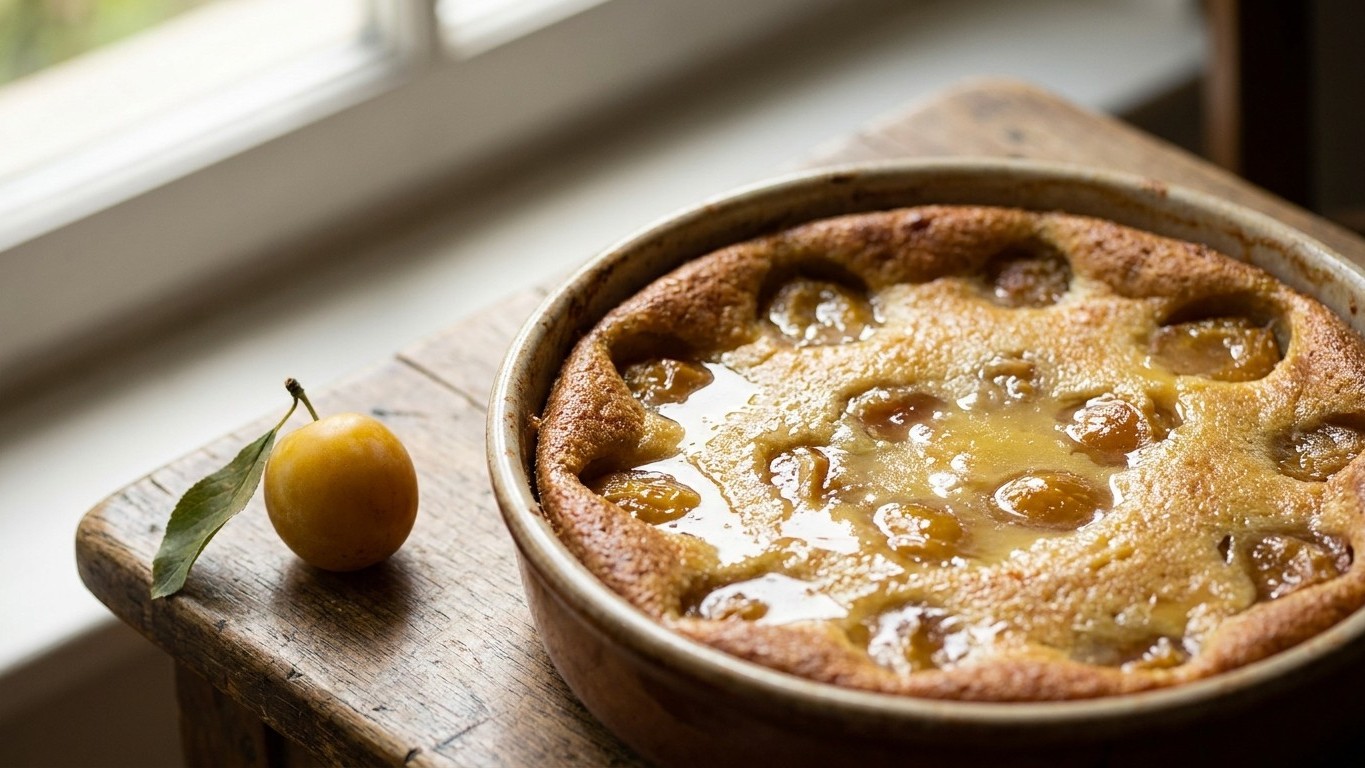
Ninety minutes of prep saved on a busy afternoon. That was the plan when the mirabelles got pitted early, tucked into the fridge, ready to go straight into the batter the next morning. Instead, the clafoutis came out of the oven looking golden and set at the edges, then collapsed into a wet, custardy pool the second a knife hit the center. The fruit had been the problem all along.
Mirabelle plums are deceptively juicy. With 76 calories per 100g, mirabelle plums contain 78% water, which is higher than most stone fruit sold at the farmers market. Once the skin is broken and the pit removed, that water doesn’t stay put. It seeps out slowly, pooling at the bottom of whatever container holds the fruit, and by the next day there’s a small puddle of mirabelle juice sitting quietly at the bottom of the bowl, ready to get poured straight into the batter along with the fruit.
Key takeaways
- A bowl of pitted mirabelles sits quietly releasing juice overnight—a process nobody intended to start
- That pooled juice destroys the precise liquid-to-protein ratio a custard clafoutis depends on to set
- The edges cook while the waterlogged center stays liquid, no matter how long the oven runs
The Maceration Nobody Meant to Start
This is basically what happens on purpose when making jam. Home preservers know the drill: cut the fruit, add sugar, let it sit overnight so the sugar draws out the natural juices before cooking. Macerating the fruit and sugar in a cool place for a few hours releases the juice, that’s the entire point of the technique when the goal is a syrupy jam base.
The issue is that a clafoutis batter isn’t a jam pot. It’s a delicate custard built on eggs, milk, and a small amount of flour, designed around a fairly precise ratio of liquid to protein. Sitting pitted mirabelles overnight quietly turns them into mini maceration vessels, and the batter poured over them the next day is no longer meeting dry, intact fruit. It’s meeting fruit that has already wept a good portion of its water weight, water that has nowhere to go but into the custard around it.
Mirabelles also don’t sit still biologically once they’ve left the tree. They’re climacteric fruit, meaning they continue to ripen after harvest, produce ethylene, and are sensitive to mechanical damage. Pitting is about as mechanical as fruit handling gets, cutting through the flesh accelerates the softening that was already underway, which is part of why a bowl of pitted mirabelles left overnight often looks noticeably softer and wetter than the same fruit would have looked freshly halved that morning.
Why the Custard Never Caught Up
A clafoutis sets through gentle, even coagulation of egg proteins in the batter as it bakes, similar to what happens in a flan or a baked custard, just with less sugar and a lot more fruit. That process depends on the batter reaching a fairly consistent temperature throughout the dish. Extra liquid pooling around the fruit doesn’t just dilute the batter’s protein ratio; it also creates cooler, wetter pockets that take longer to reach setting temperature than the rest of the dish.
That’s the mechanism behind the classic “sets at the edges, stays liquid in the middle” failure. The outer batter, in direct contact with the hot dish, sets on schedule. The center, sitting in a small reservoir of mirabelle juice released overnight, never quite gets there in the same baking window, extending the time in the oven to compensate usually just overcooks and browns the edges before the center has a chance to catch up.
Several bakers who work with juicy stone fruit have landed on the same fix independently: pat the fruit dry, or let it drain briefly, right before it goes anywhere near the batter. For very juicy mirabelles, draining them for a few minutes on paper towel before arranging them preserves the texture of the clafoutis. It’s a small, almost throwaway step, but it’s the difference between fruit that releases its juice into the batter during baking (where the custard can absorb it gradually as it firms) and fruit that’s already sitting in a puddle before the oven even gets involved.
The Fix That Actually Works With the Clock
None of this means the mirabelles have to be pitted at the last possible second every single time. The trick is choosing which kind of “ahead of time” is actually compatible with a clafoutis. Pitting and refrigerating raw fruit for hours invites exactly the slow weeping described above. But pitting the fruit and tossing it immediately with a spoonful of sugar, the way jam-makers do on purpose, front-loads the juice release into a liquid that can simply be drained off before baking, rather than one that quietly accumulates, unnoticed, at the bottom of a covered bowl.
The other lever is the recipe itself. If mirabelles are visibly very ripe and glossy with juice, it’s worth quietly cutting the milk by a small amount, since the fruit is about to contribute more liquid than a firmer batch would. It’s a minor adjustment, but it accounts for exactly the kind of variability that made this particular clafoutis fail in the first place: not a bad recipe, not a bad oven, just fruit that had already given up more of itself than the batter was built to handle.
One more detail worth knowing before the next batch: mirabelle season is short, typically just a few weeks in late summer, so the fruit sold in most markets is often picked closer to full ripeness than plums meant to travel further. That ripeness is exactly why it’s worth pitting them the same day they go into the oven, not the night before.
Sources : homedistiller.org | youandmi.fr