
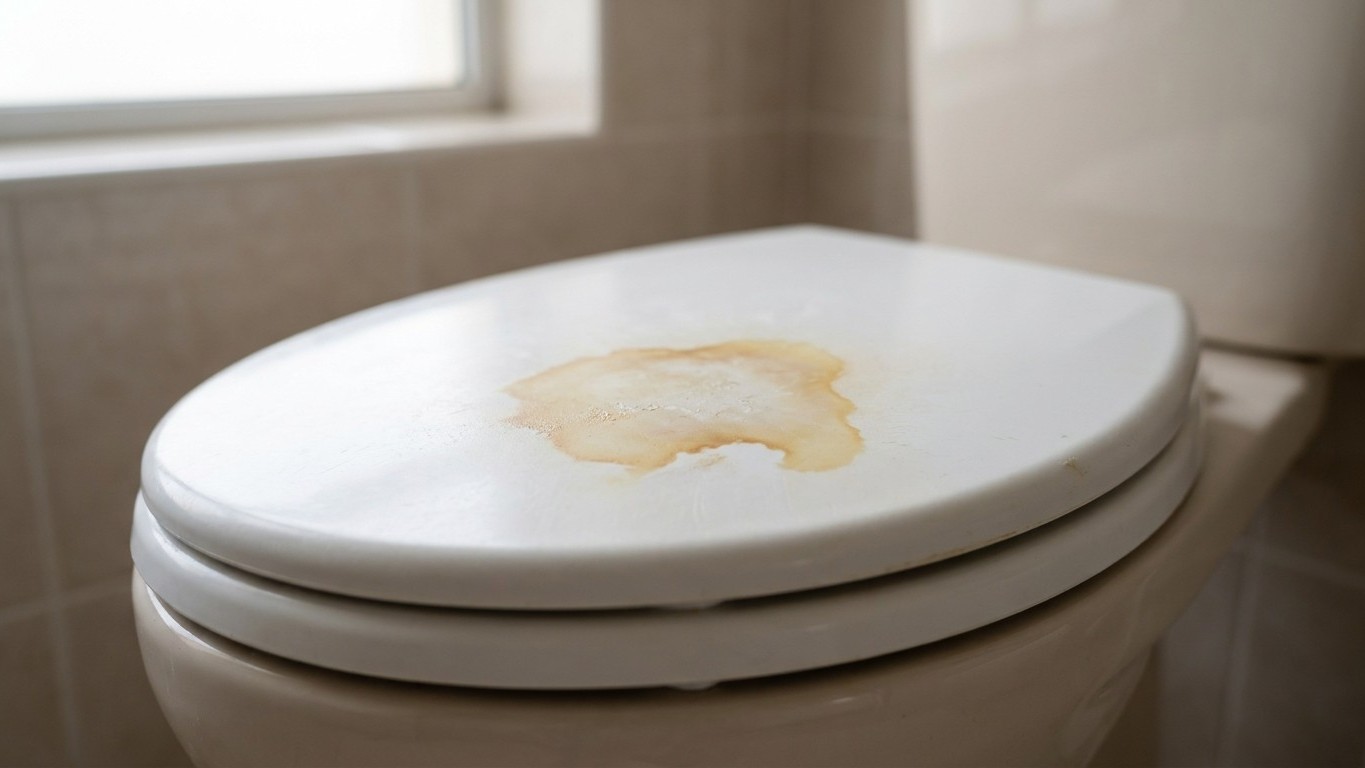
That satisfying “click” of hope you feel when you spray bleach on a stubborn yellow stain? It’s a trap. An hour is all it takes to turn a quick whitening fix into a permanent, irreversible stain that no amount of scrubbing will ever undo.
Here’s what nobody tells you before you reach for that bottle: bleach doesn’t clean yellow off a toilet seat. It reacts with it. Because chlorine bleach is corrosive, a chemical reaction can occur between it and the surface of a toilet seat, causing the color of the seat to permanently turn yellow. The very product marketed as the ultimate whitener is, on plastic, doing the opposite of what the label promises.
Key takeaways
- Bleach chemically reacts with plastic polymers, permanently discoloring them yellow—the opposite of what the label promises
- One hour is all it takes for the damage to become irreversible; hot bleach accelerates the reaction to mere minutes
- Enzymatic cleaners, vinegar, and baking soda work better on toilet seats without triggering the oxidation reaction that ruins plastic
What’s actually happening when bleach sits on plastic
The science here is almost cruelly ironic. Sodium hypochlorite, known as chlorine bleach, can discolor plastic and a variety of other materials, turning them yellow, because the corrosive nature of bleach can react with the polymers that the surface is made of. That reaction doesn’t ask for permission, and it doesn’t care that you were trying to help.
Plastic experts describe it as a kind of accelerated aging. The bleach breaks molecular bonds, changing how light reflects on the surface, it’s cosmetic but signals early degradation. Not every plastic reacts the same way, either. Polyethylene and polypropylene stand as the champions of bleach resistance, featuring stable carbon-carbon bonds that resist oxidation effectively, while polycarbonate, PVC, and ABS show greater sensitivity to bleach. Toilet seats are frequently molded from these more sensitive plastics, which explains why so many households report the exact same disaster after the exact same well-intentioned move.
And temperature Matters More Than most people assume. Hot bleach solution accelerates chemical reactions, potentially causing damage in minutes rather than hours. If your bathroom runs warm, or if you poured the bleach straight from a bottle that had been sitting in a sunny cabinet, the clock on ruining your seat was already ticking faster than you realized.
Why that one hour sealed the damage
The instinct to “let it sit” is understandable, most cleaning products work better with dwell time. Bleach breaks that rule entirely on plastic surfaces. Cleaning guides specifically warn not to leave bleach on a plastic seat for more than an hour, and by the time most people check back, the damage has already set in. You cannot reverse yellowing on plastic toilet seats caused by bleach, as the bleach burns the fibers of the plastic seat, so you can’t scrub it away.
What makes this particularly maddening is that the discoloration often isn’t even about hygiene. If bleach has already stained your toilet seat, there’s not much hope of reversing the damage, and to return your seat to its nice, white finish, you may need to paint it. Painting a toilet seat sounds almost absurd, but for many households it becomes the only realistic option short of buying a replacement.
Full disclosure : I’ve made this exact mistake myself, on a seat that was maybe eight months old. I assumed the manufacturer had used cheap plastic. Turns out I was the problem, not the seat.
What actually removes yellow, without the risk
The uncomfortable truth is that bleach was never designed to whiten hard plastic surfaces the way it whitens fabric. Professional plumbing and cleaning resources consistently point elsewhere. The best way to get yellow stains off a toilet seat is by using products made specifically for this purpose, while avoiding soap, bleach, and other harsh household chemicals that can damage the finish.
Enzymatic cleaners tend to outperform bleach on the exact stains people are trying to fight. Contrary to popular belief, cleaning a stained toilet with bleach will not remove urine or hard water stains, you need a cleaner that has enzymes in it, designed for this type of stain removal job. That’s because most yellowing on a toilet seat isn’t a hygiene failure at all. Hard water is rich in minerals, and when the water evaporates, it leaves behind mineral deposits, commonly known as limescale, that also turn yellow over time and are damaging to the plastic.
For a gentler at-home approach, several low-risk options exist:
- Hydrogen peroxide (3%) applied directly to the stain and left briefly
- A baking soda paste, scrubbed with a soft cloth
- White vinegar, particularly effective on mineral and limescale buildup
To remove yellow stains on a toilet seat, a solution of baking soda, vinegar, lemon juice, hydrogen peroxide, or a dedicated toilet cleaner tends to work far better than straight bleach. None of these carry the same risk of triggering the oxidation reaction that leaves plastic permanently discolored.
If you still want to use bleach, here’s the only safe way
Some cleaning routines genuinely call for a bit of bleach, particularly for disinfecting rather than whitening. The rule that actually protects your seat is dilution, not duration. If you want to use bleach to clean your toilet seat, dilute it with water, using at least one part bleach to five parts water. Even then, treat contact time as non-negotiable rather than flexible. Bleach-resistant plastics can safely tolerate a diluted bleach solution for 10 to 15 minutes maximum, while more sensitive plastics should limit exposure to five minutes or less.
An hour, was never a safe number to begin with, not five minutes past it, not for any plastic seat sold today. Always rinse immediately after the recommended contact time expires to halt the chemical reaction before it has any chance to set.
One detail rarely mentioned: sunlight causes an almost identical yellowing effect through UV exposure, meaning a seat near a bright bathroom window can develop the same permanent discoloration even if bleach never touches it. Yellowing can also result from prolonged sun exposure, and UV damage can cause permanent color changes, just like bleaching. So before blaming your last cleaning session, check where your toilet actually sits relative to that window.
Sources : bestplumbersclub.com | housedigest.com