
Walk down any bakery aisle and you’ll spot it immediately: “made with real butter,” “all butter,” sometimes stamped right on the wrapper like a badge of honor. Shoppers reach for it instinctively, assuming that label is the golden ticket to bakery-quality croissants and puff pastry at home. It isn’t. The butter that actually makes those paper-thin, shattering layers possible has almost nothing to do with the word “butter” on a label and everything to do with a number most people never check: water content.
Professional pastry chefs don’t shop by slogan. They shop by moisture percentage. And once you understand why, you’ll never look at a butter wrapper the same way again.
Key takeaways
- What makes the difference between soggy homemade pastry and bakery-quality flakiness has nothing to do with the marketing on the wrapper
- The butter pros actually use is engineered around a single variable that most shoppers never check—and it’s legal for two butters to behave completely differently while wearing identical labels
- That 2% difference in fat content isn’t a rounding error; it’s the molecular secret that separates butter that shatters from butter that greases
The Fine Print Behind “All Butter” Claims
In the United States, federal regulation only requires butter to contain a minimum of 80 percent milkfat, with the remainder made up largely of water and milk solids. That threshold has stayed unchanged for decades, and it’s exactly why two products both legally labeled “butter” can behave in wildly different ways once they hit a rolling pin. A standard American stick, sitting right at that 80 percent mark, carries noticeably more water than what professional bakers reach for when the goal is lamination, the repeated folding of butter and dough that builds the hundreds of layers found in croissants, puff pastry, and mille-feuille.
French bakers have a name for the butter built specifically for that job: beurre de tourage, or “dry butter.” An ingredient key will make all the difference: the tourage butter, also called dry or extra-dry butter. It isn’t a marketing gimmick. It’s a distinct product engineered around one variable that regular butter never bothers to control.
Meet the Butter That Actually Holds a Croissant Together
The difference starts with fat percentage but it’s really about what’s left after you subtract the fat. Beurre de tourage stands out for its high lipid concentration and low water content. Unlike traditional butter, which generally contains 82% fat, tourage butter runs at a 84 percent minimum. That two-point gap sounds trivial until you watch it in action. This 2% difference radically changes how the fat behaves under the rolling pin. A reduced moisture content makes the butter less soft at room temperature. It has a stable molecular structure that lets it stretch into thin layers without breaking or blending into the dough.
Water percentages vary by brand and source, but the pattern holds everywhere: tourage butter has a firm, dry and plastic texture. It has a lower water content with a moisture rate of 14% and a higher fat percentage compared to classic butter (84% versus 82%). Some producers push the gap even further. Unlike traditional butter which contains about 16% water, tourage butter contains only 10 to 12%, a spread that changes everything about how the dough handles under a rolling pin during the multiple folds professional lamination requires.
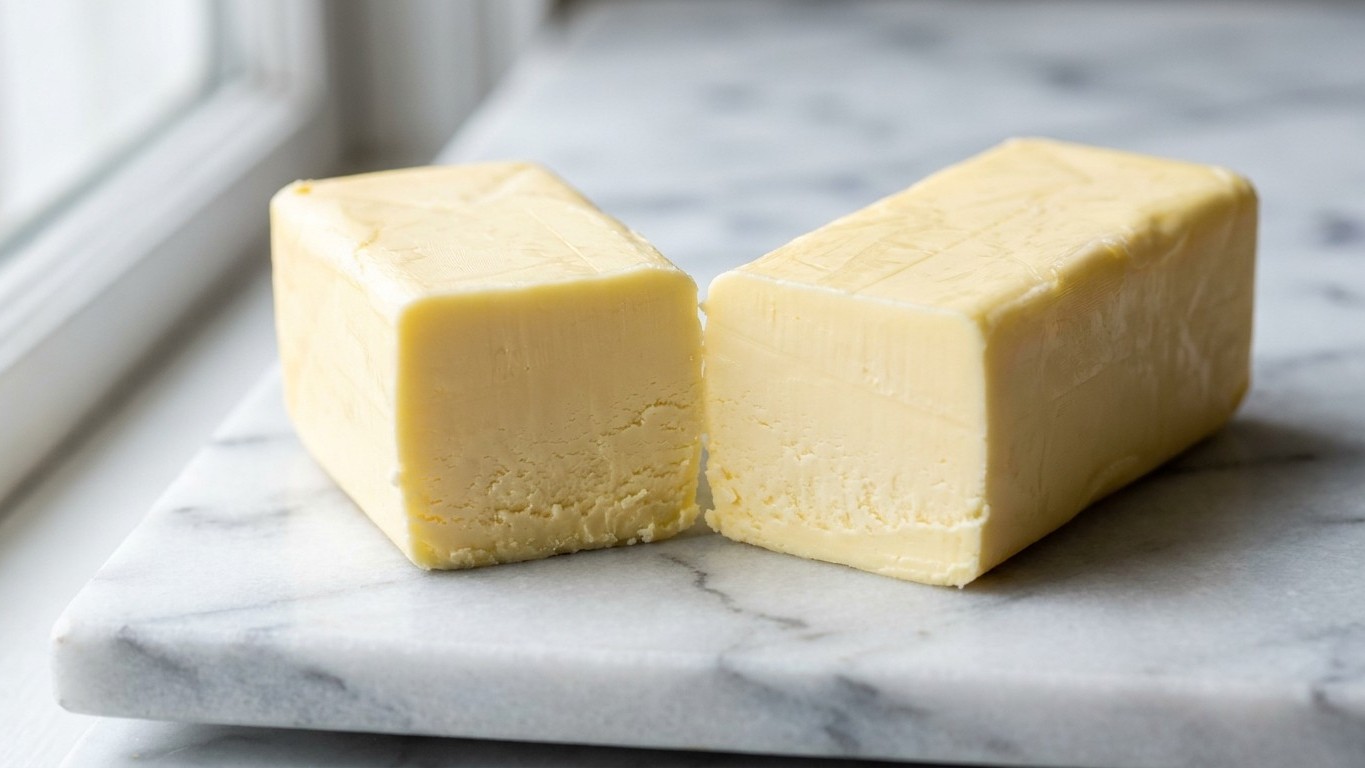
That drier, firmer texture isn’t just about baking chemistry, either. Chefs also describe it as more flexible under pressure: plasticity refers to the butter’s ability to deform without breaking. A good tourage butter bends into a U shape without cracking when removed from the refrigerator after 30 minutes. This property comes from the crystalline structure of the fats. Regular high-water butter simply doesn’t have that same give. It either turns greasy and slides around under the rolling pin, or it snaps and tears, punching holes straight through your carefully built layers.
Why the Water Actually Matters at 400 Degrees
Here’s the part that flips conventional wisdom: water isn’t the enemy of flaky pastry. It’s the engine. During baking, gaps form between the layers left by the fat melting; the pastry is leavened by steam from the water content of the fat as it expands, puffing the separate layers. Every laminated pastry, from a supermarket puff pastry sheet to a $6 Parisian croissant, relies on that steam explosion to separate dough from fat and create lift.
So why does less water in the butter produce a better result, not a worse one? Because the water inside the dough itself, not the butter, does most of the heavy lifting for steam. Their advantage also lies in their low water content, sometimes around 14% humidity, which limits slippage in the dough. Less water gives more predictable behavior. The butter stays better in place between the layers of dough and helps achieve a cleaner separation during baking. The steam produced by the moisture in the base dough then pushes the layers apart, while the fat prevents the layers from fusing together. a soggier butter doesn’t add more rise, it just melts too fast, seeps into the dough, and glues layers together before the oven ever gets a chance to work its magic.
Bakers who’ve run side-by-side comparisons notice this immediately. During recipe development, testing different types of butter in puff pastry revealed quite a contrast in flavor and flakiness between them. European butter has a higher fat content and less water than American butter, resulting in a more tender, puffier, flakier puff pastry. The taste difference isn’t imaginary, either: a butter adapted for lamination has real gustative qualities: intensity, since less water means less dilution and more richness. Less water quite literally means more concentrated milkfat flavor in every bite.
What This Means at Your Own Kitchen Counter
You don’t need a professional supplier account to benefit from this. European-style butters sold in most well-stocked U.S. grocery stores, the ones labeled with terms like “European-style” or carrying a higher fat percentage on the nutrition panel, sit closer to that 82-84 percent range than standard American sticks. Look at the fat grams per tablespoon before you look at the word “butter” on the front. In France, the professional versions are often tied to specific regions: produced in the departments of Charente, Charente-Maritime, Deux-Sèvres and Vienne, or produced in Normandy, in Calvados and la Manche, areas with protected designation status roughly equivalent to how Parmigiano-Reggiano is tied to its origin in Italy.
For a weekend croissant project, the fix is simple: buy the driest, highest-fat butter you can find, keep it cold but pliable, and stop trusting the front label to tell you anything useful about how it’ll behave under a rolling pin. The percentage on the back is the only number that’s ever told the truth.
Sources : tasteeurope.com | wellri.com