
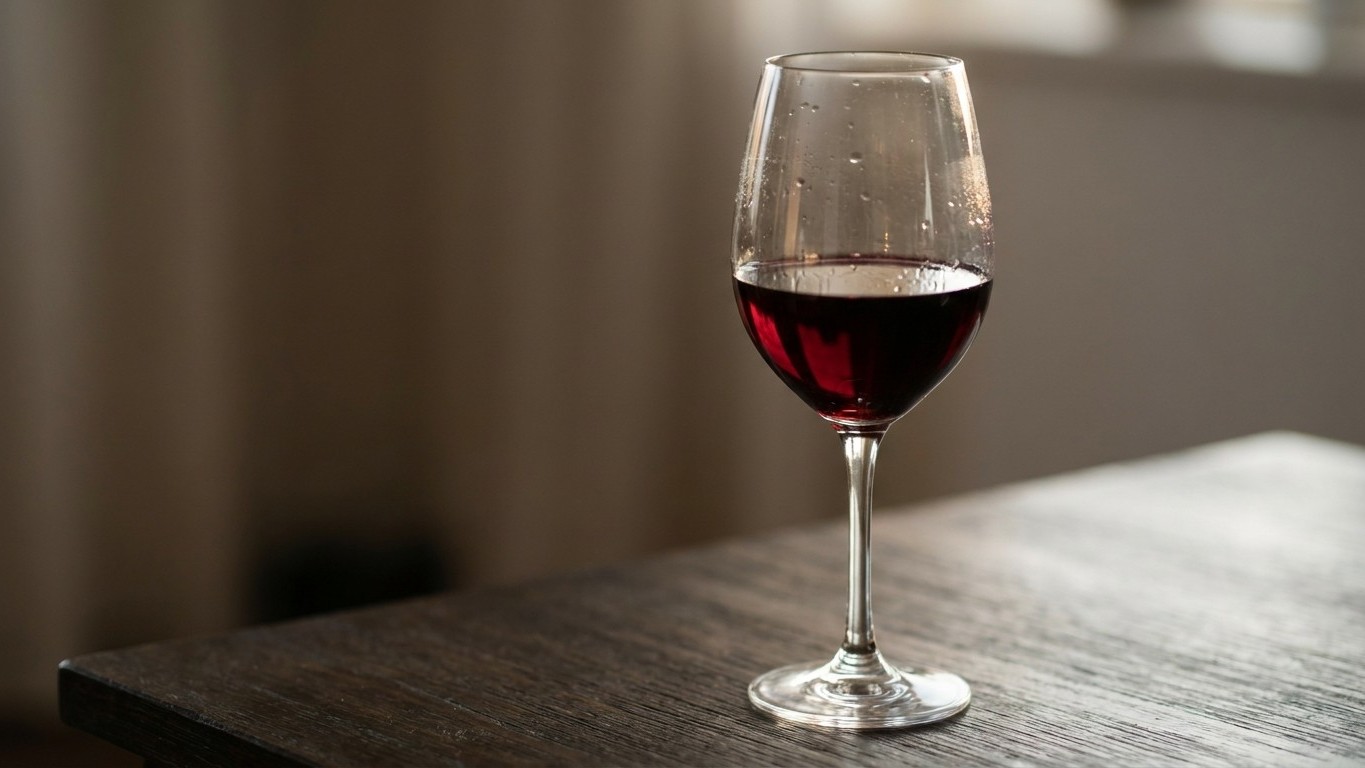
Pour a glass of red at 7 p.m., feel the tannins settle, call it self-care. That’s the ritual millions of American women repeat nightly, convinced that one drink is basically nothing. But the moment that wine hits your bloodstream, your liver converts it into a compound called acetaldehyde, and the World Health Organization’s cancer agency has placed that substance in exactly the same danger category as cigarette smoke.
Not a similar category. The same one. The International Agency for Research on Cancer classifies alcohol as a Group 1 carcinogen, alongside tobacco, asbestos, and formaldehyde, the highest level of classification for when there is enough evidence to conclude that it can cause cancer in humans. And it isn’t just the ethanol itself. Ethanol in alcoholic beverages and the acetaldehyde associated with consumption of alcoholic beverages are both classified as carcinogenic to humans, Group 1.
Key takeaways
- Your body turns alcohol into a DNA-damaging compound the WHO classifies identically to cigarette smoke
- Recent federal guidance abandoned decades of ‘one drink is safe’ messaging—here’s what changed the science
- One daily drink raises cancer risk by 40% across seven types, yet 17% of alcohol-related cancer deaths occur in people following official guidelines
What actually happens between the glass and the cell
Here’s the part almost nobody explains at brunch. One way the body metabolizes alcohol is through an enzyme called alcohol dehydrogenase, or ADH, which converts ethanol into the carcinogenic metabolite acetaldehyde, mainly in the liver. That metabolite doesn’t just pass through quietly. Exposure to high levels of acetaldehyde, a potent genotoxic metabolite, is a major determinant of alcohol-related carcinogenesis, particularly in the upper aerodigestive tract. Genotoxic means it damages DNA directly, the same mechanism that makes tobacco smoke so dangerous.
The body’s cleanup crew, meanwhile, is oddly underequipped for the job. The capacity of the oral or gut microbiome and mucosa to eliminate acetaldehyde is limited because of low enzyme activity, which results in accumulation of acetaldehyde at genotoxic concentrations in saliva, gastric juice, and colonic contents. That accumulation is compounded, quite literally, for a huge portion of the world’s population. Over 500 million people with Eastern Asian roots have been estimated to be carriers of a deficient ALDH2 enzyme, and if they are heavy drinkers, their risk of oral, pharyngeal, and esophageal cancers is over 10-fold higher than in drinkers with the normal enzyme. The flushed cheeks after a single glass that some people experience isn’t a cute quirk. It’s a visible sign of acetaldehyde piling up faster than it can be cleared.
The “one drink a day” comfort zone doesn’t hold up
For decades, U.S. guidance drew a tidy line: one drink daily for women, two for men, and you were considered “moderate,” essentially off the hook. That line has been quietly crumbling. A recent U.S. surgeon general report deviated from 45 years of federal assurances that one to two drinks per day are unlikely to harm health, telling Americans that no amount is safe when it comes to preventing at least seven types of cancer. Among those seven, alcohol increases the risk of developing at least seven types of cancer, and according to the surgeon general’s report, alcohol ups the risk of breast cancer more than any other cancer in women.
The numbers attached to that single nightly pour are more sobering than the ritual suggests. Overall, people who had one drink a day had a 40% higher risk of developing any of seven types of cancer, mouth, throat, voice box, esophagus, breast, liver, and colorectal. And this isn’t a theoretical statistic buried in a lab somewhere. The surgeon general cited a study showing that about 17% of alcohol-related cancer deaths in 2021 to 2022 were in people whose alcohol intake did not exceed those official guidelines, amounting to 650 deaths that year that could possibly have been avoided. People following the rules to the letter and still landing in the risk column. That’s the contradiction nobody wants printed on a wine label.
Nationally, the scale is hard to ignore. This advisory highlights alcohol use as a leading preventable cause of cancer in the United States, contributing to nearly 100,000 cancer cases and about 20,000 cancer deaths each year, even though alcohol use is very common, with 72% of U.S. adults reporting they consumed one or more drinks per week. Meanwhile, less than half of U.S. adults are aware of the relationship between alcohol consumption and cancer risk.
Why the message never quite lands
Franchement, this is the gap that fascinates me most as a journalist covering wellness trends. We’ve spent twenty years learning to fear sunscreen-free afternoons and ultra-processed snacks, yet a substance sitting in the same regulatory tier as tobacco gets a pass because it comes in a pretty bottle with a cork. Fewer than half of Americans know that alcohol can increase the risk of certain cancers, despite growing evidence supporting the connection over the past few decades, warnings from major cancer and public-health organizations, and classifications of alcoholic beverages as human carcinogens. A 2025 MD Anderson survey found something similarly striking: almost 60% of U.S. adults are unaware or uncertain about the link between alcohol and cancer.
The comparison to smoking isn’t just symbolic, either. For oral and pharyngeal cancers, the harms associated with using both alcohol and tobacco are multiplicative, greater than would be expected from simply adding the individual harms together. One habit doesn’t just sit next to the other. It amplifies it.
So, does this mean panic over every pour?
Not exactly, and this is where nuance actually matters. Doctors interviewed on the topic are careful to separate population-level risk from individual fate. While there might be seven cancers that have an increased probability of occurring with exposure to increasing levels of alcohol, it doesn’t mean that if you drink alcohol you’re going to get one of those seven cancers, and it doesn’t mean that if you avoid alcohol you’re not going to get them. Risk is cumulative and probabilistic, not a guarantee stamped on every glass.
What’s changed isn’t the biology. Acetaldehyde has behaved the same way in human cells for as long as we’ve fermented grapes. What’s changed is the willingness of public health authorities to say the quiet part out loud: the WHO has stated that no safe amount of alcohol consumption for cancers and health can be established. The habit that felt like harmless self-care might just be the one health trend of this decade still hiding in plain sight, uncorked, unlabeled, and largely unquestioned.
Sources : ncbi.nlm.nih.gov | ncbi.nlm.nih.gov