
The plasterboard went up fast, glued straight over the old masonry, foam core snapped tight into place with a rubber mallet. Three weekends, a few hundred dollars in materials, and suddenly the draft that had haunted that north-facing bedroom for two winters was gone. The room felt warmer within days. What I didn’t know, standing there admiring my handiwork, was that I had just built a small, sealed pocket where every ounce of moisture in that wall would have nowhere left to go.
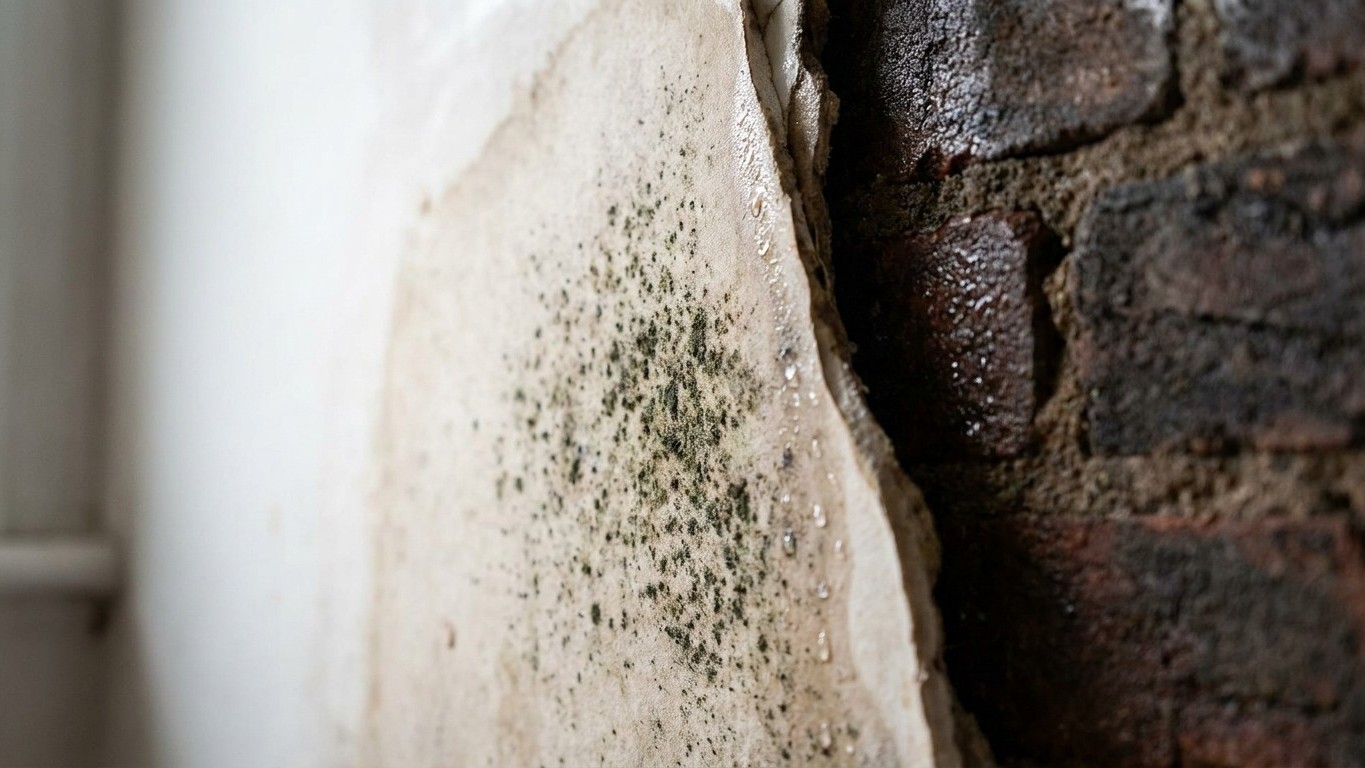
By January, a faint mustiness crept in near the baseboard. By February, a brownish halo bloomed at the bottom corner of one panel, right where the exterior wall meets the floor. I pulled back a section expecting nothing much. What I found was damp insulation, a slick film on the old brick behind it, and the unmistakable dark speckling of mold creeping up the back of the board I’d installed with so much pride.
Key takeaways
- Insulation panels don’t just block cold—they also trap the moisture that old walls need to release naturally
- The mold wasn’t from the materials themselves, but from humid indoor air condensing against a cold surface with nowhere to escape
- Proper insulation requires understanding vapor permeability, air gaps, and humidity control—not just gluing panels to walls
Why cold walls sweat once you seal them
Here’s the mechanism nobody explained to me at the hardware store: insulating panels don’t just block cold, they also block the slow, ambient drying that a bare wall gets from room heat and airflow. The condensation isn’t just on the surface. It’s actually inside the wall assembly, including inside the old insulation in the wall. Warm air from inside the house carries water vapor, and that vapor migrates toward the coldest surface it can find, which after a rushed insulation job is usually the original wall hiding behind the new panel.
Building scientists have a blunt way of putting it. Think of a pop can pulled out of a cooler on a hot day: it starts to sweat because the cold soda meets warm air. That’s essentially what happens in walls when two very different temperatures meet. Except in my case, the Temperature clash was happening on the hidden side of a brand-new insulation panel, against a 100-year-old brick wall that had never been sealed and had always relied on breathing to stay dry.
Forums full of contractors and DIYers describe the exact same trap. If you pull the insulation from a concrete wall in winter, there is a good chance you will find the surface damp due to air leaks, moisture from inside condensing on the cooler surface. One renovator restoring a century-old brick house put it plainly after discovering the same thing I did: a turn-of-the-century brick house suffered moisture damage after being insulated internally with a stud frame, insulation, vapor barrier, and drywall, with no sill paper, resulting in mold in the sill.
The panel wasn’t the problem. The seal was.
This is the part that surprised me most, and honestly reshaped how I think about “quick fix” insulation. It’s not the foam or the mineral wool that causes the mold. It’s what happens when you trap humid indoor air against a cold surface with nowhere for that moisture to escape. Condensation from poorly insulated areas or inadequate ventilation creates a favorable environment for mold, and poor ventilation combined with installation errors traps moisture, creating stagnant conditions that foster mold development. A panel glued flush against an old wall, with no gap, no vapor control layer, and no way for the assembly to dry toward either side, behaves exactly like a greenhouse for spores.
Older homes are particularly vulnerable to this because they were never built to be airtight. In regions where seasonal humidity swings are common, homes are especially vulnerable to hidden moisture problems, as warm, humid air followed by cooler indoor temperatures create the perfect conditions for condensation inside walls. My house, built long before anyone worried about R-values, had solid masonry walls that had spent decades slowly wicking moisture in and out without issue. Gluing an impermeable layer directly onto that wall didn’t stop the moisture from arriving. It just stopped it from leaving.
The building-science consensus on how to handle this divides almost entirely along vapor permeability and placement. A vapor barrier is a layer in the building envelope that prevents water vapor from entering the wall cavity, and the class required depends on the climate zone and cladding type. In cold-climate homes like mine, that barrier needs to sit on the warm side of the insulation, meaning close to the living space, not sandwiched somewhere that traps moisture against masonry. Get the order wrong, or skip it entirely while sealing the surface anyway, and you’ve essentially built a sponge with no drain.
What actually needs to happen behind the boards
Ripping the panels back out was the only honest option. What went back up looked less pretty on paper but performed infinitely better in practice: a small airgap against the masonry, a vapor-permeable mineral wool rather than a sealed foam, and a proper interior-side vapor retarder installed continuously, taped at every seam, before the new plasterboard went on. The wall needed to be allowed to dry toward the inside during summer while staying protected from indoor moisture in winter, rather than being locked in a single, static, cold-side condition all year.
Humidity management inside the room mattered just as much as anything happening inside the wall cavity. Keeping indoor humidity below 60 percent, ideally between 30 and 50 percent relative humidity, is one of the clearest ways to prevent the conditions mold needs. A hygrometer costs less than a takeout dinner and would have flagged the problem months before I ever pulled a panel off the wall. Since the key to mold control is moisture control, mold should be cleaned up promptly and the underlying water problem fixed rather than painted over.
What nobody tells you when you’re standing in the insulation aisle, weighing panels against your heating bill, is that thermal comfort and moisture management are the same problem wearing two different hats. Fix one without understanding the other, and you haven’t insulated your wall. You’ve just relocated the cold, damp spot from the room you can see to the cavity you can’t, and given it a full season to grow before you notice the smell.
Sources : quora.com | retrofoam.com