
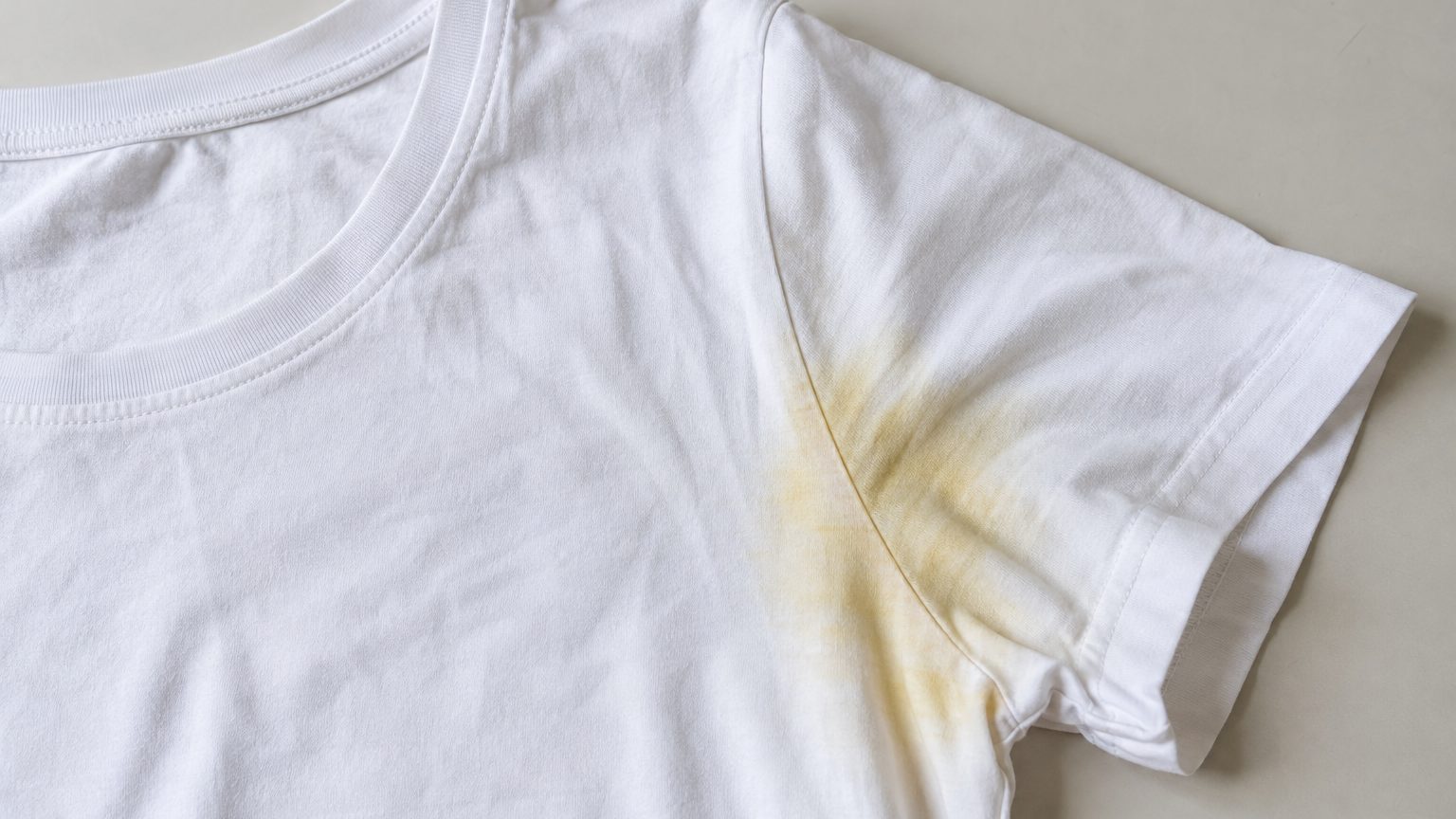
The aluminum compounds in antiperspirants react with sweat, and that reaction is what leaves yellow stains on your shirts. Sweat on its own is mostly water and salt, and it dries clear.
The fabric ends up holding the evidence.
- Aluminum in antiperspirants reacts with sweat proteins to create yellow stains that accumulate over multiple wears.
- Dryer heat permanently sets faint stains into fabric, so air-drying treated garments prevents discoloration.
- Applying antiperspirant 2-3 minutes before getting dressed or the night before significantly reduces stain formation.
The chemistry under your sleeve
Apocrine glands cover the underarms and produce sweat packed with fats and proteins. Those proteins react with aluminum to create yellow stains on cotton shirts. The result is a yellowish substance that soaks into the fabric.
Franchement, the label on your stick matters more than most people think. Deodorants neutralize odor, while antiperspirants block sweat with aluminum-based compounds. A product labeled “antiperspirant deodorant” contains aluminum. Pure deodorants can still discolor fabric, especially if they contain oils, but they are far less likely to leave stubborn yellow marks.
White streaks are a separate problem. They come from deodorant rubbing off onto fabric, especially before it has dried.
Why one wear is never the culprit
One wear rarely ruins a shirt. The damage is cumulative. Body heat melts and spreads the product, washing removes only part of it, and dryer heat sets what is left into the fibers. After enough cycles, the patch looks dark yellow, stiff and crusty.
Heat is the accomplice. The University of Georgia’s extension service warns against ironing or heating a deodorant stain, because the combination of chemical and heat interaction will ruin most fabrics.
The dryer is where a faint tint becomes permanent.
Stopping it before it starts
application habits do more than you’d expect. Most staining happens when wet product transfers onto fabric and mingles with sweat throughout the day. Give it two to three minutes to dry, or apply it the night before. A thick layer makes the transfer worse, and worn shirts should go in the wash within a day or two, not sit in the hamper.
Switching products works too. Aluminum-free formulas don’t trigger the chemical reaction with sweat. The trade-off is obvious: you lose the sweat-blocking, and many people want that power, so the goal is to use antiperspirants smarter rather than ditch them.
There is also a retro option. Underarm liners are applied directly to clothing, and they were common before chemical antiperspirants, mostly to protect fine dresses.
Rescuing the shirts you already own
Treat first, wash second. Treat before heat, and use enzyme detergent or oxygen bleach only where labels allow. For a baking soda treatment, mix three parts baking soda with one part water, let it work for up to an hour, then rinse or wash as normal. You may need to repeat it.
On whites only, mix equal parts water and hydrogen peroxide and soak the stain for 30 minutes to an hour. White vinegar is the gentler route: 2 tablespoons in 1 cup of water, soaked for 30 minutes to an hour. Resist the urge to reach for chlorine bleach. It seems like the obvious fix for white clothing, but it can make the stain worse. Stain guides do disagree on this (the Georgia extension lists bleach as a last step), so test a hidden seam first and read the care label.
Colored clothes have a different issue. Aluminum chloride is acidic and may shift some dyes, but a few drops of ammonia on a new stain or white vinegar on an old one can restore the color.
Sources : athenaclub.com | curiebod.com