
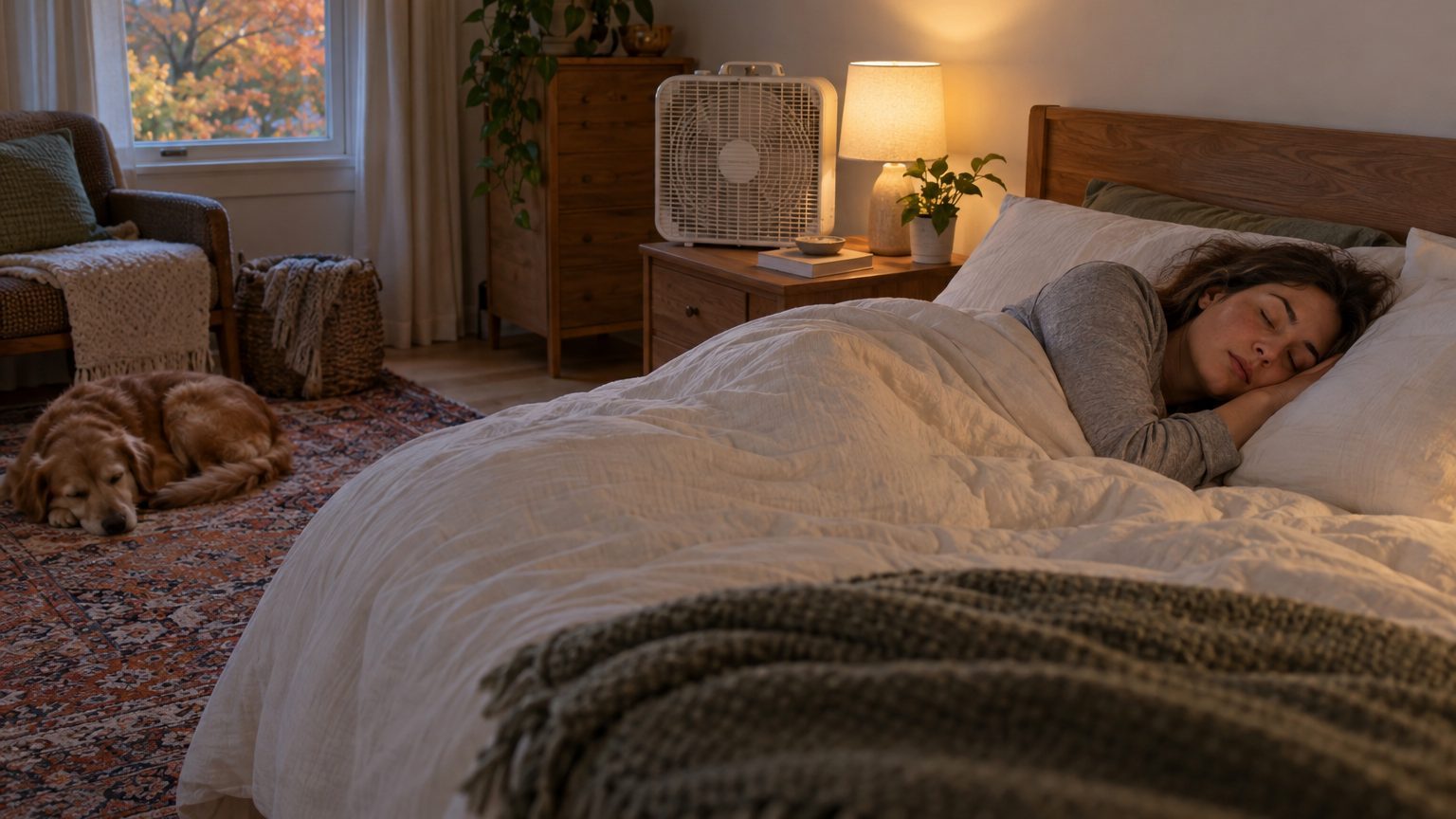
A box fan humming beside the bed doesn’t cool the air by a single degree. It moves air across your skin so sweat evaporates faster, which feels like relief, and that’s the whole trick. The same mechanism explains most of what can go wrong overnight.
The short answer: it isn’t dangerous, but it isn’t neutral either.
- Moving air across mucous membranes causes dry throat, stuffy nose, and gritty eyes, especially in already-dry rooms.
- Fans circulate dust, pet dander, and mold spores collected on the blades directly into your breathing space.
- Pointing the fan at a wall or ceiling instead of your face, using low speed, and placing it several feet away reduces drying and irritation.
What moving air does to your nose, throat and eyes
Air blowing across mucous membranes dries them out. Wake up with a scratchy throat, a stuffy nose or gritty eyes after a fan night, and that’s usually the culprit. Dry membranes produce thicker mucus, which is why sinus-prone sleepers and people with asthma or allergies tend to notice first. Contact lens wearers often do too, and so do those who sleep with their mouths open.
Stiff necks are the other classic complaint. Hard evidence is thin, but a steady stream of air on exposed shoulders and neck for eight hours is not what muscles ask for, and plenty of sleepers report tightness that vanishes when the fan is redirected.
As for the “fan death” belief in South Korea, where people fear that a fan running in a closed room can suffocate you, medical experts find no support for it. Your fan is not a villain. Where it points is the problem.
Healthy sleepers in a reasonably humid room have little to worry about.
The dust problem nobody wants to look at
Run a finger along the grille of any fan that’s been on a shelf since August. That gray felt is dust, pet dander and, in humid climates, sometimes mold spores, and every time the blades spin they fling a share of it into the room. A fan is a tiny weather system, and it doesn’t distinguish between clean air and the lint under your dresser. Turbulence near the bed can also lift settled dust back into the air you’re breathing.
Humidity matters just as much. The EPA recommends keeping indoor humidity between 30 and 50 percent: below that, membranes dry out faster, and above it, dust mites and mold thrive. A fan running in an already dry, heated room in early fall doubles up on the drying effect.
Cleaning takes five minutes. Unplug it, wipe the blades with a damp microfiber cloth, and vacuum the grille every couple of weeks during heavy use. Wash your bedding weekly in hot water, because the mites that bother allergic sleepers live there, not in the fan.
A grimy fan is an allergen sprinkler with a power cord.
How to set it up so you actually sleep better
Franchement, positioning is where most people go wrong. They aim the fan at their face because that’s where the relief is strongest, and that’s also where the drying is strongest. A few small changes fix most of it:
- Point the fan at a wall or the ceiling so the air circulates indirectly, or aim it at your feet.
- Use the lowest speed that still feels comfortable, and turn on oscillation.
- Place it several feet from the bed rather than inches away.
- Set a timer if you tend to wake up chilled in the early morning hours.
Temperature still does the heavy lifting. Sleep specialists generally point to a bedroom between roughly 60 and 67°F as the sweet spot, and a fan lets you reach comfort without dropping the thermostat that low. Opening a window on the opposite side of the room creates a cross-breeze that works better than a fan alone, though in high-pollen season you may be inviting allergens in.
There’s a limit, too. When temperatures climb into the high 90s, the CDC cautions that fans alone won’t prevent heat-related illness, and in extreme heat they can feel like a hair dryer.
A cheap hygrometer, the small humidity gauge sold at most hardware stores, takes the guesswork out of the dry-air question. If it reads under 30 percent, a small humidifier near the bed will offset what the fan takes away.
For parents, one more data point: a 2008 observational study in a pediatrics journal linked fan use in a baby’s room to a markedly lower risk of SIDS, around 72 percent in the findings. It’s correlation, not a prescription, and it doesn’t replace safe-sleep basics. Still, it’s a reminder that moving air in the bedroom can do real good when it’s handled thoughtfully.