
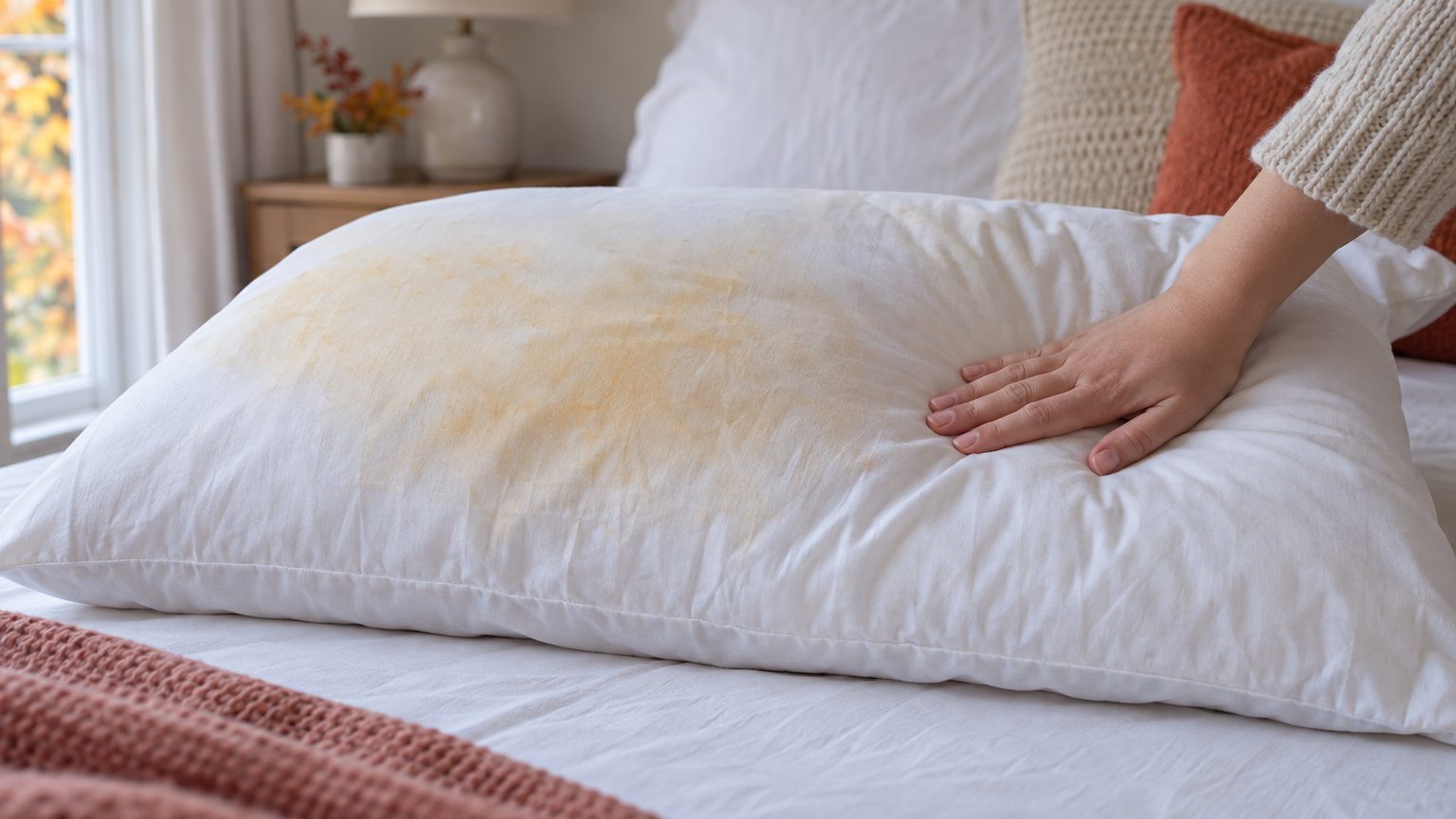
Yellow pillows are rarely about sweat alone. Sweat is mostly water with a little salt, and it dries nearly clear. The stain comes from what rides along with it: sebum, dead skin cells, saliva and the proteins in apocrine sweat.
- Yellow stains form from sebum and body oils oxidizing when exposed to the warmth and moisture of your head during sleep.
- Nighttime skincare products like creams, oils, and serums transfer onto pillows and yellow faster than natural body oils alone.
- Most pillows last one to two years, and deep yellowing that survives washing means oils have saturated the core and cannot be removed.
What that yellow actually is
Oxidation does the rest.
Body oils exposed to air and warmth change color, the way a cut apple browns or an old baking sheet darkens. Your head runs warm all night, and by some estimates a sleeper loses about a cup of fluid overnight through skin and breath. That moisture carries oils past the pillowcase and into the fill. By the time yellow shows at the surface, the core is usually saturated.
Here is the counterintuitive part: a spotless pillowcase proves very little. Even washed weekly, it lets oils migrate through the weave, so the pillow underneath keeps accumulating.
The skincare factor
Nighttime routines have made the problem worse, frankly. Rich creams, facial oils, sleeping masks and hair serums all transfer onto fabric, and they are far stickier than natural sebum. The pillows of devoted night-cream loyalists often yellow faster than anyone else’s.
Some actives bring their own damage. Benzoyl peroxide bleaches fabric, leaving orange or pale patches that no wash will reverse, while self-tanner and tinted products leave a beige cast. Retinoids don’t bleach, but they are usually layered with heavy moisturizers that leave an oily film.
Give products 15 to 20 minutes to absorb before lying down.
A dedicated pillowcase for treatment nights helps too. White cotton shows everything, which works as an early warning, while darker or patterned cases simply hide the transfer. A zippered, breathable protector under the case adds a barrier you can wash monthly. Skip plastic-backed versions, since they trap heat and make you sweat more.
How to clean it, by pillow type
Check the care tag first, because the fill dictates everything. Down, feather and polyester pillows usually tolerate a washing machine, while memory foam and latex do not. A solid foam pillow tossed in the drum will crumble.
For down and polyester, choose a gentle cycle with warm water and a small amount of liquid detergent, then add an extra rinse. Wash two pillows at once so the drum stays balanced. For yellowing, add an oxygen-based bleach to the load, since chlorine bleach can weaken fibers and often deepens the tint on synthetics. Water around 130°F kills dust mites, provided the tag allows that temperature.
Drying is where most people ruin a pillow.
Tumble on low with a couple of wool dryer balls or clean tennis balls, and keep going well past the point where it feels dry. Damp fill breeds mildew and clumps, and down can need several cycles. A sunny afternoon outdoors helps as well, since UV light freshens and brightens.
Foam needs a gentler route. Remove the cover and wash it separately, then spot-treat the foam with diluted mild detergent on a damp cloth and let it air-dry flat, away from direct heat.
When it’s time to let go
Washing buys time, not immortality. Most pillows last one to two years, with quality down and latex stretching longer and cheap polyester falling at the short end. In between, a wash every three to six months keeps buildup in check.
Try the fold test on a fiber-filled pillow: fold it in half and let go. If it stays folded or flops open, the support is gone. Deep yellow that survives a thorough wash, a musty smell that returns, or a stiff neck on waking all point the same way. Oils that have reached the core cannot be rinsed out, and a replacement is the honest answer.
You may have seen the claim that an old pillow is up to half dust mites and dead skin by weight. No solid study stands behind that figure, and mites feed on skin flakes rather than creating the stain. Yellow is mostly cosmetic and a signal of buildup, though allergy sufferers still have good reason to wash hot and protect the pillow.