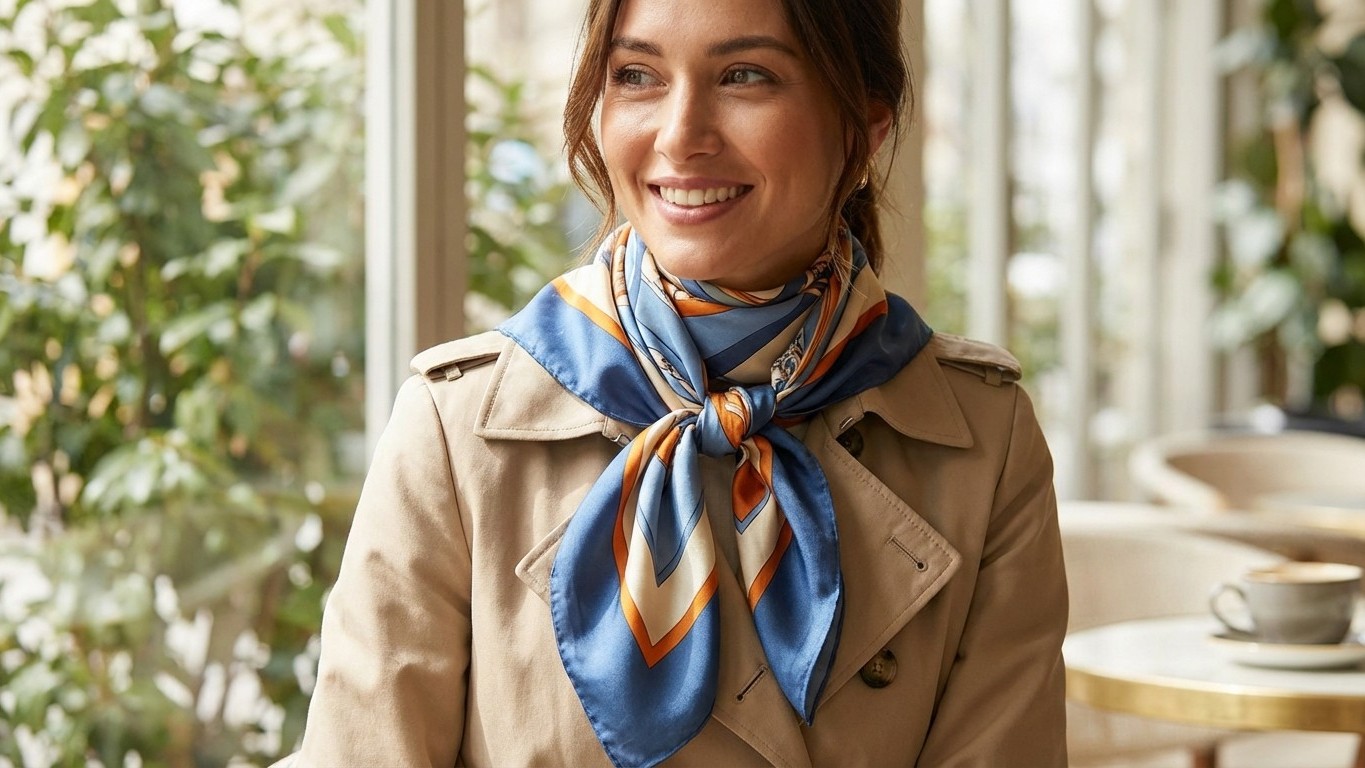
There I was, standing in front of my mirror, doing the same tired triangle fold and basic knot I’d been doing with my square scarves for what felt like Forever. The scarf looked fine, but fine isn’t Actually-look”>Exactly the vibe we’re going for, is it? Everything changed when a professional stylist friend watched me get ready and gently intervened with words that would revolutionize my accessory game: “You’re not wrong, but there are so many more beautiful ways to showcase that gorgeous piece.”
What followed was a masterclass in scarf styling that opened my eyes to the incredible versatility hiding in my accessory drawer. These weren’t complicated techniques requiring fashion school training—they were simple, elegant methods that transformed my square scarves from afterthoughts into statement pieces that elevated every outfit.
The Foundation: Understanding Your Canvas
Before diving into specific techniques, my stylist friend emphasized something crucial: the beauty of a square scarf lies in its geometric perfection and the way it holds its shape. Unlike rectangular scarves that naturally drape, square scarves offer structured elegance when styled correctly. The key is working with this structure rather than fighting against it.
The first revelation came with the classic Parisian fold—not the basic triangle I’d been defaulting to, but a more sophisticated approach. Instead of folding the square diagonally once, she showed me how folding it into a triangle, then folding the long edge over twice creates a band with weight and substance. This band doesn’t disappear into your neckline or look insignificant against outerwear. When tied loosely to one side, it creates that effortless French girl aesthetic that feels both polished and undone.
The second technique completely changed my perspective on proportions. The twisted rope method involves folding the scarf into that same substantial band, then twisting it gently before wrapping. This creates beautiful texture and visual interest while maintaining the scarf’s presence. The twist catches light differently throughout the day, adding subtle movement and sophistication that a flat band simply cannot achieve.
Beyond the Neck: Unexpected Styling Territory
Perhaps the most eye-opening moment came when she demonstrated the hair scarf technique. Rather than attempting to integrate the entire square scarf into a hairstyle, she showed me how folding it into a narrow band and weaving it through a low ponytail or bun creates an elevated look that works for both casual and professional settings. The key is ensuring the scarf’s pattern or color complements rather than competes with your outfit, creating a cohesive, intentional appearance.
The fourth technique ventured into bag styling territory. Using the scarf as a bag accent—tied to the handle of a structured handbag or tote—adds personality and color in a way that feels current and thoughtful. The trick is in the tying: instead of a simple bow, creating an asymmetrical knot with one end longer than the other prevents the look from feeling too precious or overly coordinated.
The final technique was perhaps the most versatile: the belt alternative. Folding the square scarf into a substantial band and threading it through belt loops or tying it around the waist over dresses and longer tops creates definition while adding color and pattern. This works particularly well with neutral or monochromatic outfits where the scarf becomes the focal point without overwhelming the overall aesthetic.
The Art of Intentional Imperfection
Throughout this styling session, one principle emerged consistently: the most beautiful scarf styling looks slightly undone. Those perfectly symmetrical bows and ruler-straight folds that I’d been striving for actually work against the natural elegance of silk and other flowing fabrics. Allowing for slight asymmetry, gentle gathers, and natural draping creates looks that feel sophisticated yet approachable.
The confidence that comes from mastering these techniques extends far beyond the scarf itself. There’s something transformative about knowing you can take a Simple square of fabric and create multiple distinct looks that enhance your personal style. Whether you’re reaching for vintage silk scarves found at estate sales or investing in contemporary designer pieces, these techniques ensure every scarf in your collection becomes a valuable styling tool rather than a decorative afterthought.
Now, instead of defaulting to that same basic triangle and knot, I approach each scarf with intention, considering the outfit, the occasion, and the mood I want to create. The result is a more thoughtful, polished approach to dressing that makes every day feel a little more special—and isn’t that exactly what great accessories should do?