
Polyester is oleophilic, which is a chemist’s way of saying it loves oil. That single property explains why a pair of leggings can come out of the washer looking spotless and still smell like a gym locker the moment your body warms them up.
The culprit isn’t dirt. It’s a film.
- Polyester and nylon attract and hold body oils more than cotton does.
- Fabric softener coats synthetic fibers and traps oils and bacteria beneath the surface.
- Enzyme detergent, an overnight soak, and air-drying remove the film that causes the odor.
The oil magnet in your drawer
Most leggings are built from polyester, nylon, and elastane, all petroleum-based fibers. Unlike cotton, which absorbs water and releases a good share of its soil in the wash, synthetic fibers repel water and attract oils. Sebum, the waxy substance your skin produces, bonds to the surface of those fibers and settles into the tiny gaps of the knit. Add sunscreen, body lotion, and deodorant residue, and you have a layer that ordinary detergent struggles to lift.
Sweat itself is nearly odorless. The smell comes from bacteria on your skin and fabric feeding on the lipids and proteins in that sweat, then releasing volatile compounds. Researchers at the University of Colorado Boulder, in a 2024 study on textiles and odor, found that bacteria commonly linked to body odor, including Micrococcus, thrive on polyester far more than on cotton. Their work suggests the material itself selects for the microbes that smell worst.
Cotton wears its odor lightly. Polyester keeps it.
Leggings make the problem worse by design. Compression fabric sits tight against the skin, so it picks up more sebum than a loose tee, and it covers areas (inner thighs, lower back, waistband) where you sweat heavily and air barely circulates. A tight knit also means smaller pores for the wash water to flush through.
Why the wash cycle often makes it worse
Here is the counterintuitive part. The habits that feel most virtuous, a hot cycle, extra detergent, a generous splash of fabric softener, are the ones that most often lock the smell in.
Fabric softener is the biggest offender. It works by depositing a waxy, water-repellent coating on fibers, and on technical fabric that coating traps oils and bacteria beneath it while clogging the moisture-wicking structure. Many activewear brands say plainly on their care labels to skip it. Dryer sheets do the same thing in a different format.
Too much detergent is the quieter problem. Residue that doesn’t rinse out feeds bacteria and leaves a stiff, faintly sour film, especially in a front-loader running a short eco cycle with low water levels. Heat is a gamble too: very hot water and high dryer settings can degrade elastane, which is why old leggings lose their snap and start to bag at the knees.
Then there’s the waiting. Leggings tossed into a hamper and forgotten for three days give bacteria a damp, warm, oily buffet. By the time they reach the machine, the odor compounds have already settled deep into the knit.
How to get the smell out for good
Start with a soak. Fill a basin with cool or lukewarm water and add a cup of white vinegar, then let the leggings sit for 30 minutes to an hour before washing. The acid helps break down mineral and soap residue and loosens some of the oily film. Skip the vinegar if your care label warns against it, and never mix it with bleach.
Wash them next with a detergent made for activewear, or at least a liquid detergent with enzymes. Enzymes (lipases, in particular) target fats, which is exactly what you’re fighting. Use less than the bottle recommends, since leggings are light and small loads need little soap. Turn them inside out so the surface touching your skin gets the most agitation, and wash with similar fabrics instead of a heavy towel load that will rub the film around.
For stubborn cases, a stripping routine works. Dissolve a tablespoon or two of baking soda in a warm wash, or use an oxygen-based booster, and run a full cycle with an extra rinse. Some people swear by sports-specific odor removers, and a few do contain enzymes that justify the claim. Check the label for fabric compatibility.
Drying matters as much as washing.
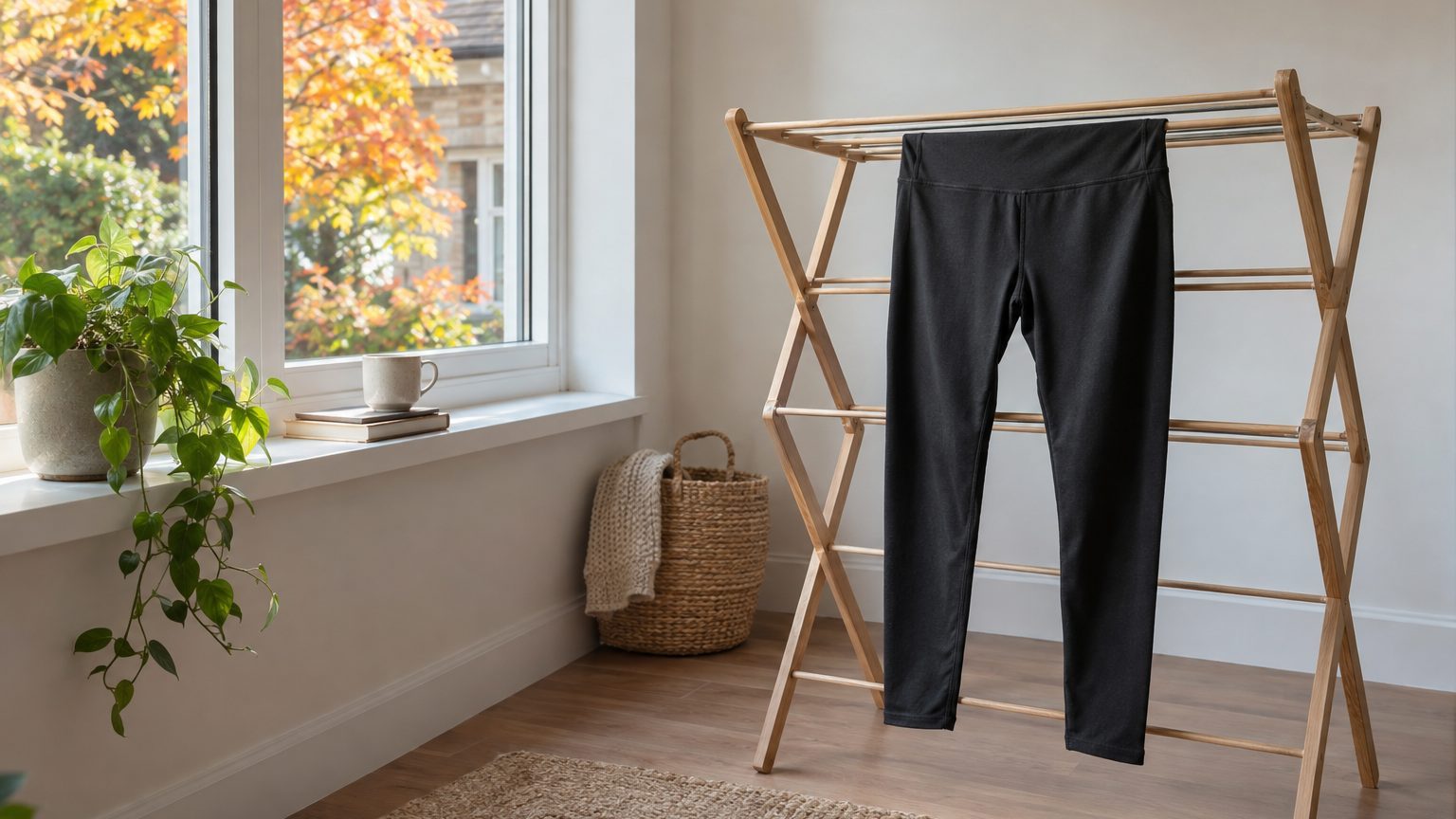
Air-dry flat or hang them, ideally in open air and out of direct harsh sun. Heat can set any leftover residue, so if you do use a dryer, keep it on low. Never fold or stash leggings that are even slightly damp.
Habits that keep the smell from coming back
A few small changes make the biggest difference. Hang leggings to air out right after a workout instead of tossing them in a bag or hamper. Rinse them in cool water within a day if you can’t wash them fully. Rotate pairs so each one gets a full wash, and rinse off sunscreen and thick body lotion before you pull them on, since those add to the oil load. Skip the softener entirely.
If a pair still smells after two stripping washes, the bacterial colony has probably moved into the elastane core, and you can stop blaming your technique. Some brands now treat fabric with silver or zinc-based antimicrobial finishes, though those can wear off after dozens of washes, so a “never smells” label has a shelf life.
One last detail: the smell often reappears only when you sweat, because moisture reactivates the bacteria still in the fibers. Dry leggings sniffed straight from the drawer can pass the test, then fail 10 minutes into a walk. Test them damp, with a little warm water on the inner thigh, and you’ll know whether the wash actually worked.