
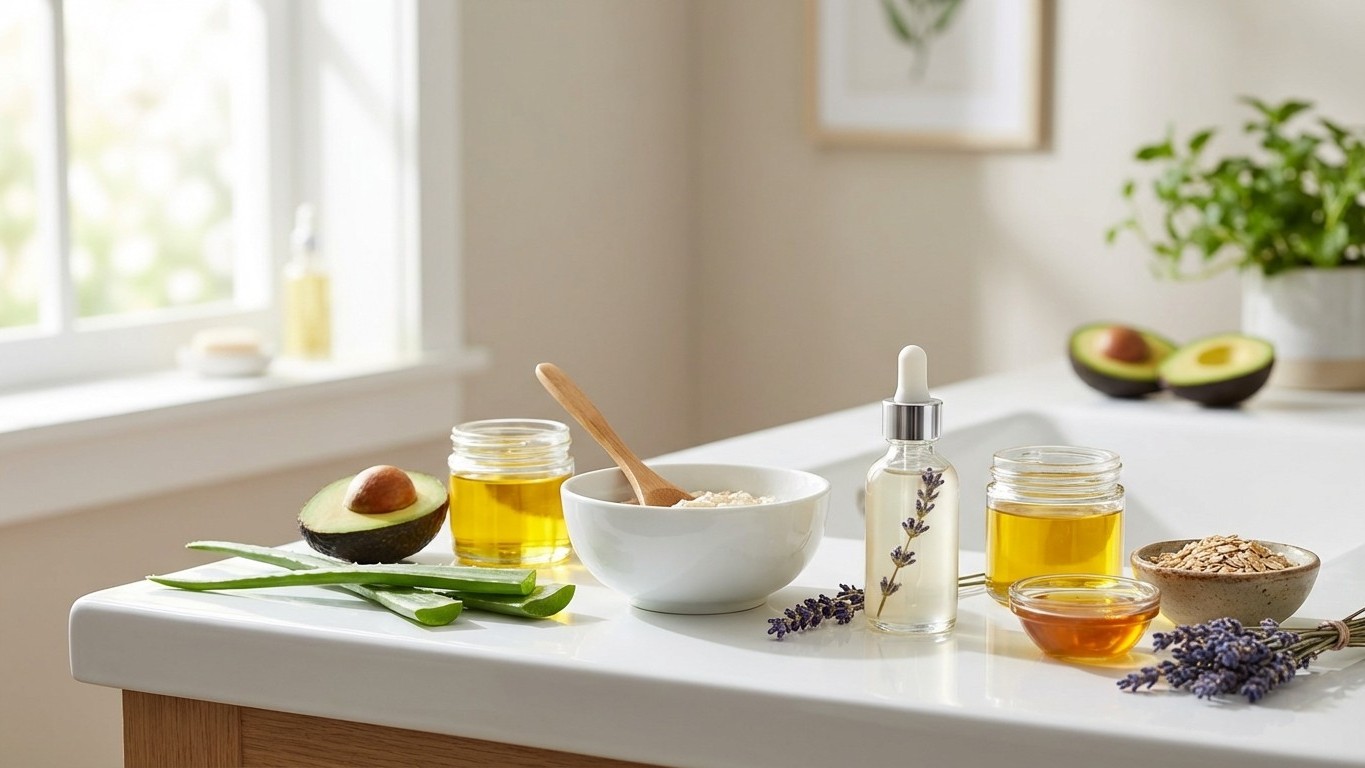
It starts the way most good skin stories start: a clean face, a bathroom light that’s a little too honest, and a jar that smells faintly of plants and summer. Natural skincare, in February 2026, isn’t a niche hobby anymore. It’s a practical response to ingredient fatigue, barrier damage, and that quiet desire to understand what you’re putting on your skin, and why.
But here’s the counter-intuition That Changes Everything: “natural” isn’t automatically gentler, safer, or better. Sometimes it’s the opposite, especially when you go DIY, use essential oils neat, or assume that a botanical can’t trigger irritation. The good news: you can build a smart, high-performing Routine-naturelle-en-climat-humide-limiter-brillance-et-pores-obstrues”>Routine-naturelle-du-plus-leger-au-plus-riche”>routine-adaptee”>routine with plant-derived ingredients, if you treat them like actives, not folklore. The result. Clearer choices. Calmer skin.
Why choose natural ingredients for your skincare routine?
Benefits of natural ingredients vs. synthetic ones
Fragrance aside, the real appeal of natural ingredients is functional: many plant oils are rich in fatty acids that support the skin barrier, many botanical extracts bring soothing polyphenols, and classic “kitchen” staples like honey or oat can behave like legitimate topical helpers in the right context.
For dry or reactive skin types, the first win is often barrier Comfort. Plant oils (think jojoba, argan, avocado) can reduce that tight, papery feeling by replenishing lipids. Humectants like glycerin, and plant-derived hyaluronic acid, can make skin feel bouncy without the heaviness some people associate with rich creams. And antioxidants from green tea, vitamin C derivatives, or rosehip oil can support that “rested” tone that makes you look like you slept eight hours, even when you did not.
Another advantage is transparency. A short INCI list, fewer fragrance allergens, fewer “mystery blends” can make troubleshooting easier, especially if you’re acne-prone or eczema-adjacent. And frankly, it’s the kind of trend that rewards patience: you end up observing your skin like a designer studies light in a room, small shifts, big outcomes.
Risks and limits to know
Natural ingredients can irritate, sensitize, or clog pores. Essential oils are the headline example: tea tree oil has evidence for acne support at appropriate concentrations, but applying it undiluted increases the risk of irritation and allergic sensitization. The “natural = safe” shortcut is where most routines go wrong.
There are also limits of evidence. Some natural ingredients have strong clinical backing for specific uses (like aloe vera in wound-healing contexts), while others are mostly supported by tradition, lab studies, or anecdote. That doesn’t make them useless; it means you should match expectations to reality, and prioritize formulations that are stable, preserved, and tested.
If you want a broader safety-first framework that helps you choose and use natural actives without improvising, read best natural ingredients for skincare routine (internal guide) for a deeper, ingredient-by-ingredient decision process.
The best natural ingredients: complete list and recommended uses
Below is the reference list I wish everyone had before they buy three oils, one clay, and a “detox” toner, then wonder why their cheeks sting. Think in roles: humectant (pulls water), emollient (smooths), occlusive (seals), anti-inflammatory (calms), antimicrobial (targets breakouts), antioxidant (supports glow and resilience).
Aloe vera: hydration and soothing
Aloe vera gel is the “cold glass of water” of natural skincare: light, refreshing, and often well-tolerated. It’s commonly used to calm redness, support a compromised barrier, and add hydration through its water-rich gel base. In medical literature, aloe has been studied in wound contexts, including burn healing, where meta-analyses of randomized trials suggest it can shorten healing time in second-degree burns compared with some comparators. That’s not the same as “cures irritation overnight,” but it supports aloe’s place as a soothing adjunct in skincare.
How to use it:
- As a hydrating layer under moisturizer for dehydrated skin.
- As a calming step after sun exposure, shaving, or over-exfoliation.
- In gel-cream formulas for oily skin that still gets tight.
What to watch:
- Choose formulas with minimal fragrance and a proper preservative system, “pure” aloe spoils.
- If you’re very sensitive, patch test: botanical extracts can still trigger reactions.
For formats, mistakes, and how to pick the right type, see aloe vera in natural skincare routine (internal guide).
Honey: repair support and glow
Honey is a paradox: sticky, messy, and yet quietly clinical. Medical-grade honey has been studied as a topical wound dressing; reviews suggest honey may improve healing in certain wound contexts, though evidence quality varies and results depend heavily on the setting and comparator. Translating that to facial skincare, the most realistic benefits are: humectant hydration, a softening effect, and a gentle “freshness” that reads as glow.
How to use it:
- As a short-contact mask (5 to 15 Minutes), then rinse thoroughly.
- In cleansers or masks formulated with honey for easier handling.
What to watch:
- DIY honey masks can be irritating for some, especially if skin is inflamed or compromised.
- If you have pollen allergies, be cautious and patch test, reactions are possible.
Rosehip oil: radiance, barrier comfort, and “soft-focus” aging support
Rosehip seed oil (often from Rosa canina) is beloved for a reason: it’s one of the plant oils that can feel both nourishing and surprisingly wearable. It’s typically rich in linoleic acid and contains carotenoids that contribute to its color and antioxidant profile. In real-life routines, rosehip oil is often used to improve the look of dullness, support a stressed barrier, and soften the appearance of fine lines through better hydration and lipid support.
How to use it:
- Press 2 to 4 drops onto damp skin, then seal with moisturizer if you’re dry.
- Mix a drop into a plain cream to reduce the “too oily” feel.
What to watch:
- Oils can feel heavy for some acne-prone users, go slow and track clogged pores.
- Store away from heat/light to reduce oxidation, rancid oil can irritate.
Tea tree oil: acne support and antimicrobial properties
Tea tree oil is the ingredient people misuse the most, precisely because it works. There are randomized controlled trials showing that a 5% tea tree oil gel can improve mild to moderate acne versus placebo. That’s meaningful: it’s not just a TikTok myth. But it comes with a hard boundary: do not apply undiluted tea tree oil directly to facial skin. Dermatology sources warn that “neat” essential oils can cause irritation and allergic sensitization, and clinical patch testing data suggests tea tree allergy is not rare.
How to use it (safely):
- Prefer a finished product formulated around ~5% tea tree oil, or a well-designed spot treatment.
- If you dilute yourself, use a low concentration and a stable carrier, and avoid daily, all-over use.
What to watch:
- Do not use on broken skin, and keep away from eyes.
- Patch test and stop if burning, rash, or persistent redness appears.
For dilution, application frequency, and precautions, see tea tree oil skincare tips for acne (internal guide).
Natural vitamin C: glow and antioxidant protection
Vitamin C is where “natural” and “science” can actually shake hands. The caveat is stability: pure ascorbic acid is potent but oxidizes easily, and many “natural” products rely on derivatives or plant extracts rich in vitamin C (like acerola or kakadu plum). The glow benefits people love often come from antioxidant support plus mild brightening over time, especially if you pair it with daily sunscreen.
How to use it:
- Secretly-draining-your-energy-and-how-to-fix-them”>Morning-routine-mistakes-that-secretly-drain-your-energy-and-how-to-fix-them”>Morning, under sunscreen, for tone and antioxidant support.
- If you’re sensitive, start 2 to 3 times a week, then increase.
What to watch:
- Stinging can happen, especially at low pH formulas.
- Oxidized products can be less effective and more irritating, watch color/smell changes.
Other must-have plant oils (jojoba, argan, avocado, and more)
Quick guide by skin type:
- Oily/combination: jojoba, grapeseed, squalane (plant-derived), hemp seed oil.
- Dry: argan, avocado, olive-derived squalane, marula.
- Sensitive/barrier-impaired: minimal, fragrance-free oils, used sparingly and introduced slowly.
What to watch:
- “Natural” oils can still trigger breakouts for some, comedogenicity is individual.
- Essential oil blends hidden inside face oils can be the real irritant, check labels.
Plant extracts (chamomile, calendula, green tea, etc.) and specific benefits
This is where natural skincare can feel like a well-curated pantry. Chamomile and calendula are commonly used for soothing, often in creams aimed at reactive skin. Green tea is prized for polyphenols, and shows up in products designed for antioxidant support and oil-control-friendly calm. Licorice root extract is a classic for uneven tone support, and centella asiatica (cica) sits at the intersection of botanical tradition and modern barrier-focused routines.
How to use them:
- In toners/essences if you like layers and want lightweight calm.
- In moisturizers if your skin gets reactive easily and you want fewer steps.
What to watch:
- More extracts does not mean better, it can mean more potential allergens.
- Botanical fragrance compounds can irritate even when a product is “plant-based.”
Natural powders and clays: purify and mattify
Clays are the minimalist’s “reset button,” but they’re not a daily cleanser replacement. Kaolin is generally gentler than bentonite. Rhassoul clay is popular for a softer cleanse feel. These ingredients can absorb oil and temporarily reduce shine, which is satisfying in the way a crisp white shirt is satisfying: immediate structure.
How to use them:
- 1 to 2 times a week, short contact time, especially if you’re dehydrated.
- Mix with water or a hydrating base, not with harsh acids for “extra power.”
What to watch:
- Letting clay crack fully dry can increase tightness and irritation for many.
- Always follow with hydration and barrier support.
Natural hydrating actives: glycerin, plant-derived hyaluronic acid, beta-glucan
If your routine feels “natural” but your skin still looks flat, it’s often missing humectants. Glycerin is one of the most effective, skin-compatible humectants in skincare, and it plays well with almost everything. Hyaluronic acid can be produced via biofermentation and used in “naturally positioned” formulas; it’s a water-binding ingredient that supports plumpness, especially when applied to slightly damp skin and sealed with a cream or oil. Beta-glucan (often from oats or yeast) is another hydration-and-calm favorite, particularly for reactive skin.
How to use them:
- Apply on damp skin, then layer a moisturizer to reduce transepidermal water loss.
- In winter or dry climates, avoid relying on humectants alone, pair with emollients.
How to integrate these ingredients into a natural skincare routine
How to choose based on your skin type
Start with your constraints, not your wishlist. If you’re acne-prone, prioritize lightweight hydration (glycerin, hyaluronic acid) and targeted antimicrobials (well-formulated tea tree at safe concentrations). If you’re dry, focus on lipids and sealing steps: plant oils plus a barrier-friendly cream. If you’re sensitive, reduce variables: fewer products, fewer extracts, no essential oils, no fragrance.
A useful litmus test: if your skin is stinging with plain water after cleansing, you don’t need a new active. You need comfort and barrier support first. Simple. Almost too simple.
Sample routine: morning vs. night
Morning should feel like preparation, not punishment:
- Gentle cleanse (or rinse if very dry)
- Humectant layer (glycerin or HA serum)
- Antioxidant step (vitamin C or green tea extract product)
- Moisturizer as needed
- Sunscreen (non-negotiable if you want brightening to actually show)
Night is where repair habits add up:
- Cleanse
- Soothing layer (aloe-based gel or calming botanical cream)
- Moisturizer
- Optional: a few drops of rosehip oil pressed on top if you’re dry
If you want a step-by-step structure that fits the whole cocoon, use natural skincare routine skin care tips (internal hub) as your routine backbone.
Precautions, dosage, and compatibility
The main compatibility issue in natural skincare is not “chemical conflicts.” It’s irritation stacking. Clay plus essential oil plus vitamin C plus scrubbing equals a stressed barrier, even if every ingredient is botanical.
Practical rules:
- Introduce one new ingredient at a time, give it 10 to 14 days before adding another.
- Use tea tree as a targeted step, not a full-face daily oil.
- Alternate purifying steps (clay) with recovery nights (aloe, lipids, humectants).
Patch test: pure ingredient or formulation?
Dermatologists recommend testing new skincare products at home by applying them to a small area twice daily for 7 to 10 days, then watching for redness, itching, swelling, or irritation. This matters even more with natural products because botanicals and essential oils can still trigger allergic contact dermatitis.
Pure vs formulation is where people get it backwards. A well-formulated product can be safer than a “pure” ingredient because it’s preserved, balanced, and designed for skin. DIY can be fun, but it’s also where dosing errors happen.
False friends and common mistakes with natural ingredients
Ingredients to avoid or use with caution
These are not “bad,” they’re just high-risk without guidance:
- Undiluted essential oils (tea tree, lavender, citrus oils), higher irritation and sensitization risk.
- Phototoxic citrus oils (some expressed citrus oils can increase sun sensitivity).
- Harsh scrubs (apricot kernels, sugar) on inflamed or acneic skin.
- Unpreserved DIY water-based mixes (microbial growth risk).
Myths about effectiveness or safety
Myth: natural ingredients can’t be “active.” Reality: they can be active enough to irritate.
Myth: if it tingles, it’s working. Reality: tingling can be barrier stress, not progress.
Myth: oils hydrate. Reality: oils mainly seal and soften; humectants plus moisturizer often hydrate better.
Zoom: winning combinations by need (acne, glow, hydration, wrinkles)
Examples of personalized routines
Acne-prone, oily, sensitive-leaning
- AM: gentle cleanse, glycerin/HA, lightweight moisturizer if needed, sunscreen
- PM: cleanse, aloe gel layer, moisturizer
- Target: tea tree product (around 5%) as spot treatment 3 to 5 nights/week
Dullness and uneven tone
- AM: cleanse, vitamin C product, moisturizer, sunscreen
- PM: cleanse, soothing botanical or aloe, rosehip oil (a few drops) on top
- Weekly: gentle clay mask once, followed by hydration
Dehydrated, tight, “my skin feels smaller than my face”
- AM: rinse, glycerin/HA on damp skin, richer moisturizer, sunscreen
- PM: cleanse, aloe or beta-glucan serum, moisturizer, optional plant oil seal
Fine lines, dryness, compromised barrier vibe
- AM: gentle cleanse, humectant, moisturizer, sunscreen
- PM: cleanse, calming cream (chamomile/calendula/cica style), rosehip oil press
- Avoid: frequent clay masks, essential oils, aggressive brightening until calm
FAQ: quick answers about natural skincare ingredients
Which natural ingredients are truly effective in skincare (with evidence)?
Some have stronger clinical support in specific contexts: tea tree oil at around 5% has randomized trial evidence for mild to moderate acne improvement; aloe vera has clinical research in wound-healing contexts (including burns), supporting its soothing and recovery-adjacent reputation. Honey has research in wound care too, though evidence quality varies by indication and comparator. For glow and barrier feel, plant oils and humectants are often effective in practice, even when the “clinical trial” framing is less direct.
Which natural ingredients should be avoided or used with caution on the face?
Undiluted essential oils, DIY unpreserved water-based mixes, harsh physical scrubs, and heavily fragranced botanical blends. “Natural fragrance” can still be fragrance, and fragrance is a common irritation trigger.
How do I know if a natural ingredient fits my skin type?
Match the ingredient role to your need, then test slowly. Oily skin often tolerates lightweight humectants and gels best; dry skin tends to love oils plus creams; sensitive skin usually does best with fewer ingredients and no essential oils. Patch test new products for 7 to 10 days on a small area, especially if you’ve reacted before.
Conclusion
The smartest natural routine doesn’t chase “purity.” It chases consistency, tolerance, and a few well-chosen roles: hydrate, soothe, support the barrier, and protect during the day. Pick two or three ingredients from this list, introduce them like you’d introduce new foods to a sensitive stomach, and let your skin vote.
If you want to build your full routine step-by-step and avoid the classic mistakes, follow the internal guides on natural skincare routine skin care tips, then go deeper on aloe vera in natural skincare routine and tea tree oil skincare tips for acne when you’re ready to refine. And the question that will keep you honest: are you buying an ingredient for your skin, or for the story you want your bathroom shelf to tell?