
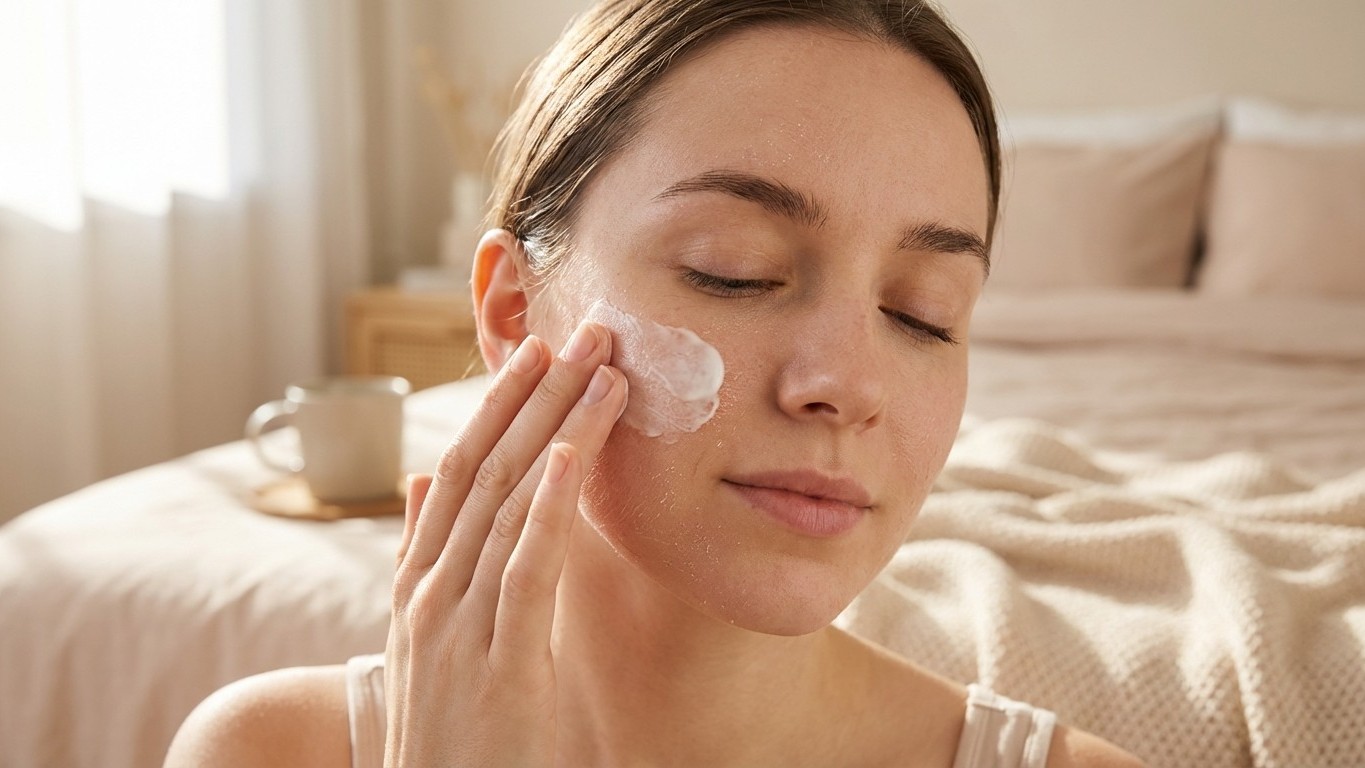
Cold air on your cheeks, radiator heat in your living room, and that familiar tightness that creeps in by mid-Morning. Dry skin has a way of making itself audible, a quiet crackle under makeup, a sting after cleansing, a dull glow you can’t “fix” with one more layer of anything. The real issue usually isn’t a lack of products. It’s a barrier that’s asking for repair, not punishment.
Frankly, this is the kind of trend I’m glad we’re seeing in 2026: fewer heroic actives, more daily barrier logic. Not “minimalism” as an aesthetic, but as a strategy. Because when the skin barrier is compromised, even the nicest botanical oil can feel like too much, and even water can become a trigger. The result. Tightness, flaking, that uncomfortable shine-dull cycle that makes you question your Routine-naturelle-en-climat-humide-limiter-brillance-et-pores-obstrues”>Routine-naturelle-du-plus-leger-au-plus-riche”>routine every three days.
Understand dry skin: causes, symptoms, and what Happens to the barrier
Dry skin, often called xerosis, is not just “skin that needs moisturizer.” It’s a state where the outer layer of skin, especially the stratum corneum, struggles to hold water and lipids in the right structure. When that outer layer is weakened, transepidermal water loss rises, and irritants enter more easily. You feel it as tightness, rough texture, peeling, or small patches that look irritated for no obvious reason.
The counter-intuitive part: many people with dry skin cleanse more, exfoliate more, and chase a squeaky “fresh” feel. That’s exactly what tends to worsen barrier instability. A barrier-first approach may look slower, even boring. It works because it stops the leak before trying to refill the tank.
Dry skin vs dehydrated skin
Dry skin is typically low in oil, meaning it lacks the lipid support that helps keep water in and protects from friction and irritants. It often feels rough, looks dull, and can show flaking or fine lines more easily.
Dehydrated skin is low in water, which can happen to any skin type, including oily and acne-prone. Dehydration often shows as tightness with a surface that may still produce oil, sometimes even more oil, because the skin is trying to compensate. That’s why the internet’s one-size-fits-all “drink more water” advice doesn’t fully solve dry skin, and why some oily skins still need humectants and gentle cleansing.
Internal and external factors that worsen dryness
Some triggers are obvious: cold wind, low humidity, long hot showers. Others are sneakier, like fragrance exposure, frequent handwashing, high-foaming cleansers, overuse of exfoliating acids, or using alcohol-heavy formulas daily.
Internal factors matter too. Age-related Changes can reduce natural oil production, and certain skin conditions, including eczema-prone skin, make barrier weakness more likely. Even stress can change habits, more face touching, more picking, less consistent moisturizing, and the barrier pays the price.
The skin barrier: what it does, and how to tell it’s damaged
Think of the stratum corneum like bricks and mortar. The “bricks” are corneocytes. The “mortar” is a lipid matrix that helps control what gets out (water) and what gets in (irritants). When that mortar is disrupted, water evaporates more easily and the skin becomes reactive. That’s the heart of dry-skin discomfort, and it’s why barrier repair becomes the priority.
Why repair it first?
Because the best hydrating serum in the world won’t feel good if your barrier is inflamed, and your richest cream can still sit oddly if the skin surface is rough and compromised. Barrier repair is the foundation that makes everything else tolerable, and more importantly, sustainable.
Signs the barrier is struggling:
- Persistent tightness after cleansing, even with gentle products
- Flaking or peeling during the day, especially around nose, cheeks, or mouth
- Stinging with “normal” products, including mild vitamin C or fragrance-free formulas
- Redness that comes and goes, with no clear acne pattern
- Makeup clinging to patches and separating quickly
Morning natural skincare routine for dry skin
Morning is about calm hydration plus protection. The goal is Comfort that lasts until evening, not a glow that peaks for 30 minutes and collapses by lunchtime.
Gentle cleansing: choose a natural-friendly cleanser that respects the barrier
If your skin is very dry, you may not need a full cleanse every morning. A rinse with lukewarm water can be enough, or a very mild, low-foam cleanser used only where needed. Hot water and harsh surfactants can intensify dryness by stripping what little lipid support your skin has left.
Look for a cleanser that is fragrance-free or very lightly fragranced, low-foaming, and marketed as gentle or suitable for sensitive skin. If a cleanser leaves your face feeling “tight but clean,” it’s not clean, it’s compromised.
Tone without aggression: hydrosols and mists
Toners can be either a blessing or a sneaky source of irritation. Skip anything that feels astringent. Favor simple hydrosols or mists that are alcohol-free and fragrance-light. The point is to add a whisper of water back to the surface so your next layers have something to hold onto.
Application detail matters. Mist, then press with hands, don’t rub with cotton pads. Rubbing looks harmless; dry skin experiences it as friction.
Hydration: serums and natural-origin humectant “stars”
For a natural skincare routine for dry skin, humectants are your daily workhorses. They attract and hold water in the upper layers of skin, especially when paired with a richer layer on top.
- Aloe vera: often soothing, helpful when dryness comes with mild irritation.
- Glycerin: a classic humectant, widely used because it’s effective and well-tolerated when formulated properly.
- Hyaluronic acid (naturally derived): supports surface hydration and that “plumped” feel, but it needs a moisturizer over it to reduce evaporation.
Small reality check: humectants don’t “seal” hydration by themselves. If you live in a very dry climate or spend hours in heated indoor air, a humectant-only routine can feel good at first and then worse later, because water can still evaporate. Your next step is what makes the hydration last.
Nutrition and protection: plant oils, rich creams, and natural waxes
Dry skin needs both hydration and lipids. Plant oils can be excellent here, but not all oils behave the same on every face. Some people love a single oil; others need a proper emulsion, a cream, because it combines water, humectants, and lipids in a way the skin can “read” easily.
What to look for in this step:
- Barrier-supportive lipids, formulas that include skin-identical lipids or support them (ceramide-focused products are common in barrier repair)
- Richer textures (creams or ointments tend to reduce water loss more than lotions)
- Occlusives when needed, including balms with waxes, to reduce evaporation on the driest zones
On very dry patches, a thin layer of balm over your cream can change your whole day. Cheeks stop “drinking” product. Makeup sits better. Less face touching. The comfort loop begins.
Sun protection: filter without suffocating
Sunscreen is barrier care. UV exposure contributes to dryness and can worsen sensitivity over time, even when you don’t burn. If you’ve avoided SPF because it feels heavy, the fix is not skipping it. It’s finding a texture that your dry skin can tolerate: often a creamier base, fragrance-free, and comfortable enough that you’ll actually apply the recommended amount.
If your barrier is very compromised, patch test new sunscreens. Stinging around the eyes or nose is common when the skin is irritated.
Evening natural skincare routine to regenerate the barrier
Night is where you do the “repair architecture.” Not aggressive resurfacing. Not chasing tingling sensations. Repair.
Makeup removal and gentle cleansing
If you wear sunscreen or makeup, removing it thoroughly matters, but scrubbing is not the price of cleanliness. Consider a gentle oil-based first cleanse, followed by a mild cleanser only if you need it. If you don’t wear makeup and used a comfortable sunscreen, a single gentle cleanse can be enough.
Keep the water lukewarm and the cleanse short. Dermatology guidance for dry, eczema-prone skin often emphasizes brief, warm (not hot) bathing and moisturizing soon after, because prolonged hot water exposure can worsen dryness.
Layering: hydration then nourishment
This is where the “layering” idea becomes practical rather than fussy. You’re building a gradient: water-binding layers first, then lipid layers, then optional occlusion on top.
- Step 1: hydrosol or mist (optional)
- Step 2: humectant serum (glycerin, hyaluronic acid, aloe-based formulas)
- Step 3: richer cream with barrier-supportive ingredients
- Step 4: balm on the driest areas (optional)
If you’re eczema-prone, the “soak and seal” idea is worth borrowing. Moisturizing shortly after washing, while skin is still slightly damp, helps trap water and supports the barrier.
Repair gesture: masks and SOS balms (DIY-friendly options)
I like DIY in dry-skin care when it stays simple and low-risk. No essential oil cocktails. No kitchen acids. Just soothing, cushiony comfort.
Ideas that are generally accessible:
- Colloidal oatmeal mask or compress: finely ground oats mixed with lukewarm water to a paste, applied briefly, then rinsed gently and followed by moisturizer. Colloidal oatmeal has evidence for supporting barrier properties and soothing eczema-like irritation in some studies.
- Shea butter as a targeted balm: warmed between fingers and pressed onto flaky zones, especially at night.
- “Balm sandwich”: cream, then balm only on corners of nose, lips, and cheekbones, where peeling loves to settle.
DIY caution: avoid raw lemon, baking soda, undiluted vinegar, and strong essential oils. Dry skin doesn’t need bravery, it needs predictability.
Common mistakes in a natural skincare routine for dry skin
Over-cleansing and over-exfoliating
Dry skin often gets treated like a texture problem. People see flakes and assume they must scrub. In reality, flaking is frequently a sign of impaired barrier function and increased water loss. Scrubbing can create micro-irritation and prolong the cycle.
If you exfoliate, do it gently and infrequently. Choose milder options, and only when your skin feels stable. Consider soft washcloth pressure once a week, or a very gentle exfoliant used sparingly. If you feel stinging, you’ve crossed the line.
Ignoring water and climate
Heated indoor air in winter, plane cabins, desert climates, these environments pull water from the skin. A routine that works in humid summer can fail in January. That’s not your skin “acting up.” It’s physics.
Try this: on dry-climate days, increase the richness of your moisturizer and add an occlusive layer to the driest zones. A humidifier at night can also help some people feel less tightness in the morning, especially during heating season.
Key natural ingredients: what actually helps restore the barrier
Natural doesn’t mean random. It means choosing ingredients with a reason to be there, then pairing them in a way that supports barrier mechanics: water-binding, lipid replenishment, and reduced irritation.
Oat, shea, rosehip, borage: a practical zoom
Oat (colloidal oatmeal) is one of the most reassuring ingredients for dry, reactive skin. It’s used in products aimed at eczema-prone skin and is known for soothing and barrier-supportive properties. It’s also a rare “natural” ingredient that sits comfortably next to dermatology-grade barrier logic.
Shea butter is a classic for a reason: it’s rich, protective, and helpful when you need comfort fast. For faces that clog easily, keep it as a targeted step rather than an all-over daily layer.
Rosehip oil is often loved for its feel and its role in routines focused on dryness and dullness. If your barrier is fragile, patch test, and use a few drops mixed into your cream rather than applying a heavy oil layer alone.
Borage is interesting because it’s associated with gamma-linolenic acid (GLA) in discussions of skin comfort and barrier support. If you explore borage oil topically or as a supplement, choose quality carefully and treat supplements as a medical conversation, not a skincare hack.
Essential oils for dry skin: worth it?
This is where I’m opinionated. Essential oils are often marketed as “nourishing,” but dry, barrier-impaired skin frequently reads them as irritants. If you’re committed to using them, keep them out of leave-on face products, or use only in very low concentrations in rinse-off formulas, and patch test. If you’re dealing with eczema, frequent stinging, or active peeling, skip them and simplify.
Adjust your routine by season and context (winter, heating, travel)
Dry-skin care should be modular. The core stays the same, gentle cleanse, humectant hydration, lipid-rich moisturizer, SPF. The intensity changes with your environment.
- Winter and indoor heating: richer cream, more frequent moisturizing, add a balm on cheeks and around mouth at night.
- Travel and flights: reduce actives, pack a small barrier balm, mist plus cream before boarding, reapply balm to tight zones mid-flight if needed.
- Dry climate or high altitude: prioritize occlusion over “light layers.” Hydration without a sealing step often feels short-lived.
- Humid summer: keep humectants, but lighten occlusives if you feel greasy, and focus on sunscreen comfort.
For cross-cluster reading, the topic of protecting dry skin in extreme dry climates fits here naturally, because barrier repair is what makes those environments tolerable for your face and hands.
Beyond skincare: food, hydration, and environment
Topicals are your front line, but lifestyle can reduce the background noise. If your diet is low in fats, your skin may feel less resilient. If your sleep is chaotic, stress-driven face touching and inflammation tend to rise. And if your home air is desert-dry in winter, no serum will fully compensate.
Practical supports:
- Keep showers shorter and warm rather than hot
- Pat skin dry, don’t rub
- Moisturize soon after washing, hands included
- Use fragrance-free laundry and avoid scratchy fabrics against the face and neck
- Consider indoor humidity moderation during heating season
FAQ: dry skin routine, specific tips
What is the best natural skincare routine for very dry skin?
A very dry-skin routine is usually: gentle cleanse (or rinse), humectant serum, rich barrier cream, then a targeted balm on the driest zones, plus daily sunscreen. At night, keep the same structure and consider a thicker final layer. Consistency beats intensity here.
Which natural ingredients are most effective for restoring the skin barrier?
Look for a combination approach: soothing agents like colloidal oatmeal, humectants like glycerin and hyaluronic acid (natural-origin), and lipid support through richer creams and well-chosen plant oils. Barrier-friendly formulas often include ceramide-focused support as well.
How do I stop my skin from feeling tight or peeling during the day?
First, avoid harsh cleansing. Second, apply hydrating layers on slightly damp skin, then seal with a richer moisturizer. Third, add a small amount of balm on the zones that peel, usually cheeks, around the mouth, corners of the nose. Reapply a cream, not a foamy cleanser, if you feel tightness midday.
Should you exfoliate dry skin, and if so, how?
Only when the skin feels stable. Choose gentle methods, keep it infrequent, and moisturize well afterward. If you’re actively peeling, stinging, or red, pause exfoliation and focus on barrier comfort for a couple of weeks.
What mistakes should I avoid with dry skin and a natural routine?
Over-cleansing, over-exfoliating, using heavily fragranced “natural” products, and relying on humectants without a sealing moisturizer are the big ones. Another common misstep is changing products every few days. Dry skin responds to repetition.
Build your personalized plan
Start with a two-week reset. Strip your routine down to: gentle cleanse, humectant hydration, rich moisturizer, sunscreen, and an optional balm at night. Let your skin settle. Then introduce optional extras one by one: an oatmeal mask once weekly, a different oil, a slightly richer cream for winter, a lighter texture for summer.
If you want to explore neighboring routines in this semantic cluster, make sure your approach still respects your skin type boundaries. The logic changes for oilier profiles and for reactive profiles, and you’ll find that contrast helpful when choosing textures and steps: natural skincare routine for oily skin, natural skincare routine for oily skin, natural skincare routine for sensitive skin, natural skincare routine skin care tips.
One last thought, the kind you only really accept after you’ve tried to “outsmart” dryness for years: dry skin isn’t asking for more products, it’s asking for fewer frictions. If you make your routine quieter, what would your skin do with that extra calm?