
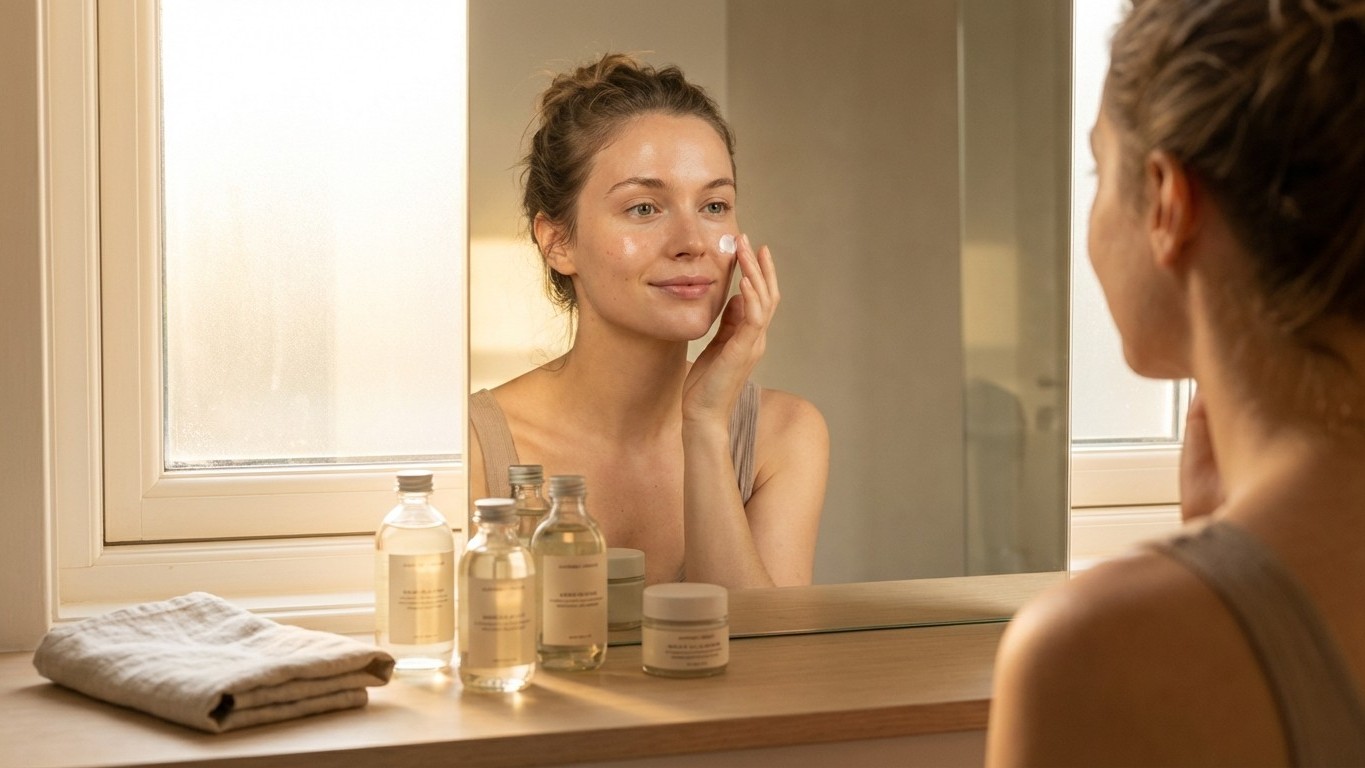
The bathroom light is a little too bright, the mirror a little too honest, and your skin is doing that thing where it feels both dry and shiny at the same time. You want to “go natural”, but the internet hands you a hundred-step ritual, a pantry full of oils, and a vague promise of “glow.”
Let’s make this simple, safe, and actually doable. A natural skin care Routine-adaptee”>routine for beginners should feel like a calm reset, not a second job. Five steps. Minimal ingredients. A real plan for sensitive moments. And a method that respects the one thing most trend cycles ignore: your skin barrier.
One counter-intuition upfront: “natural” doesn’t automatically mean gentle. Fragrance is still fragrance, essential oils can still trigger reactions, and over-cleansing is still over-cleansing. The result. Cleaner choices, fewer surprises.
Why adopt a natural skincare routine?
Benefits for skin and overall Comfort
Natural routines, at their best, do two things exceptionally well: they reduce unnecessary exposure and they simplify decision-making. In early 2026, the “less but better” approach is everywhere, from capsule wardrobes to minimalist interiors, and skincare is Finally catching up.
When you choose formulas built around fewer, familiar materials, you often lower the risk of piling irritants on top of irritants. That matters for beginners, because most beginner skin issues are not “mysteries.” They’re patterns: stripping cleansers, too many actives, inconsistent moisturising, and sunscreen avoidance.
- Better tolerance when you avoid heavy fragrance and keep the ingredient list short.
- More consistent habits because you’re not overwhelmed by choice.
- Stronger skin barrier over time when you prioritise gentle cleansing and steady moisturising.
Natural vs conventional: what beginners should know
“Conventional” isn’t the villain, and “natural” isn’t automatically the hero. Frankly, this is the kind of trend that sells a vibe, clean labels, earthy fonts, the whole apothecary aesthetic, and then quietly forgets that your skin is an organ with preferences.
Here’s the practical way to think about it:
- Natural can mean plant-based oils, floral waters, mineral sunscreen filters, aloe, clays, and gentle humectants.
- Conventional often includes lab-made versions of the same functional categories: cleansers, humectants, emollients, preservatives, UV filters.
- What matters most is how your skin reacts, how stable the product is, and whether the routine is consistent enough to work.
A key safety note: “natural fragrance” and essential oils can be just as allergenic as synthetic fragrance, and people with eczema-prone or very sensitive skin are often advised to avoid them whenever possible. Essential oils like tea tree oil can irritate and can trigger allergic contact dermatitis in some people. If you’re a beginner, this is a place to be conservative, at least at first.
The 5 essential steps of a natural skin care routine for beginners
If you like structure, keep this as your anchor. You can go deeper later, but beginners win by repeating the basics until the skin stops complaining.
1) Cleanse gently: choose the right natural cleanser
Clean skin should feel comfortable, not squeaky. That tight, “ultra-clean” feeling is usually your barrier waving a white flag.
What to look for in a beginner-friendly natural cleanser:
- Low-foam, gentle surfactants and a pH that doesn’t leave you feeling stripped.
- Minimal fragrance, ideally fragrance-free if you’re reactive.
- Rinse-off simplicity: a cleanser is on your face for seconds, so you don’t need a complicated ingredient story.
How to use it (beginner method):
- At night: cleanse once to remove sunscreen, pollution, and daily grime.
- In the Morning: rinse with lukewarm water or use a very mild cleanse if you wake up oily.
- Pat dry, don’t rub. Small detail, big difference.
If you wear heavy makeup or water-resistant sunscreen, you might prefer a gentle “first cleanse” approach, like an oil-based cleanser followed by a mild water-based cleanser. Keep it optional, not a rule.
2) Tone: restore freshness with simple natural ingredients
Toner has a reputation problem. People think it’s either useless or harsh. Both can be true, depending on the toner.
A beginner-friendly toner is more like a comfort layer: light hydration, soothing feel, and a quick reset after cleansing. Think floral waters (often called hydrosols), or very simple watery formulas.
- Good beginner options: fragrance-free hydrosol-style toners, or simple glycerin-based hydration mists.
- Be careful with: toners loaded with essential oils, heavy fragrance, or strong exfoliating acids when you’re just starting.
How to use: press a small amount into damp skin with clean hands. Cotton pads can add friction you don’t need.
3) Moisturise: pick a plant-based moisturiser (or oil) for your skin type
This is where most beginners either overcomplicate or skip entirely. Especially oily and acne-prone beginners, who assume moisturiser equals breakouts.
Counter-intuition, again: oily skin can still be dehydrated, and barrier stress can push skin to feel even oilier. A lightweight moisturiser can make your skin calmer, not greasier, if the formula suits you.
Choose your texture by skin mood, not by your “identity”:
- Feels tight, flaky, reactive: reach for a creamier plant-based moisturiser with gentle humectants and barrier-supporting lipids.
- Feels shiny, clogged, acne-prone: aim for a lighter gel-cream texture and avoid heavy, strongly fragranced oils.
- Feels normal: a simple lotion is your best friend.
Oil as moisturiser, yes, but with nuance. Oils can reduce water loss, but they don’t replace water-based hydration. Many beginners do best with a basic moisturiser first, then add a few drops of a simple plant oil only if needed.
4) Protect: understand natural protection (SPF and anti-pollution habits)
If you do one “grown-up” thing for your skin, make it sunscreen. Especially in 2026, when daily sun exposure is still the quiet driver behind texture Changes and uneven tone.
In the US, broad-spectrum sunscreen means UVA + UVB protection, and SPF tells you primarily about UVB (burning rays). Dermatology organisations commonly recommend choosing broad-spectrum SPF 30 or higher for daily use. Also, there’s no such thing as “waterproof” sunscreen. The label can say water-resistant (40 or 80 minutes), and you still need to reapply at least every two hours when outdoors.
Where “natural SPF” gets tricky: many people use the phrase to mean mineral filters (like zinc oxide or titanium dioxide). Those can be a great match for sensitive skin, but “natural” claims on packaging aren’t always regulated in the way consumers assume. Read the active ingredients and the directions.
Anti-pollution protection, the real version, is less about a trendy label and more about habits:
- Cleanse at night to remove buildup.
- Moisturise to support the barrier.
- Use sunscreen as your daily shield when UV is present.
5) Nourish and treat: add simple actives (slowly)
This step is where beginners get tempted into chaos. A serum for glow, an oil for “detox,” a mask for pores, and suddenly your face feels like it’s negotiating a ceasefire.
Keep “treat” extremely simple at first. Good beginner-friendly natural-leaning options include:
- Aloe vera for soothing, especially after sun or irritation (choose formulas without heavy fragrance).
- Basic plant oils used sparingly to seal moisture (one at a time, not a buffet).
- Gentle exfoliation occasionally, not as a daily identity.
About exfoliation: you don’t have to exfoliate at all. Skin naturally sheds. Over-exfoliation is one of the fastest ways to damage the barrier, trigger sensitivity, and create that shiny-but-irritated look. If you want it, keep it conservative: once a week is plenty for many beginners, less if you’re sensitive. Avoid harsh scrubs and avoid stacking exfoliation with other strong steps.
Practical tips to start without upsetting your skin
How to test products gradually (patch test, the smart way)
This is the safety step people skip, then regret. Patch testing slows you down, but it can save your face, literally.
At-home patch testing is commonly done by applying a small amount of product to a small area of skin (often inner arm or elbow bend) and watching for irritation. Some guidance recommends repeating this twice daily for a longer window (around a week to 10 days) because reactions can be delayed. If you’re testing a rinse-off product, you leave it on only for the time it would normally stay on before rinsing.
- Test one new product at a time.
- Keep the rest of your routine stable while you test.
- Stop immediately if you get burning, swelling, or a rash.
If you suspect an allergic reaction, symptoms can range from itching and rash to more severe signs like facial swelling or Breathing issues. Severe symptoms need urgent medical care. Don’t “push through.”
How to simplify to the maximum (and still get results)
Minimalism in skincare isn’t laziness. It’s strategy.
- Morning: optional gentle cleanse, moisturiser, sunscreen.
- Night: gentle cleanse, moisturiser, optional simple treatment.
Buy fewer products, but give them time. Most beginners should run a routine for a few weeks before judging it, unless irritation shows up, then you stop and reset.
If you want a clean structure for the order of products and how to keep it beginner-proof, look for the sister page with the anchor: natural skincare routine steps.
Common beginner mistakes to avoid
Some mistakes are so common they feel like a rite of passage. You can skip the rite.
- Switching everything at once: you won’t know what caused the reaction.
- Assuming essential oils are always safe: they’re a frequent source of irritation and allergic contact dermatitis for some people, especially in sensitive or eczema-prone skin.
- Over-exfoliating: more scrub does not equal more glow.
- Skipping moisturiser because you’re oily: dehydration and barrier stress can make oiliness feel worse.
- Underusing sunscreen: “natural” routines still need serious UV protection.
- DIY without guardrails: kitchen experiments can be unpredictable, especially with acids, spices, or undiluted essential oils.
One more subtle one: chasing “purity” so hard that you avoid preservatives entirely. Products that grow microbes are not kinder to skin. Beginners deserve stable, well-formulated basics.
Get inspired, then adapt: natural routine by time of day
Morning vs night: what actually changes
Morning skincare is about protection and comfort. Night skincare is about recovery.
Morning focus:
- Keep cleansing light.
- Moisturise enough to prevent tightness.
- Apply broad-spectrum SPF 30+ and reapply if you’re outside.
For a dedicated morning flow that stays beginner-simple, use the sister page anchor: natural skincare routine morning.
Night focus:
- Cleanse properly to remove sunscreen and buildup.
- Moisturise to support the barrier.
- Add one gentle treatment only if your skin is calm.
If your skin tends to feel more reactive in the evening, or you want a recovery-focused setup, use the sister page anchor: natural skincare routine night.
For broader guidance, including common pitfalls and beginner-proof habits, the cross-cluster page anchor fits naturally here: natural skincare routine skin care tips.
FAQ: your questions about a natural skin care routine for beginners
What is the simplest natural skincare routine for a complete beginner?
Three steps in the morning and two to three at night.
- AM: gentle cleanse (or rinse), moisturiser, sunscreen.
- PM: gentle cleanse, moisturiser, optional soothing step like aloe or a very mild oil.
If you start here, you can add toner or gentle exfoliation later, only if your skin asks for it.
Which natural products are safe and effective for sensitive skin?
Sensitive skin usually does best with fragrance-free, minimal-ingredient formulas and a cautious approach to essential oils. Mineral sunscreen is often tolerated well, but you still need to patch test and apply it correctly. Look for simple moisturisers that focus on barrier comfort rather than strong “active” claims.
How can I tell if a natural product irritates my skin?
Watch for burning, stinging that persists, new redness, itch, swelling, or a rash. Irritation can show up quickly, while allergic contact dermatitis can appear later, often within 24 to 72 hours after exposure. Patch testing helps you catch that before you apply a product to your whole face.
Do I need a moisturiser if my skin is oily or acne-prone?
Often, yes. Oily skin can still have a stressed barrier, especially if you cleanse aggressively or use drying acne treatments. The key is a lightweight texture and avoiding heavily fragranced products. Start with a small amount and reassess after a week.
How do I introduce new natural products without overwhelming my skin?
Add one product at a time, patch test first, and keep the rest of your routine boring for a couple of weeks. If something goes wrong, you’ll know what it was. If everything feels calm, you can choose one “upgrade” step, not five.
Keep it regular, keep it kind
Start tonight: gentle cleanse, moisturiser, and a promise to patch test anything new before it touches your whole face. Give the routine two weeks of consistency, then adjust one detail, texture, cleanser strength, SPF feel, instead of rewriting your entire shelf.
Skincare trends will keep spinning, glass skin one month, barrier repair the next, but your skin is not a mood board. What Happens if you treat this routine less like a makeover and more like a daily, quiet practice you can actually keep?