
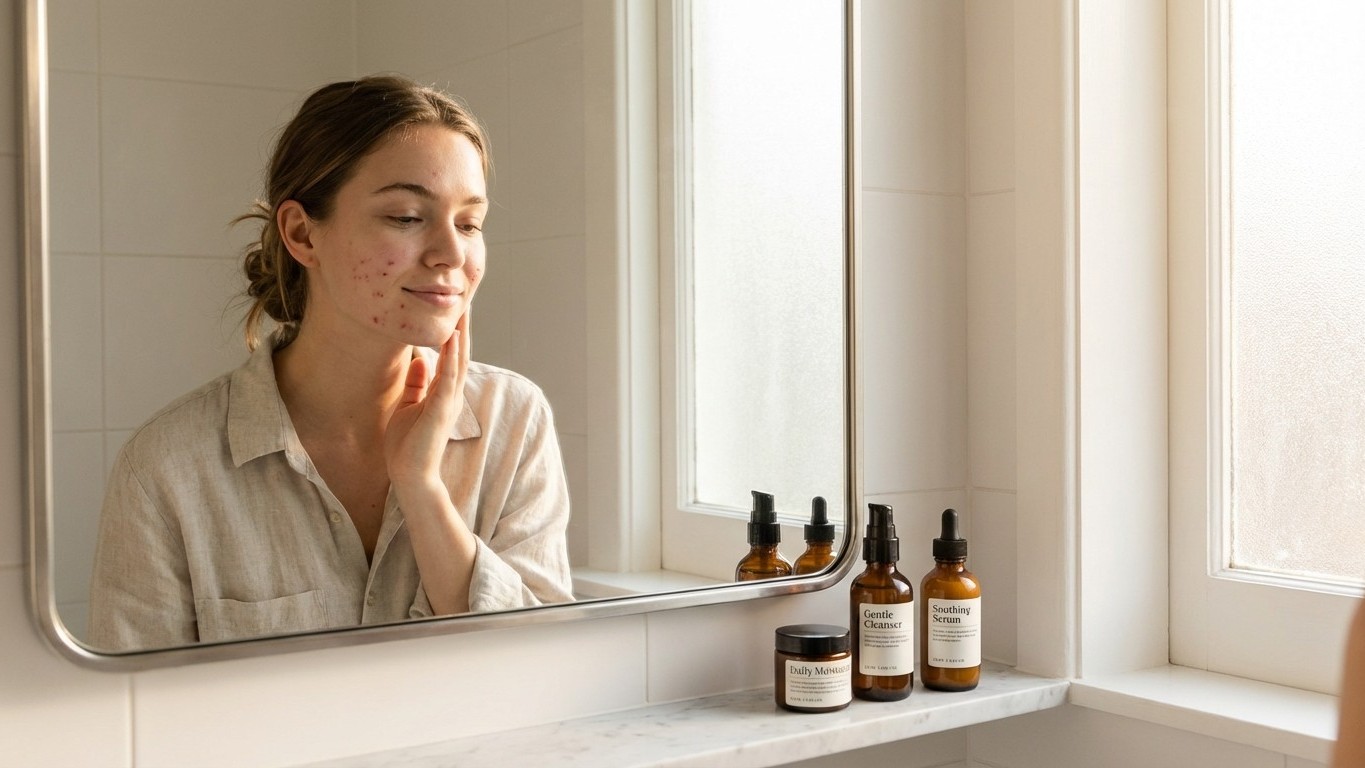
Morning light hits the bathroom mirror, and there it is again: a new bump near the jawline, plus the ghost of last month’s breakout still lingering as a pink mark.
Acne-prone skin has a cruel sense of timing. It flares when you overdo it, it flares when you do nothing, and it often punishes “quick fixes” with more inflammation, more sensitivity, more marks. That’s why a natural approach, when it’s structured and realistic, can feel like a reset: fewer irritants, more barrier support, and a routine you can actually keep doing on a busy Tuesday in March 2026.
This page is built for one goal: a natural skincare routine for acne prone skin that reduces active breakouts while actively preventing post-acne marks, without falling into the trap of stripping, scrubbing, and stacking too many actives at once.
Introduction: Why choose a natural routine for acne-prone skin?
Because “natural” can be a relief, but only if you treat it like skincare, not folklore.
A lot of people move toward natural routines after a bad cycle: harsh cleansers, aggressive exfoliation, skin that feels squeaky-clean at noon and angry by night. Fragrance, over-cleansing, abrasive scrubs, and random essential oils can keep the skin in a low-grade state of irritation, which often makes acne more stubborn and marks more visible.
The counter-intuitive part, and frankly the one most guides skip, is this: acne-prone skin usually doesn’t need more punishment. It needs calmer rules. A routine that cleans thoroughly, hydrates consistently, and treats blemishes in a measured way tends to work better over the long haul than the “burn it off” mindset dermatologists repeatedly warn against. The American Academy of Dermatology emphasizes gentle cleansing, avoiding harsh scrubbing, moisturizing when needed, and daily sunscreen as a foundation, even for oily or acne-prone skin. aad.org
Understand acne-prone skin: causes and specifics
Natural and aggravating causes of acne
Acne is not just “dirty skin.” It’s a multi-factor condition shaped by oil production, clogged pores, inflammation, and the behavior of skin microbes. Hormones, stress, friction (hello, chin straps and phone screens), overly occlusive products, and picking can all push the skin toward breakouts.
Diet is a sensitive topic, because people want a single villain. The reality is personal: some notice flare-ups with high glycemic-load patterns, others don’t. A practical approach is to treat food and lifestyle as support rather than as a moral test, while you build a routine that reduces inflammation and protects the barrier.
Why acne-prone skin reacts differently to “classic” products
Many mainstream “anti-acne” products rely on strong surfactants, high alcohol content, heavy fragrance, or too-frequent exfoliation. These can temporarily reduce shine, but they also risk disrupting the skin barrier. When the barrier is impaired, you can see more redness, more stinging, and a rebound of oiliness that makes people cleanse even more. The spiral is real.
And acne-prone skin often has a paradoxical need: it can be oily and dehydrated. This is where a natural routine shines when it’s well-designed, because you can prioritize hydration and barrier lipids while keeping textures light and non-comedogenic.
Principles of a natural routine adapted to acne
Key steps: from cleansing to moisturizing
A consistent natural skincare routine for acne prone skin is less about a hundred products and more about a repeatable sequence:
- Cleanse gently (remove sweat, sunscreen, pollution, and makeup without stripping).
- Hydrate with water-based layers (especially if you’re using any drying treatments).
- Treat targeted concerns (blemishes, texture, marks) with a limited set of actives.
- Moisturize to keep the barrier resilient.
- Protect with daily sunscreen to reduce post-acne marks and irritation from UV.
That last point is not optional. The AAD recommends broad-spectrum, water-resistant sunscreen with SPF 30 or higher for daily protection. If you’re working on acne marks, this becomes even more relevant because UV exposure can make discoloration linger. aad.org
The right order for applying natural products
Think “thin to thick,” but also “calm to active.”
- Cleanser
- Hydrosol or watery toner (optional)
- Water-based serum/gel (aloe, niacinamide-style actives, azelaic acid if used)
- Light moisturizer
- Facial oil (optional, small amount, only if your skin tolerates it)
- AM only: sunscreen
Spot treatments go after cleansing and before heavier creams or oils, so they can actually reach the skin.
Select the right natural ingredients for breakouts and marks
Cleanse without aggression: suitable plant oils and floral waters
Oil cleansing can work for some acne-prone skins, but it’s not a universal miracle. If you wear sunscreen and makeup, a gentle first cleanse (balm/oil) followed by a mild water-based cleanse can reduce residue without harsh rubbing.
Where people go wrong is choosing heavy, highly occlusive oils and then massaging for too long, or skipping the second cleanse and leaving a film. If you try oils, keep it brief, emulsify well, and patch test. For watery steps, fragrance-free formulas or simple hydrosols can feel soothing, but anything scented can be a gamble if your skin is reactive.
Exfoliate gently: natural acids, grains vs enzymes
Scrubs feel satisfying. They also often make acne angrier.
Physical grains can cause micro-irritation, especially if you’re inflamed or you have active lesions. Enzymes and low-dose acids can be a softer option, but the principle remains: acne-prone skin often improves with less frequent exfoliation than you think.
If you’re choosing evidence-based actives that still fit a “naturally leaning” routine, azelaic acid and salicylic acid are commonly referenced in acne care, and the AAD’s updated acne guidance includes them among topical options, noting azelaic acid can also help fade dark spots that persist after acne clears. aad.org
Hydrate and repair the barrier: aloe vera and non-comedogenic oils
Aloe vera gel is a classic for a reason: light, calming, compatible with oily skin when the formula is simple. Layering a light moisturizer on top reduces the “tight but shiny” feeling that drives people to over-cleanse.
If you use facial oils, treat them like seasoning, not like a sauce. A few drops max, pressed onto damp skin, and only if your pores don’t protest. Among “traditional” options people discuss for acne-prone skin, black seed oil (often called nigella) is popular in natural circles, but individual tolerance varies widely, so patch testing matters more than hype.
Target blemishes: essential oils (tea tree, lavender), zinc, and “natural” niacinamide
Tea tree oil sits at the intersection of tradition and modern evidence. A Cochrane review on complementary therapies for acne found low-quality evidence from single trials suggesting tea tree oil may reduce lesion counts, and it also reported local side effects like itchiness, dryness, and flaking in some users. cochrane.org
Translation: tea tree can help, but it can also irritate. If you use it, dilution and frequency are everything.
- Dilution rule of thumb: avoid applying undiluted essential oils to facial skin.
- Placement: use as a spot treatment, not all over, especially if you’re sensitive.
- Schedule: start 2 to 3 times per week, then adjust.
Lavender is often marketed as “gentle,” yet fragrance components can trigger dermatitis in some people. Patch test it, and avoid it entirely if you have a history of fragrance reactions or eczema flares. Data from patch testing clinics show lavender can cause allergic contact dermatitis, even if it’s not common. pubmed.ncbi.nlm.nih.gov
Niacinamide is another ingredient worth discussing because it’s widely used for barrier support, sebum regulation, and post-acne discoloration. Clinical studies have suggested topical niacinamide can reduce sebum measures, and reviews describe potential benefit in acne with a need for more robust comparisons. pubmed.ncbi.nlm.nih.gov
Fade acne marks: natural vitamin C sources and rosehip oil
There are two common “marks” people lump together:
- Post-inflammatory erythema (red/pink marks)
- Post-inflammatory hyperpigmentation (brown/gray marks, more common and persistent in deeper skin tones)
Both improve faster with daily sunscreen. Without that, you’re trying to mop the floor while the faucet is running.
Rosehip oil is frequently used in scar and mark routines. Some clinical observations suggest it may reduce scar redness in post-surgical contexts, and recent cosmetic research has explored topical rosehip oil effects on skin characteristics, including measures associated with oily/acne-affected skin, though results vary and are not a guarantee. webmd.com
The best use-case: small amounts, introduced slowly, and paired with sunscreen and barrier repair rather than used as a standalone “eraser.”
Natural skincare routine for acne prone skin: morning and night
Morning routine: protect, matte, prevent
Goal: keep the skin calm, reduce midday shine without stripping, and protect against UV-driven marks.
- 1) Gentle cleanse or rinse: if you’re oily, a mild cleanse can help. If you’re reactive or dry-leaning, a water rinse may be enough.
- 2) Hydration layer: aloe gel or a simple, fragrance-free hydrating serum texture.
- 3) Light treatment (optional): a niacinamide-based step can support barrier function and oil balance, but introduce it slowly if you’re sensitive. pubmed.ncbi.nlm.nih.gov
- 4) Moisturizer: lightweight, non-greasy, no heavy fragrance.
- 5) Sunscreen: broad-spectrum, SPF 30 or higher, water-resistant as recommended by the AAD. aad.org
A note on texture, because life is real: if sunscreen feels suffocating, you won’t apply enough. Choose a finish you can tolerate, then make it a habit. Consistency beats perfection.
Evening routine: purify, soothe, repair
Goal: remove sunscreen and grime fully, then shift into barrier repair mode.
- 1) First cleanse (if needed): oil/balm to dissolve sunscreen and makeup.
- 2) Second cleanse: gentle, short contact time, no scrubbing.
- 3) Treatment nights (2 to 4x/week): choose one main active approach. Options include azelaic acid or salicylic acid depending on tolerance and needs, and azelaic acid is often mentioned for both acne and persistent dark spots after lesions clear. aad.org
- 4) Non-treatment nights: aloe/hydration, then moisturizer.
- 5) Spot treatment (as needed): diluted tea tree in a carrier, only on individual blemishes, and stop if you see dryness or flaking. cochrane.org
What I’d avoid, personally, is the “natural layering marathon.” Ten steps at night can feel like self-care, but acne-prone skin often reads it as stress.
Frequency and classic mistakes to avoid
Overdoing it: over-cleansing and over-exfoliation
The fastest way to turn mild breakouts into a prolonged mess is to exfoliate daily because you’re impatient. Irritation is not “purging.” Irritation is inflammation, and inflammation is acne’s favorite environment.
Keep exfoliation modest. Give changes time. If your skin burns, stings, or feels tight after cleansing, that’s feedback, not a challenge.
Minimalist routine vs natural layering: finding balance
A minimalist routine is not laziness. It’s strategy.
Start with a core routine (cleanse, moisturize, sunscreen). Then add one treatment step, wait 2 to 4 weeks, observe, and only then consider adding another. This is especially true if you’re experimenting with essential oils, because reactions can be delayed and cumulative.
Natural supports and lifestyle habits that reinforce results
Food, stress, daily hygiene: real levers
Acne often reflects what’s happening beyond the bathroom shelf.
- Stress: chronic stress can worsen inflammation and habits like picking.
- Sleep: short sleep can make skin look dull and more reactive.
- Friction and occlusion: mask edges, helmet straps, tight collars can drive jawline breakouts.
- Hygiene: clean pillowcases, phone screens, and makeup tools matter more than people want to admit.
Frustratingly simple. The result, sometimes dramatic.
When to consult or adjust your routine
If you have painful cysts, widespread acne on face/back, scarring, or significant distress, a natural routine can be supportive but may not be sufficient alone. The AAD’s acne management guidance highlights multiple medical options and underscores that treatment plans are individualized, which matters for moderate to severe acne. aad.org
Also consult if you develop persistent burning, swelling, or a rash after introducing an essential oil or fragranced product. Allergic contact dermatitis is not “detox.” It’s a problem to stop, not push through. pubmed.ncbi.nlm.nih.gov
Examples of complete natural routines by acne severity
Occasional breakouts (1 to 3 pimples at a time)
AM
- Gentle cleanse or rinse
- Aloe gel (thin layer)
- Light moisturizer if needed
- SPF 30+ broad-spectrum sunscreen
PM
- Double cleanse if you wore sunscreen/makeup
- Moisturizer
- Spot treat with diluted tea tree 2 to 3 nights/week if tolerated
Keep exfoliation to once weekly at most at the start, then adjust.
Moderate to severe acne (as support to medical care)
AM
- Gentle cleanse
- Hydration layer (aloe or simple humectant serum)
- Barrier-friendly moisturizer
- SPF 30+ broad-spectrum sunscreen
PM
- Double cleanse
- One main topical active approach on selected nights (for example azelaic acid, depending on tolerance and medical guidance)
- Moisturizer every night, even on treatment nights
In this category, essential oils are usually the first thing I’d simplify or remove if irritation appears. Acne that’s already inflamed does not need extra sensitizers.
FAQ: common myths about a natural anti-acne routine
Which natural ingredients are truly effective against acne?
“Effective” depends on your acne type and your tolerance. Evidence for complementary approaches is mixed. Tea tree oil has limited, low-quality evidence from single trials suggesting possible benefit, and it can cause dryness or irritation in some users. cochrane.org
For a routine that’s natural-leaning but still grounded, prioritize gentle cleansing, consistent moisturizing, and daily sunscreen, then add one proven anti-acne active if needed, rather than stacking many trendy botanicals.
Can a natural routine be enough for severe acne?
Sometimes it can help, but it often isn’t enough on its own. Severe acne can scar, and delaying effective treatment may increase the risk of long-term marks. The AAD stresses individualized plans and includes multiple medical options for acne management. aad.org
A natural routine can still be valuable as your “base layer,” protecting the barrier and reducing irritation from prescription treatments.
How do you fade scars and red marks left by pimples?
Start with sunscreen, every morning, because UV can prolong the visibility of discoloration. The AAD recommends broad-spectrum SPF 30+ daily. aad.org
Then go slow with brightening steps. Niacinamide is often used for discoloration support and barrier care, and it has research suggesting effects on sebum measures and potential acne improvement. pubmed.ncbi.nlm.nih.gov
Rosehip oil is a popular natural option for scar appearance support, with some clinical observations in scar redness contexts, but it’s not instant and it’s not universal. webmd.com
How can you use essential oils without worsening acne?
Dilute, patch test, and avoid daily all-over application. Keep tea tree as a spot treatment, watch for dryness, and stop if flaking starts. Cochrane’s review noted local side effects reported by tea tree users, which is a reminder that “natural” can still irritate. cochrane.org
If you’re fragrance-sensitive or eczema-prone, be extra cautious with lavender, which is a known trigger for some people and has been associated with allergic contact dermatitis in patch test data. pubmed.ncbi.nlm.nih.gov
Conclusion: build an effective natural routine that stays flexible
Acne-prone skin improves when you treat it like a long game: gentle cleansing, consistent hydration, smart treatments, and daily sun protection. A natural skincare routine for acne prone skin should feel like a system, not a punishment, and it should evolve with seasons, stress levels, and hormonal shifts.
If you want to make this actionable today, pick your baseline routine for the next 14 days, keep it simple, and track only three signals: new breakouts, irritation, and how quickly marks fade. Then adjust one variable at a time.
And here’s the question That Changes Everything: if your skin calmed down with fewer steps, would you Finally trust “less” enough to keep going?