
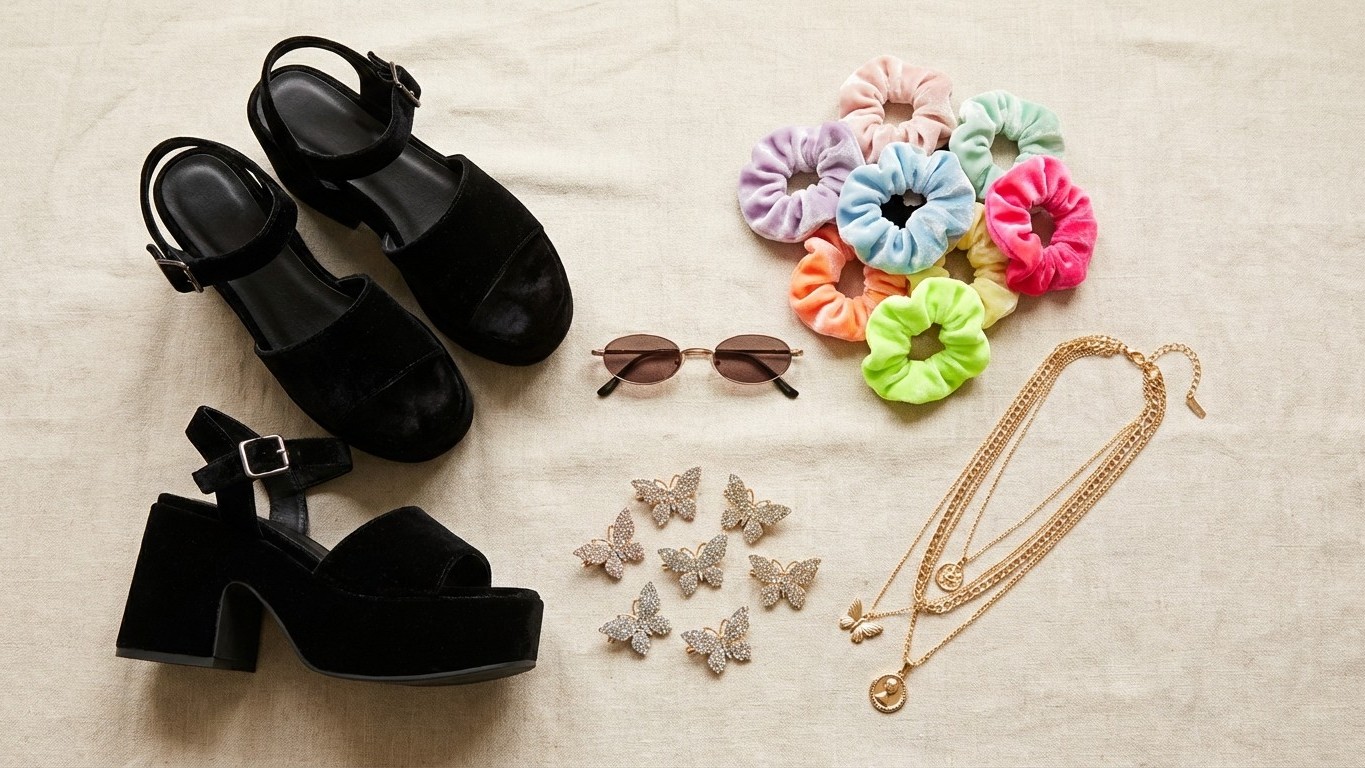
The crushing realization hit me like a vintage Prada bag to the face: that Entire box of ’90s accessories I cheerfully donated to Goodwill five Years Ago could have funded a luxury vacation. While I was Marie Kondo-ing my way through closets, convinced that chunky platform shoes and tiny sunglasses would never see daylight again, the fashion world was quietly orchestrating the biggest comeback since low-rise jeans.
Fashion stylists and vintage dealers are now confirming what many of us suspected too late – those accessories we dismissed as relics from our questionable teenage years have become the holy grail of contemporary style. The very pieces we couldn’t wait to purge are now commanding premium prices on resale platforms, with some items selling for more than their original retail cost.
The Accessories That Became Gold Mines
The transformation of ’90s accessories from closet clutter to coveted collectibles reads like a cautionary tale for anyone who’s ever been too hasty with spring cleaning. Platform shoes, once dismissed as impractical relics, are now the cornerstone of modern street style. The chunkier and more outrageous the Better, with vintage platforms from that era fetching impressive sums from collectors who understand their cultural significance.
Tiny sunglasses, perhaps the most mocked accessory of the early 2000s revival, have experienced a renaissance that nobody saw coming. These impossibly small frames, once ridiculed for their complete lack of sun protection, are now worn by celebrities and influencers as the ultimate statement piece. The irony isn’t lost on fashion insiders who remember when these same glasses gathered dust in discount bins.
Hair accessories tell a similar story of unexpected resurrection. Those butterfly clips that seemed so juvenile, the zigzag headbands that screamed ‘middle school dance,’ And the colorful scrunchies that our mothers begged us to stop stylist-showed-me-this-belt-trick”>wearing – they’ve all found new life as nostalgic treasures. Fashion stylists report that clients specifically request these pieces to achieve that authentic ’90s aesthetic that can’t be replicated with modern reproductions.
The Psychology Behind the Vintage Boom
The resurgence of ‘90s Accessories taps into something deeper than mere fashion cycles. For millennials, these pieces represent a time of optimism and possibility, when technology felt exciting rather than overwhelming, and when personal style was about individual expression rather than social media validation. There’s comfort in returning to accessories that feel tactile and real in our increasingly digital world.
Fashion psychologists Buying-costume-jewelry-this-one-detail-i-now-check-before-every-purchase”>Finally-explain-why-they-never-throw-away-pasta-water-and-how-it-transforms-every-sauce”>Explain that nostalgia-driven purchasing allows people to reconnect with formative periods of their lives. When someone pays premium prices for vintage chokers or original bucket hats, they’re not just Buying-barrel-jeans-this-2026-denim-finally-flatters-my-straight-figure”>Buying-lash-serums-after-discovering-this-5-oil-that-Actually-offers”>Actually-works”>buying accessories – they’re purchasing memories, identity, and a sense of belonging to a cultural moment that feels increasingly precious.
The authenticity factor cannot be understated. In an era of fast fashion and mass production, genuine ’90s accessories offer something that modern reproductions simply cannot match. The materials, construction methods, and even the wear patterns tell stories that resonate with consumers seeking meaningful connections to their purchases.
The Current Market Reality
Vintage dealers and fashion resellers have transformed what was once a niche market into a thriving economy. Original designer accessories from the ’90s now command prices that would make their original owners weep with regret. Even mainstream brands from that era have gained unexpected prestige, with pieces that sold for modest amounts decades ago now treated as investment pieces.
The digital marketplace has amplified this trend exponentially. Social media platforms showcase vintage finds daily, creating a culture where the right ’90s accessory can elevate an entire outfit from ordinary to extraordinary. Fashion stylists regularly scout vintage shops and online platforms, willing to pay premium prices for pieces that will complete their vision for editorial shoots or celebrity appearances.
What makes this particularly painful for those of us who donated our collections is the realization that many of these pieces were one-of-a-kind or limited production runs. Unlike clothing, which can sometimes be found in multiple sizes, accessories were often produced in smaller quantities, making surviving pieces increasingly rare and valuable.
learning From Fashion’s Cyclical Nature
This expensive lesson in fashion’s unpredictable nature offers valuable insights for anyone currently editing their wardrobe. The accessories we dismiss today as dated or unstylish could very well be tomorrow’s must-have items. Fashion operates in roughly twenty-year cycles, meaning that pieces from the early 2000s are already beginning their journey back to relevance.
For those fortunate enough to still possess their ’90s accessories, fashion experts recommend careful consideration Before any major purging sessions. Storage solutions that preserve condition while keeping pieces accessible might be worth the investment. After all, the difference between clutter and treasure often comes down to timing and cultural context.
The story of ’90s accessories serves as a reminder that fashion’s relationship with time is complex and unpredictable. What feels impossibly outdated today might be tomorrow’s vintage gold mine. While we cannot turn back time to rescue those donated treasures, we can approach future wardrobe decisions with a deeper appreciation for fashion’s cyclical nature and the potential value hiding in our most unexpected pieces.