
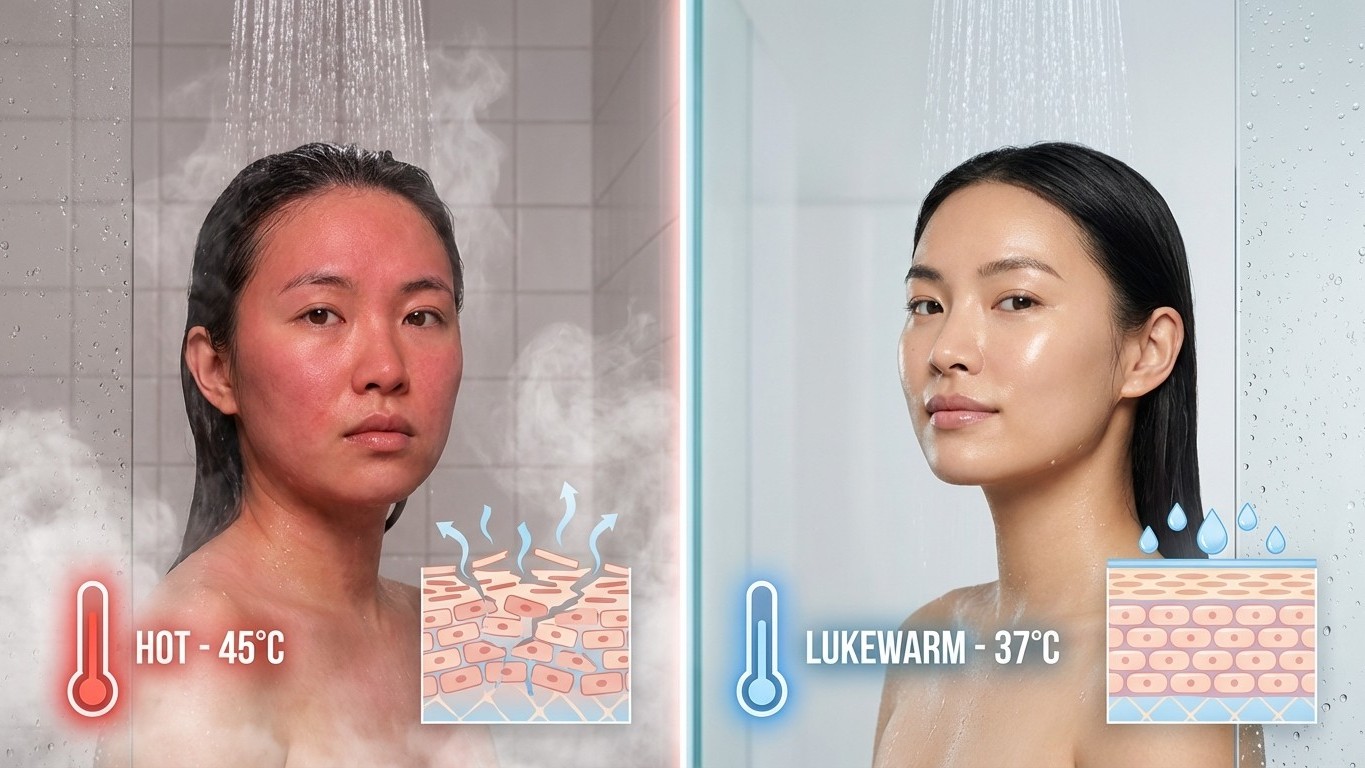
When winter arrives and the temperature drops, most of us instinctively reach for one particular comfort ritual: the long, scalding hot shower. But according to Dermatologists across the country, this seemingly innocent winter habit is quietly wreaking havoc on your skin in ways you might not even realize.
“Hot water can wash away the skin’s natural oils” explains Dr. Alexandra Coromilas from Columbia University Irving Medical Center. What feels like a soothing escape from winter’s chill is Actually depleting your skin of its natural moisture barrier, setting up a cascade of skin problems that can persist well beyond your shower time.
The Hidden Science Behind Hot Water Damage
Your skin’s protective barrier isn’t just a simple covering—it’s a sophisticated system that dermatologists compare to “a protective brick wall: the skin cells are the bricks, and they are held together by many different proteins and fats”. This barrier, technically called the stratum corneum, retains water while keeping harmful elements out of Your Body.
When you step into that steamy, hot shower, several damaging processes begin immediately. “When that outer layer gets attacked with hot water and soap, the oil melts away and the epidermis is left Exposed“, explains one dermatology expert. The heat doesn’t just remove surface dirt—it strips away the essential lipids that your skin depends on for protection and hydration.
Recent research published in 2022 provides concrete evidence of this damage. “A study published in 2022 found that when adults submerged their hands in hot and cold water, hot water did more damage. The skin turned red, the skin barrier weakened, and the skin ultimately lost more water” compared to cold water exposure. The study also revealed that hot water increased the skin’s pH level, which has been shown to disrupt the skin barrier and increase water loss.
Why Winter Makes Everything Worse
The timing of this hot shower habit couldn’t be more problematic. “In winter, cold weather and low humidity indoors and out depletes skin of its natural oils, so water escapes out of this barrier, and skin becomes dehydrated”. Your skin is already fighting an uphill battle against “cold outdoor air, dry indoor heating, and hot showers all pull moisture away faster than your skin can replace it”.
Dr. Emma Guttman-Yassky from Mount Sinai explains the perfect storm scenario: “You go between being very, very cold—and then your skin gets flaky—but then you go to the heated environment that dries your skin. And you want to alleviate it and get into a super-hot shower, so all of these make it worse”. This cycle of temperature extremes puts tremendous stress on your skin’s ability to maintain its protective functions.
The consequences extend beyond simple dryness. “Couple that long, hot shower with the cold winter air and you have a recipe for incredibly dry, itchy skin. Peeling, cracking and bleeding may soon follow if you don’t take immediate steps”. For people with conditions like eczema or psoriasis, hot water can trigger significant flare-ups during months when their skin is already vulnerable.
The Smart Shower Strategy That Actually Works
Breaking the hot shower habit doesn’t mean suffering through freezing water. Dermatologists recommend a strategic approach that protects your skin while still providing comfort. “Limit your showers to 5 to 7 minutes, not 30 to 45 minutes, because too much water contact will dry your skin”, advises Dr. Guttman-Yassky. The key is finding that sweet spot between warm and scalding.
“Take short, cold showers and avoid long, hot baths. Very hot water can dry out your skin and a long shower is more likely to cause skin dryness than a short shower”, recommends Mass General Brigham dermatologist Dr. Abigail Waldman. If the idea of cold showers seems unbearable, aim for lukewarm water that feels comfortable but doesn’t create that intense heat sensation on your skin.
Timing your moisturizing Routine is equally crucial. “Moisturizing immediately after you finish helps to trap the moisture that enters your skin in the shower and keep it hydrated”, explains Dr. David Rayhan from Rayhan Dermatology. The magic happens “within three minutes of exiting the shower while skin is still damp. This traps the water in your pores”.
Your choice of products matters significantly during winter months. “In winter, ditch the pump-bottle lotions. Opt for rich Creams or ointments (the ones that come in a jar or tube), as they have a higher oil-to-water ratio”. Look for formulations containing ceramides (to repair the barrier), hyaluronic acid (to pull in moisture), and glycerin or petrolatum (to seal it in).
When Professional Help Becomes Necessary
Sometimes, adjusting your shower routine isn’t enough to reverse winter skin damage. “It may be time to see a dermatologist if you’re trying these steps but are still dealing with: cracked, painful or inflamed skin, persistent eczema flares, dryness that doesn’t improve, acne that gets harder to control in winter”.
Professional intervention becomes particularly important when “skin becomes cracked, bleeding or crusted, or if irritation persists despite simplifying your routine”. Dermatologists can prescribe barrier-repair treatments and anti-inflammatory medications that provide relief when over-the-counter approaches fall short.
The truth is, your winter skin deserves better than the punishment of daily hot showers. By making this one simple change—trading scalding water for lukewarm temperatures and shorter shower times—you’re giving your skin the chance to maintain its natural protective abilities throughout the coldest months. Your skin will thank you with improved comfort, fewer irritations, and that healthy glow that doesn’t require a filter to achieve.