
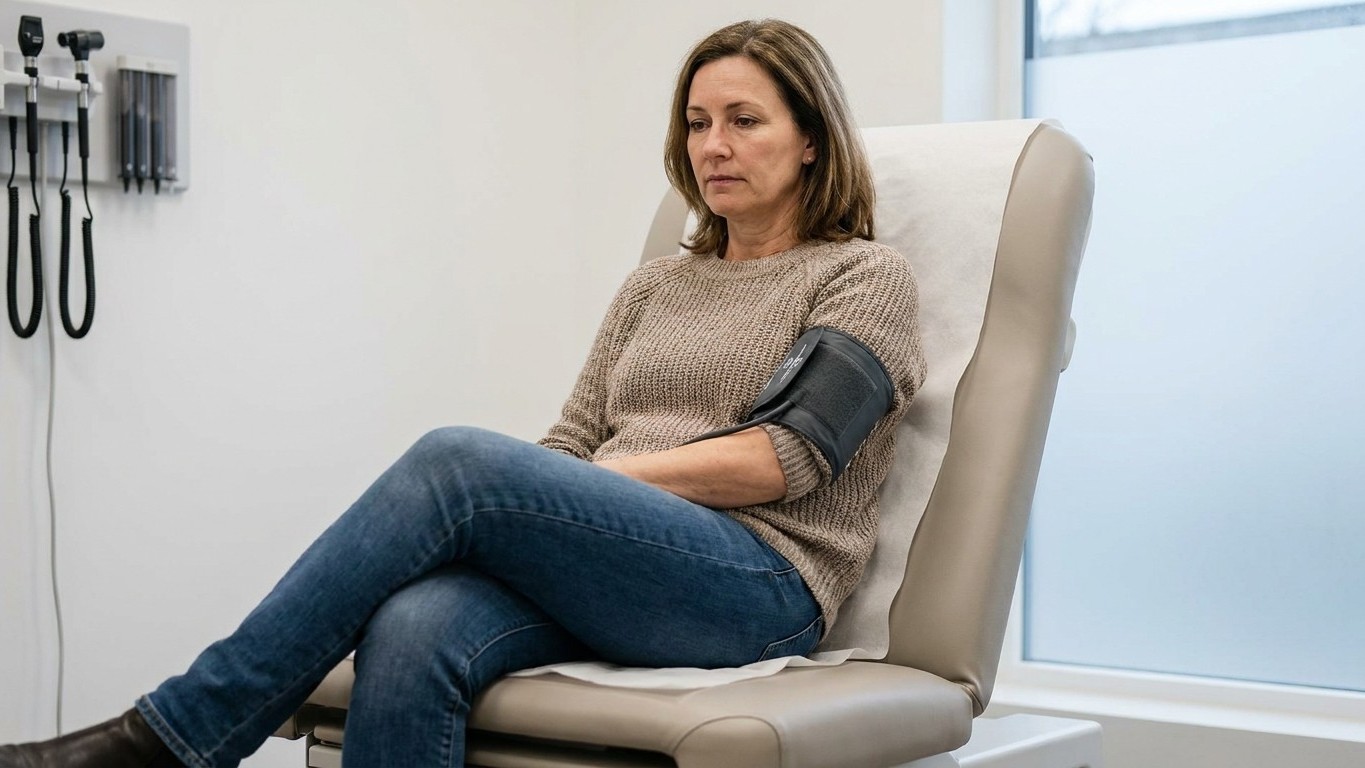
Ten mmHg. That’s roughly what a crossed-leg reading can add to a systolic blood pressure number, according to nursing research that’s been circulating in clinical journals for over two decades. Results indicated that BP increased significantly with the crossed leg position, with systolic and diastolic BP significantly increasing approximately 10 and 8 mmHg, respectively. For someone hovering near a hypertension diagnosis, that’s the difference between “watch it” and “you need medication.”
The nurse who finally uncrossed my legs during a routine check-up wasn’t being fussy. She was following a protocol I’d been ignoring for years, sitting cross-legged like it was a dinner party, not a diagnostic test. The number that came up afterward was lower than anything my home monitor had ever shown me. Turns out I’d been unknowingly sabotaging my own readings, one crossed ankle at a time.
Key takeaways
- One overlooked posture habit could be inflating your blood pressure readings enough to change your diagnosis from healthy to hypertensive
- The people most vulnerable to false readings are precisely those who already have high blood pressure—a cruel medical irony
- Medical professionals often skip retraining on proper measurement technique, leaving patients unknowingly medicating a problem partly created by bad posture
Why a crossed knee fools the cuff
The mechanism isn’t just about comfort or posture snobbery. Crossing your legs at the knees compresses blood vessels, reducing the amount of blood returning to the heart, so the body has to work harder to keep the blood flowing. Researchers who tracked cardiac output during leg-crossing found the effect wasn’t about vessels tightening elsewhere in the body. The study shows that higher blood pressure with legs in the crossed position is due to higher cardiac output and not to a higher total peripheral resistance. Your heart simply pumps harder, more blood per beat, and the number on the cuff climbs accordingly.
What surprised me most digging into the research: the effect isn’t uniform. Healthy volunteers barely notice it. People who already have hypertension get hit hardest. Crossing legs during blood pressure measurement increased systolic by an average of 8.1 mmHg for one method and 10.5 mmHg for another, and diastolic pressures by 4.5 mmHg and 4.0 mmHg respectively, in patients who have hypertension. Meanwhile crossing legs increased systolic blood pressure by only 2.5 to 3.8 mmHg in healthy volunteers, with little effect on diastolic blood pressure. The people who most need an accurate reading are precisely the ones whose numbers get distorted the most. That’s the cruel irony nobody warns you about.
It’s not just your legs
Here’s where I had to rethink my whole approach to that annual arm-cuff ritual. Crossed legs are only one culprit in a longer list of posture mistakes that quietly inflate readings. The American Heart Association has been blunt about the cumulative damage of getting these details wrong. According to the American College of Cardiology, talking can increase a measurement by up to 19 mmHg and crossed legs by up to 15 mmHg. An unsupported arm is worse. If your arm is hanging, rather than supported at heart level, readings could be up to 20 mmHg too high. Even a full bladder plays a role: lack of leg or back support can raise blood pressure by 5 mmHg, and a full bladder can increase it by up to 33 mmHg.
A 2023 randomized study out of a primary care office in Columbus, Ohio, put actual numbers on the gap between “correct” and “routine” measurement. The mean systolic and diastolic BP of readings taken on the exam table were 7.0 and 4.5 mmHg higher than those taken properly seated in a chair, both statistically significant. The researchers didn’t mince words about the stakes. The observed benefit of proper positioning is sufficient to change the BP classification of several million patients from having hypertension to not having hypertension. Millions of people, potentially medicated for a condition partly created by bad posture during a five-minute office visit. That statistic alone should make every one of us pause before our next check-up.
Getting it right, finally
The fix is almost embarrassingly simple, which might be why it gets skipped so often. Guidelines from the American Heart Association and American College of Cardiology call for a patient to be seated in a chair with feet flat on the floor, their back supported and the arm wearing the blood pressure cuff supported at heart level. The five minutes of quiet sitting beforehand matter just as much as the posture itself. AHA guidelines advise that patients be seated with feet flat on the floor, relaxed and quiet, for 5 minutes before the measurement begins, yes, 5 full minutes.
At home, the same rules apply, and they’re worth writing on a sticky note near your monitor. To get the most accurate blood pressure readings at home, use a validated monitoring device, rest at least five minutes before taking the measurement, sit still with both feet flat on the floor, and support your arm on a flat surface at heart level. Skip the phone scrolling too, since even passive attention has a measurable effect. Be still while measuring: no talking, texting, or scrolling. Johns Hopkins researchers who studied arm position specifically found the mistake happens more often than most people assume, particularly in clinics where furniture doesn’t cooperate. BP is too often measured with patients seated on an exam table without any, or inadequate, arm support.
The updated national guidelines released in August 2025 didn’t reinvent this wheel, they reinforced it. In August 2025, the American Heart Association and the American College of Cardiology released new guidelines for the prevention, detection, and treatment of high blood pressure. Feet flat, back supported, legs uncrossed, arm at heart level, five minutes of silence. It reads like a yoga instruction, not a medical protocol, and yet it’s the difference between a false alarm and an accurate diagnosis.
What still nags at me is this: half of physicians and PAs surveyed recently said they’d received zero retraining on proper technique since graduation, and a third of nurses reported the same gap. If the professionals measuring blood pressure for a living aren’t consistently trained on leg position, arm support, and timing, it’s worth asking how many of us walking around with a “borderline hypertension” label actually got there because of a crossed ankle and a rushed appointment.
Sources : thelancet.com | pubmed.ncbi.nlm.nih.gov