
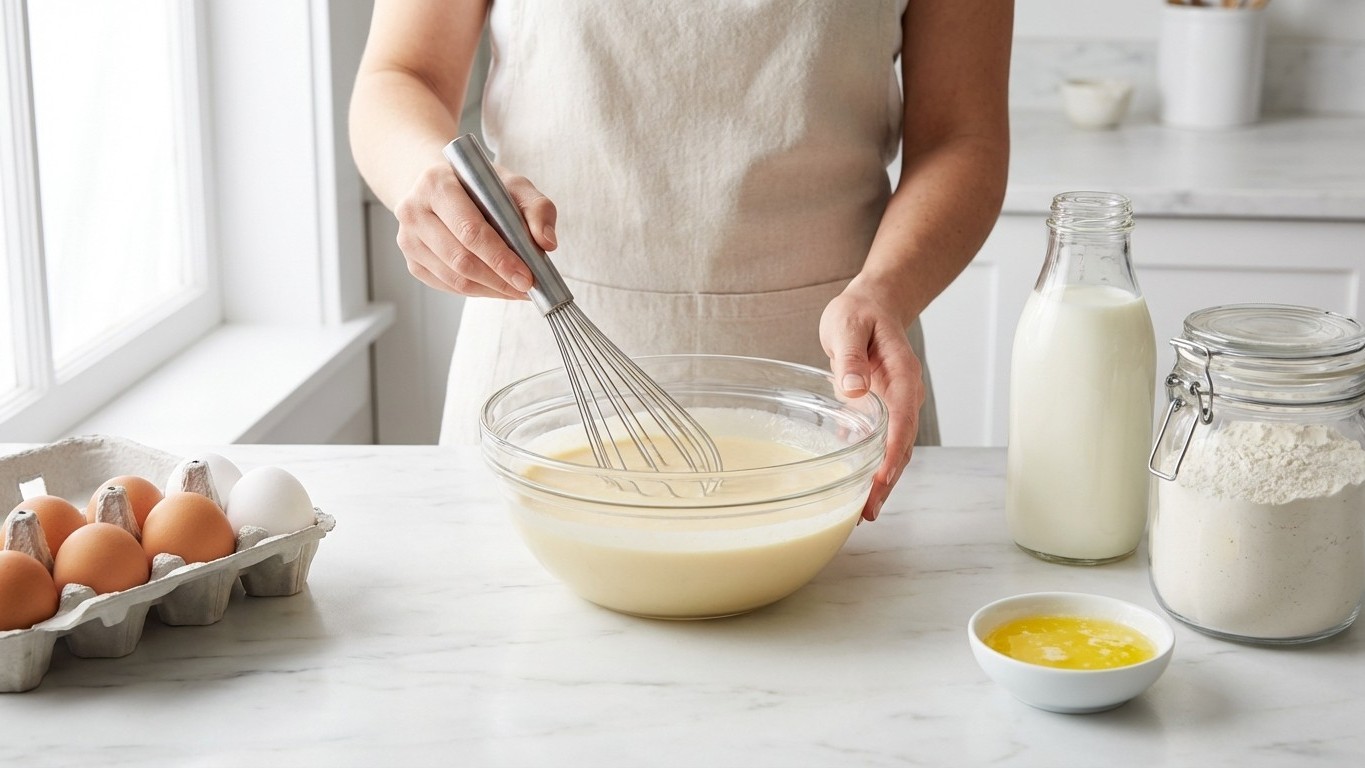
There’s nothing quite as frustrating as whisking crepe batter with the enthusiasm of a French chef, only to end up with a lumpy mess that looks more like cottage cheese than the silky foundation for perfect crepes. Yet millions of home cooks continue to struggle with this seemingly Changes-everything-in-30-seconds”>Changes-everything”>Changes-everything”>Simple-technique-changes-Everything-based-on-rose-type”>Everything-about-how-we-the”>simple task, resigned to picking flour lumps out of their batter or accepting mediocre results. the Truth is, there’s one transformative technique that professional chefs have been using for decades, and it’s so elegantly simple that you’ll wonder why cookbooks don’t shout it from every page.
The Secret-for-golden-broth”>Secret lies not in expensive equipment or exotic ingredients, but in completely reversing the way Most People approach mixing crepe batter. While conventional wisdom suggests gradually adding liquid to dry ingredients, the professional approach flips this logic entirely. Start with your wet ingredients in the bowl first – eggs, milk, and any melted butter – and whisk them into a smooth, homogeneous base. This creates what pastry chefs call a “liquid foundation,” a stable emulsion that welcomes flour rather than fighting it.
Once your liquid ingredients are perfectly combined, here comes the game-changing moment: add only half of your flour to this wet mixture. Whisk it in completely until smooth, then add the remaining flour. This two-stage flour incorporation prevents the protein networks in flour from clumping together when they hit liquid all at once. Think of it as introducing strangers at a party – gradual introductions work better than throwing Kitchen-gold”>Everyone-pours-down-the-drain-is-kitchen-gold”>Everyone together simultaneously.
The Science Behind Smooth Success
Understanding why this technique works transforms your entire approach to batter Making-a-major-comeback-in-every-outfit”>Making. Flour contains proteins that, when suddenly exposed to large amounts of liquid, form protective barriers around themselves, creating those stubborn lumps that no amount of aggressive whisking can eliminate. By creating a liquid foundation first, you’re essentially pre-conditioning the environment for flour integration.
The staged flour addition works because you’re creating what food scientists call “controlled hydration.” The first addition of flour disperses easily through the liquid base, creating a smooth paste that acts as a bridge for the remaining flour. This paste has already established proper protein networks, making it infinitely more receptive to additional flour particles.
Professional pastry chefs take this technique one step further by ensuring all ingredients are at room temperature Buying-fresh-herbs-once-i-discovered-this-simple-jar-trick”>Buying-my-humidifier”>Before beginning. Cold eggs or milk straight from the refrigerator create temperature differentials that can cause ingredients to seize or separate. Letting everything come to room temperature for about thirty Minutes before mixing creates the ideal environment for seamless integration.
Perfecting Your Technique
The beauty of this method extends beyond lump prevention – it Actually-makes-you-look-younger”>Actually-makes-you-look-younger”>Actually-explains”>Actually creates superior crepe texture. When flour is properly hydrated using this staged approach, the gluten develops more evenly, resulting in crepes that are simultaneously tender and strong enough to hold fillings Without tearing. The batter also achieves better consistency, meaning your crepes will have uniform thickness and cook more evenly.
Timing becomes crucial once you’ve mastered the mixing technique. After achieving that perfect smooth consistency, resist the urge to cook immediately. Professional crepe makers Always-check-before-buying-a-coat-on-sale”>Always let their batter rest for at least thirty minutes, and preferably an hour. This resting period allows the flour to fully hydrate and any air bubbles created during mixing to dissipate. The result is crepes with better texture and fewer holes or weak spots.
Temperature control during mixing also makes a significant difference. If you’ve melted butter for your recipe, ensure it’s cooled slightly before adding to the other wet ingredients. Hot butter can scramble eggs or create uneven textures that no amount of perfect mixing technique can remedy.
Beyond Basic Batter
Once you’ve mastered this fundamental technique, it opens doors to countless variations without fear of lumpy disasters. Want to add vanilla extract or orange zest? Incorporate them into your initial wet mixture. Planning herb crepes with fresh chives? Finely chopped herbs integrate beautifully into the liquid foundation before any flour appears. Even more adventurous additions like cocoa powder or matcha work seamlessly when added to the first half-flour stage.
This technique proves invaluable beyond crepes as well. the Same liquid-foundation principle applies to pancake batter, tempura batter, and even some cake batters. Understanding this fundamental principle of gradual incorporation rather than dumping and hoping transforms your entire relationship with batter-based cooking.