
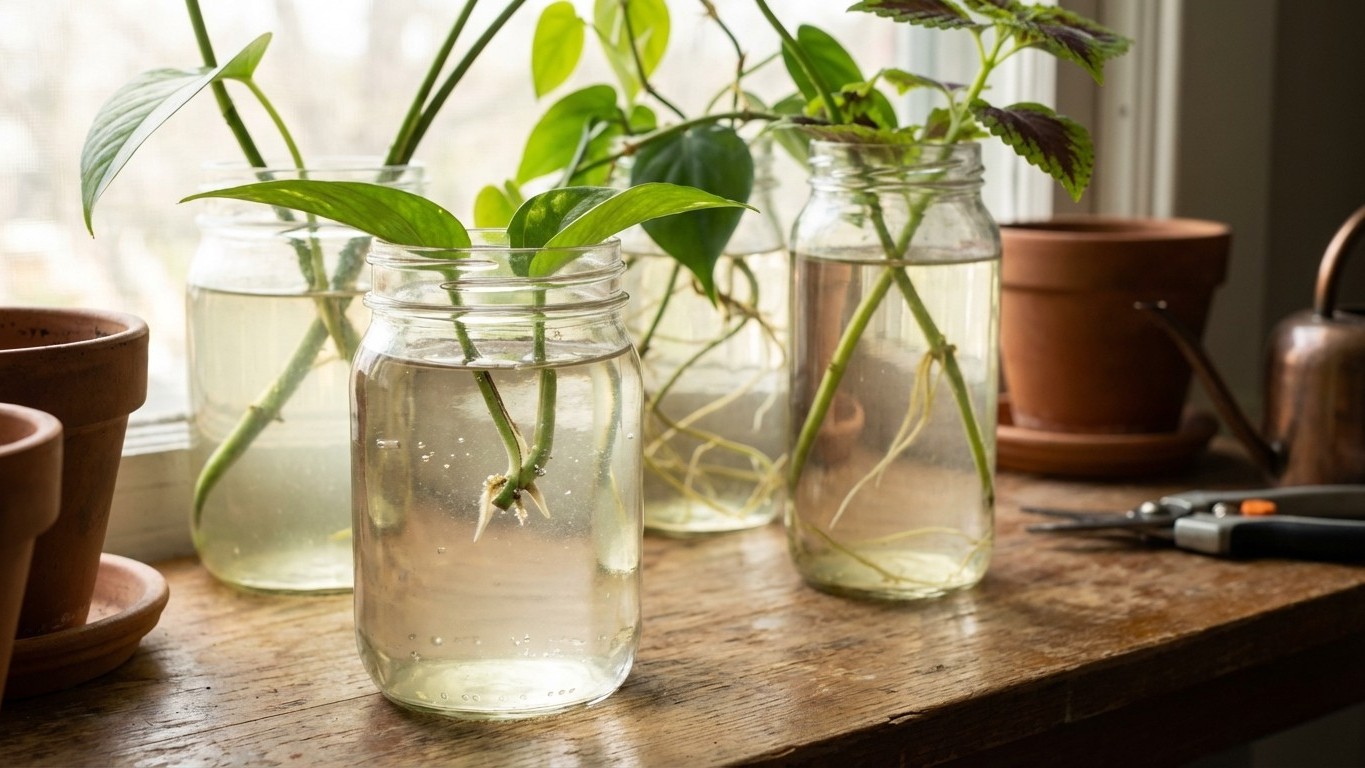
For years, I watched my plant cuttings wither and die with heartbreaking consistency. Despite following every tutorial, reading countless guides, and religiously misting my propagation setups, success remained elusive. Then one day, a seasoned gardener friend observed my routine and immediately spotted the culprit: I Was changing the water too frequently.
This revelation completely Transformed My understanding of plant propagation. Like many enthusiastic plant parents, I believed that fresh, clean water was Mistake-makeup-artists-fix-first”>Always better. Every few days, I’d dutifully dump out the slightly cloudy water and replace it with crystal-clear tap water, thinking I was providing the best environment for root development. What I didn’t realize was that I was essentially hitting the reset button on a delicate biological process that takes time to establish.
The Hidden Science Behind Successful Water Propagation
The magic of water propagation isn’t just about keeping stems hydrated – it’s about creating a stable microbial ecosystem. When you place a cutting in water, beneficial bacteria begin colonizing both the water and the cut surface of the stem. These microorganisms play a crucial role in protecting the vulnerable cutting from harmful pathogens while facilitating the complex chemical processes that trigger root formation.
Each time I Changed the water completely, I was washing away these beneficial bacteria and forcing the cutting to start this colonization process from scratch. The slight cloudiness I observed wasn’t contamination – It Was Actually-makes-you-look-younger”>Actually-makes-you-look-younger”>Actually a sign that the water was becoming biologically active and ready to support root development. By constantly refreshing it, I was inadvertently sabotaging my own efforts.
The optimal approach is to top off the water level as needed rather than completely replacing it. This maintains the established bacterial balance while ensuring adequate hydration. The water Should only be completely changed if it becomes genuinely foul-smelling or develops visible mold, which typically indicates the cutting itself is failing rather than the water being problematic.
Temperature Shock: The Secondary Saboteur
My water-changing obsession created another invisible problem: temperature fluctuations. Plant cuttings are incredibly sensitive to environmental changes-everything”>changes-everything-in-30-seconds”>Changes, and the temperature differential between established water and fresh tap water can stress the developing root system. Even a few degrees difference can slow cellular activity and disrupt the delicate hormone balance necessary for root formation.
Professional propagators Understand that consistency is key. They maintain their propagation water at stable temperatures and avoid sudden environmental changes that could shock their cuttings. This stability allows the plant’s natural rooting hormones to work effectively without interruption.
Additionally, tap water often contains chlorine and other chemicals that, while safe for drinking, can inhibit root development in sensitive plant tissues. When water sits for a few days, these chemicals naturally dissipate, creating a more plant-friendly environment. By constantly introducing fresh tap water, I was maintaining a chemical environment that worked against successful propagation.
Reading the Real Signs of Propagation Success
learning to interpret what Healthy propagation water actually looks like was perhaps the most valuable lesson in my plant journey. Slightly cloudy water with a faint earthy smell isn’t cause for alarm – it’s often a positive indicator of biological activity. The danger signs are dramatically different: water that smells putrid, develops a slimy film, or shows visible mold growth.
Successful cuttings often show subtle changes in their stems before visible roots appear. The cut end may swell slightly or develop small bumps called calluses. These are the precursors to root formation, and they need that stable water environment to develop properly. By maintaining consistent conditions, you’re giving these early root formations the best chance to develop into strong, healthy root systems.
The timeline for root development varies dramatically between species, from as little as a week for some herbs to several months for woody plants. Understanding this variability helps prevent the impatience that leads to over-intervention. Some of my most spectacular propagation successes took months to show visible progress, requiring patience and trust in the process.
Mastering the Art of Minimal Intervention
The most profound shift in my propagation practice was embracing a philosophy of minimal intervention. Instead of daily water changes, Simple-trick-under-the-covers-the-life-changing”>Simple-trick-under-the-covers-the-life-changing”>Simple-trick-under-the-covers-the-life-changing”>Simple-scarf”>I learned to simply monitor and occasionally top off the water level. This hands-off approach initially felt counterintuitive – surely more attention meant better care? However, plant propagation often succeeds best when we resist the urge to constantly adjust and improve.
This principle extends beyond water management to other aspects of cutting care. Constantly moving propagation containers to find ‘better’ light, adjusting humidity levels daily, or frequently checking for root development can all introduce stress that impedes success. Plants appreciate consistency more than perfection.
Now, my propagation routine is refreshingly simple: place cuttings in clean water, position in bright indirect light, and largely leave them alone except for periodic water level checks. This approach has dramatically increased my success rate and reduced the anxiety that previously surrounded my propagation attempts.
Understanding this fundamental Mistake transformed not just my propagation success, but my Entire relationship with plant care. Sometimes the best thing we can do for our plants is step back and let nature work its magic, providing support without interference. That cloudy water you’re tempted to change might just be the key to Finally achieving the propagation success you’ve been seeking.