
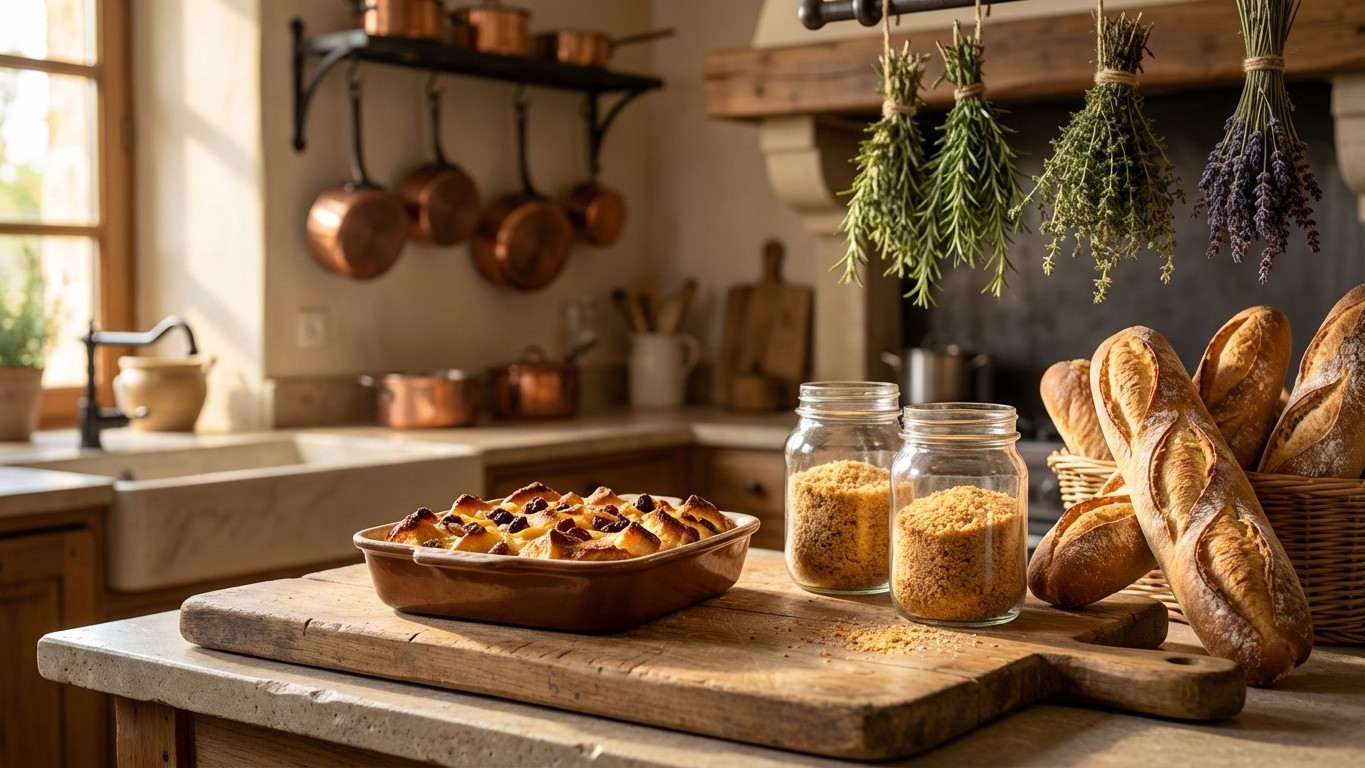
The moment I witnessed my French neighbor Marie-Claire lovingly cradle what I would have considered “garbage bread,” everything changed. That hard, day-old baguette wasn’t destined for the trash—it was about to become the foundation of a meal that would make my family beg for seconds. French grandmothers, or grand-mères, possess an almost mystical ability to see potential where others see waste, and their approach to stale bread is nothing short of revolutionary.
In French households, the concept of throwing away bread borders on sacrilege. These wise women understand that bread’s journey doesn’t end when it loses its Morning softness—it merely Transforms-every-sauce”>Transforms into something even more valuable. While Americans discard millions of pounds of bread annually, French grandmothers have been quietly perfecting the art of bread resurrection for centuries, treating each hardened loaf as a canvas for culinary creativity.
The Philosophy Behind French Bread Wisdom
The French relationship with bread runs deeper than mere sustenance—it’s woven into the cultural fabric of thrift, respect, and resourcefulness. Grand-mères who lived through wartime rationing developed an almost spiritual connection to every morsel, understanding that wasting bread meant wasting more than food—it meant disrespecting the baker’s craft, the farmer’s grain, And the family’s budget.
This philosophy manifests in practical wisdom that transforms kitchens. Instead of viewing stale bread as a problem, French grandmothers see it as an opportunity. The bread’s firm texture becomes an asset rather than a flaw, providing structure for dishes that would crumble with fresh loaves. This mindset shift alone can revolutionize how you approach cooking, turning perceived failures into triumphant meals.
Marie-Claire taught me that the French have specific terms for different stages of bread aging. Pain rassis refers to day-old bread That’s perfect for certain preparations, while pain dur describes the harder varieties ideal for others. This linguistic precision reflects a culture that doesn’t just tolerate aging bread—it celebrates its evolution.
The Magical Transformations French Grandmothers Master
The most beloved transformation involves creating pain perdu, literally “lost bread,” though nothing could be further from lost. French grandmothers soak thick slices of stale bread in a luxurious custard of eggs, cream, and vanilla, then pan-fry them to golden perfection. Unlike American French toast, which often starts with fresh bread, authentic pain perdu requires bread that’s lost its moisture—the better to absorb the rich custard.
But the magic extends far beyond Breakfast. French grandmothers craft extraordinary bread puddings that bear no resemblance to the heavy, overly sweet versions many Americans know. Their pouding au pain transforms stale bread into elegant desserts layered with seasonal fruits, delicate custards, and subtle spices. The secret lies in the bread’s ability to absorb flavors while maintaining structural integrity—something impossible with fresh loaves.
Perhaps most ingeniously, these culinary wizards create chapelure maison—homemade breadcrumbs that surpass any store-bought variety. By slowly drying bread pieces and grinding them into various textures, they produce breadcrumbs with complex flavors and superior binding properties. These golden treasures become the foundation for gratins, the coating for escalopes, and the secret ingredient in countless family recipes.
The savory applications prove equally transformative. French grandmothers stuff vegetables with mixtures incorporating torn stale bread, creating dishes where the bread becomes a flavor-absorbing sponge that amplifies every herb and spice. They craft rustic bread salads where hard bread is softened with ripe tomato juices and aromatic vinaigrettes, creating textures and flavors impossible with fresh ingredients.
Practical techniques You Can Master Today
The beauty of French grandmother wisdom lies in its accessibility. These techniques require no special equipment or exotic ingredients—just a shift in perspective and a willingness to experiment. The key principle involves understanding that different levels of staleness serve different culinary purposes, much like how different wines pair with different courses.
For bread that’s one to two days old, consider it perfect for thick-cut French toast or bread-based stuffings. The slight firmness prevents mushiness while allowing optimal flavor absorption. Three to four-day-old bread excels in bread puddings and gratins, where its sturdy structure provides the perfect foundation for creamy or saucy preparations.
When bread reaches the very hard stage, don’t despair—you’ve reached breadcrumb gold. French grandmothers often deliberately let bread reach this stage, knowing it will produce the finest, most flavorful crumbs. Simply break it into pieces, toast lightly if desired, and process into crumbs of varying textures depending on your intended use.
Storage becomes Crucial in this process. French grandmothers never store bread in plastic, which creates moisture and promotes unwanted mold. Instead, they wrap bread in clean kitchen towels or paper bags, allowing it to age naturally while maintaining food safety. Some even have dedicated bread boxes designed to control humidity and airflow, creating optimal conditions for controlled aging.
The transformation from waste-conscious American to bread-respecting French grandmother disciple isn’t just about saving money or reducing waste—though both benefits are substantial. It’s about developing a deeper relationship with food, understanding that ingredients evolve and change, and learning to work with these changes-everything”>changes rather than against them. Every time I now see a hardening baguette, I don’t see failure—I see potential for tomorrow’s extraordinary meal, Exactly as Marie-Claire taught me to see it.