
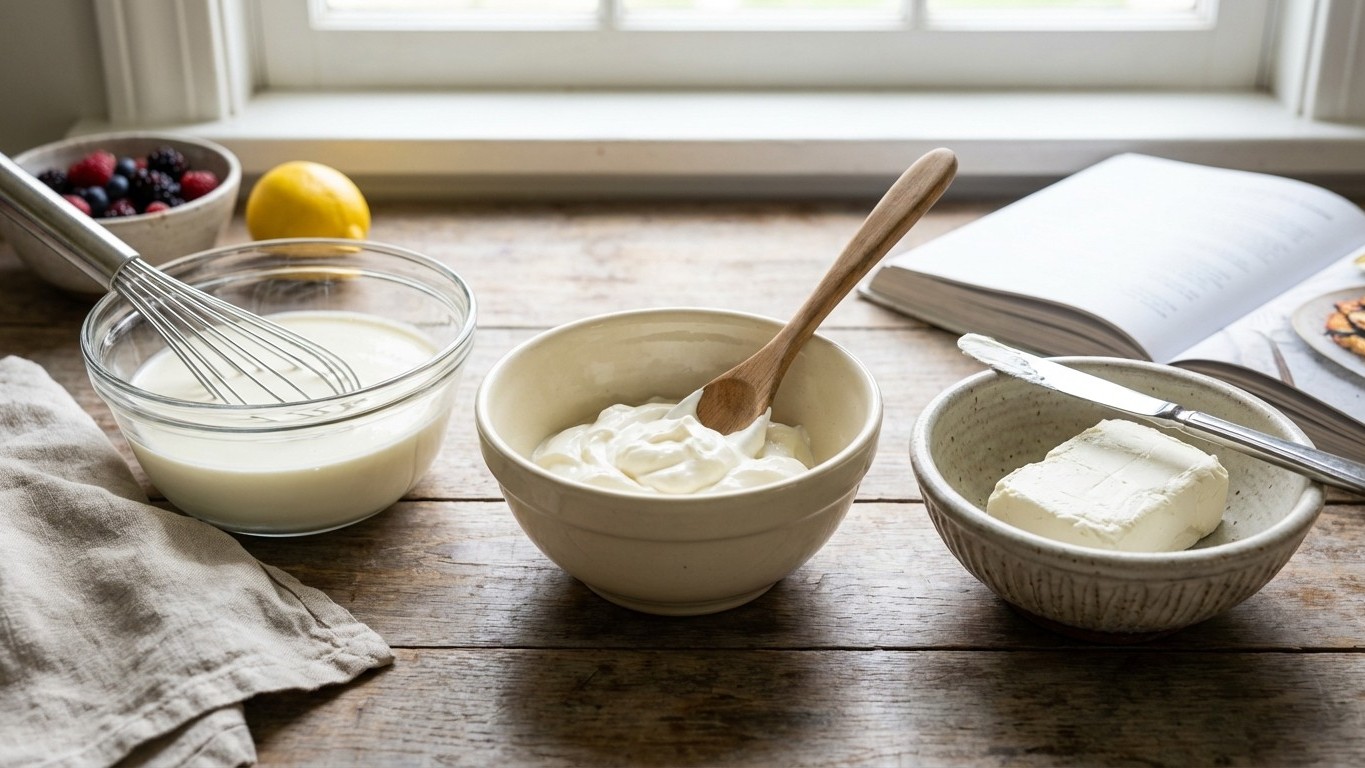
Every home cook has experienced that frustrating moment when a dish that Should Have been spectacular turns out mediocre, and you can’t quite pinpoint why. The culprit might be hiding in your refrigerator door, in the form of three seemingly innocent cream products that you’ve been unknowingly Sabotaging your meals with.
The revelation comes from professional chefs and culinary instructors who’ve noticed a persistent Pattern among home cooks: the indiscriminate mixing of heavy cream, sour cream, and cream cheese in recipes where they don’t belong together. This triple threat of dairy confusion is more widespread than you might imagine, affecting everything from pasta sauces to dessert preparations.
The Science Behind the Culinary Catastrophe
Understanding why this combination fails requires diving into the fundamental chemistry of these three cream varieties. Heavy cream, with its high fat content and neutral pH, behaves predictably under heat and maintains its smooth texture when properly handled. Sour cream brings acidity and tang, but its lower fat content and acidic nature make it prone to curdling when exposed to high temperatures or mixed with alkaline ingredients.
Cream cheese adds another layer of complexity with its dense protein structure and stabilizers. When these three are combined carelessly, their different fat contents, pH levels, and protein structures create a perfect storm of culinary chaos. The result is often a grainy, separated, or overly thick mixture that lacks the smooth, luxurious mouthfeel that each cream can provide individually.
Professional pastry chefs have long understood that timing and temperature are changes-everything”>changes-everything-this-winter”>Everything when working with dairy. The Mistake-doubled-my-heating-bill”>Mistake many home cooks make is treating all Creams as interchangeable ingredients, adding them simultaneously or at the wrong stages of cooking. This approach ignores the unique properties that make each cream special and useful in specific culinary applications.
Recognizing the Signs in Your Cooking
The evidence of this mixing mishap often appears as subtle disappointments in your finished dishes. Pasta sauces that should be silky instead turn grainy or separate. Soup bases become unexpectedly thick or develop an unpleasant texture. Dessert preparations refuse to achieve the smooth consistency you’re aiming for, despite following the recipe precisely.
Many cooks attribute these failures to other factors – perhaps they think they overcooked the dish, used the wrong pan, or misread the recipe. The reality is often simpler: they’ve disrupted the delicate balance that each type of cream requires to perform its intended function in the dish.
Temperature shock is another common consequence of improper cream mixing. When cold sour cream meets hot heavy cream in a sauce, the temperature differential can cause immediate curdling. Similarly, adding cream cheese directly to a hot mixture without proper tempering can result in lumpy, unappetizing textures that no amount of whisking can smooth out.
The Path to Cream Mastery
Transforming your relationship with these three cream varieties begins with understanding their individual strengths and optimal uses. Heavy cream excels in hot applications, can be whipped for desserts, and provides richness without competing flavors. Its high fat content makes it stable under heat, perfect for reduction sauces and cream-based soups.
Sour cream shines when added at the end of cooking processes or used in cold applications. Its tangy flavor profile makes it ideal for finishing touches on soups, incorporating into cold dressings, or creating marinades where acidity is desired. The key is protecting it from high heat and understanding that its lower fat content means it needs gentle treatment.
Cream cheese brings body and mild tang to both sweet and savory applications, but requires patience and proper Technique. Room temperature cream cheese blends smoothly into mixtures, while cold cream cheese often creates lumps that are difficult to eliminate. Its protein structure responds well to gradual temperature changes and gentle incorporation methods.
Practical Solutions for Immediate Improvement
The transformation of your cooking begins with strategic timing and temperature control. Instead of adding all creams simultaneously, introduce them at stages that respect their individual properties. Start with heavy cream for building your base, allow it to heat and thicken naturally, then remove from direct heat Before-their-feet-hit-the-floor-it-protects-their-backs”>Before gently folding in sour cream or properly tempered cream cheese.
Room temperature management becomes Crucial for consistent results. Planning ahead to bring cream cheese to room temperature, or using techniques like cutting it into small pieces and letting it warm gradually, prevents the lumpy disasters that plague many dishes. Similarly, tempering cold dairy by gradually adding small amounts of hot mixture helps prevent temperature shock.
Professional chefs often employ the technique of creating cream mixtures off-heat, combining different creams in a separate bowl before introducing them to the main dish. This controlled environment allows you to achieve the perfect consistency and flavor balance before committing the mixture to your recipe.
The journey from cream confusion to culinary confidence doesn’t require expensive equipment or advanced techniques – just awareness of how these common ingredients behave individually and together. By respecting each cream’s unique properties and optimal use cases, you’ll discover that your dishes naturally achieve the luxurious textures and balanced flavors you’ve been striving for. The secret was never about avoiding these creams, but rather about understanding when And How to use each one to its full potential.