
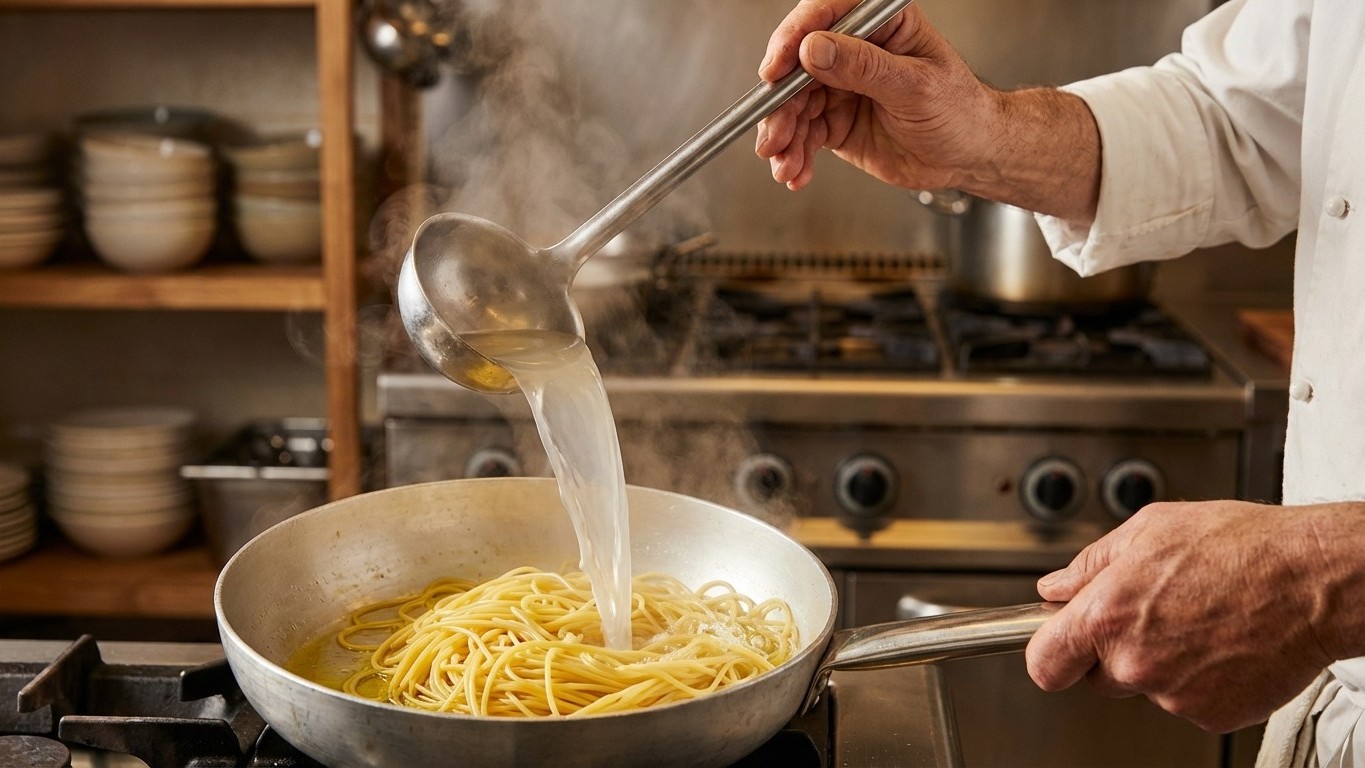
That cloudy, starchy water you’ve been draining away after cooking pasta isn’t Kitchen waste—it’s liquid gold. Professional chefs have long guarded this secret weapon, and now science backs up what Italian grandmothers Have Known for generations: pasta water is the key to creating transcendent sauces that cling to every strand like silk.
What makes this humble cooking liquid so transformative? Pasta releases a small amount of starch while cooking in the water. While adding pasta water to the sauce, you’re also adding some starch too, which will help the sauce cling to the pasta. This isn’t just culinary folklore—it’s chemistry in action.
The magic happens when dry pasta sheds starch into the water as it cooks. That cloudy liquid is basically edible glue, in the best possible way. When you finish the pasta in the pan, that starch binds with fat and heat to create an emulsion. Think of it as nature’s thickening agent, working behind the scenes to marry your sauce and pasta into one cohesive, glossy masterpiece.
The Science Behind the Magic
Understanding pasta water requires a quick dive into food science. The leached starch (and proteins) contribute to a creamy texture of the sauce, enhance the taste by the previously added salt, and facilitate a perfect adhesion of the sauce at the noodle surface. Recent research has shown that the ideal starch concentration is in the neighborhood of 2–3%, a little more than regular pasta water usually contains. Cooks can achieve the proper starchiness by concentrating the pasta water a bit by using less water during cooking.
Emulsion sounds technical, but you see it every day: it’s what makes mayonnaise creamy, or vinaigrette thick Instead of watery. Italian chefs apply that same science to pasta, using that starchy water to make the sauce cling. This process, known as mantecare, Transforms simple-trick-restores-stainless-steel-shine”>Simple ingredients into restaurant-quality dishes through the power of proper emulsification.
Professional chefs understand that adding a cup (or more) of starchy pasta-cooking water is what Actually-look”>Actually-flatters-every-body-type-according-to-stylists-and-why-it-s-not-what-you-think”>Actually-works”>actually creates the unctuous texture of aglio e olio, bringing together the seasoned oil and the cooking water into an emulsified, creamy sauce. The technique works across countless recipes, from the simplest garlic and oil preparations to more complex cream-based sauces.
How Top Chefs Master the Technique
The professionals have refined this ancient technique into a precise art form. The pasta is traditionally cooked only halfway (known as al chiodo, or “to the nail”). It is then drained, added to the pan with other ingredients (which typically include some form of fat) and a lot of starchy pasta water, and simmered until al dente and the liquid has reduced into a creamy sauce. This last step in the process is known as mantecare.
Renowned chef Massimo Bottura, renowned chef of Osteria Francescana, aptly describes pasta water as “liquid gold.” It enhances not only consistency but also helps season your sauce subtly due to the salt dissolved during cooking. This seasoning aspect is crucial—the salted cooking water doesn’t just bind ingredients, it integrates flavor throughout the dish.
Celebrity chef Lidia Bastianich recommends ladling some pasta water into the mixture of pasta and sauce, then letting it cook on a low flame until the pasta is cooked through. The pasta water will initially increase the volume of the sauce, and then, as it cooks, it will thicken the sauce, allowing it to coat the pasta better. This Technique works whether you’re stretching a sauce or perfecting its consistency.
Practical Tips for Home Cooks
Mastering pasta water technique at home requires understanding a few key principles. J.Kenji Lopez Alt explains that you should only boil pasta in enough water to cover the pasta. Doing so will yield an even more starchy pasta water. Using less water concentrates those precious starches that will later transform your sauce.
The timing is crucial. Salt the water until it really tastes of something. Cook the pasta 1–2 minutes less than the packet says. Reserve at least one cup of the cooking water Before draining. Finish the pasta for 1–3 minutes in the sauce over gentle heat. Add the starchy water little by little, stirring, until it turns glossy.
Many home cooks make the Mistake-everyone-makes-when-choosing-a-sofa-bed”>Mistake of adding Too Much pasta water at once or using water that’s lost its heat. Start by incorporating small amounts (a few tablespoons) of reserved water while stirring vigorously until you achieve an ideal coating on each noodle. Keep adding little bits until everything feels cohesive; avoid dumping large quantities all at once since this could dilute flavors instead of enhancing them.
For those times when you forget to reserve pasta water, Christopher Kimball’s Milk Street offers a brilliant workaround: Microwaving it for 2 minutes, stirring, then heating for another 2 minutes worked great. And when we tested pasta recipes using both traditional cooking water and our cornstarch fix, we found them almost indistinguishable.
Beyond Basic Sauce Making
The applications extend far beyond traditional Italian preparations. Use the pasta water as a base for soups and stews: The starchy water can be used as a base for soups and stews, adding depth and richness to your dishes. Add the pasta water to your sauce at different stages: Experiment with adding the pasta water at different stages of cooking to achieve different textures and flavors.
This technique fundamentally changes-everything”>Changes how you approach pasta cooking. Once you see pasta as a dish that’s “born in the pan”, you start cooking differently. You stop thinking of sauce as something that sits on top, and start thinking of it as something that seeps into every bite. That single shift makes basic pantry recipes suddenly feel worthy of guests.
The next time you’re about to drain that cloudy cooking water, pause and remember what the professionals know: you’re holding the key to transforming ordinary pasta into extraordinary cuisine. Save that starchy elixir, add it thoughtfully to your sauce, and watch as simple ingredients become something magical through the ancient alchemy of proper technique.