
What if the secret to dramatically improving your muscle endurance and fighting fatigue wasn’t about pushing harder, but walking smarter? A revolutionary walking technique developed by Japanese researchers at Shinshu University has captured global attention for its remarkable ability to enhance muscle strength and cardiovascular fitness in ways traditional walking simply can’t match.
This method, known as interval walking training (IWT) or Japanese walking, has been shown to produce greater increases in leg strength, thigh muscle strength, and overall physical fitness compared to steady-pace walking. Studies reveal participants experienced a 13 percent increase in knee extension and 17 percent increase in knee flexion strength after following the protocol. The technique transforms a simple daily activity into a powerful tool for combating muscle fatigue and building lasting endurance.
The Science Behind Japanese Walking’s Muscle-Boosting Power
The Japanese walking method, developed by Professor Hiroshi Nose and Associate Professor Shizue Masuki at Shinshu University, involves alternating between three minutes of higher-intensity walking and three minutes of lower-intensity recovery, repeated for at least 30 minutes, four times per week. What makes this approach so effective lies in its strategic use of interval training principles applied to walking.
When you work out at high intensity, you increase blood flow to your muscles and make your heart beat faster, triggering beneficial adaptations. Over time, this leads to increased cardiorespiratory fitness, meaning your body can better consume oxygen because your heart and lungs are stronger. The alternating intensity Pattern specifically targets muscle fatigue resistance while building strength.
During the protocol, participants walk at 70% of their peak aerobic capacity for three minutes—a moderate to high-intensity pace where you’re slightly out of breath—followed by three minutes at 40% capacity, which feels comfortable and conversational. This precise calibration allows muscles to work harder during intense intervals while recovering effectively during rest periods.
Beyond Fatigue: The Comprehensive Health Revolution
Recent 2025 research confirms that older adults who practiced Japanese walking for five months showed improvements in resting blood pressure, lower-limb muscle strength, and VO2 max—a key indicator of cardiovascular fitness and aerobic endurance. A comprehensive 2024 review concluded the health benefits were “well established both in middle- and older-aged but otherwise Healthy individuals and in individuals with metabolic diseases.”
The method particularly excels at building endurance and improving VO2 max. Studies show participants achieved 8 to 14 percent improvements in aerobic capacity over five months, with men improving their peak aerobic capacity by an average of 10.86 percent. This improvement in oxygen utilization directly translates to reduced muscle fatigue during daily activities.
The benefits extend beyond muscle performance. Research demonstrates improvements in insulin sensitivity and glycemic control, making it particularly valuable for people managing type 2 diabetes or prediabetes. Studies show enhanced muscle strength, motor function metrics, and balance index scores—all crucial factors for reducing fall risks and improving daily function.
The Mindful Movement Component
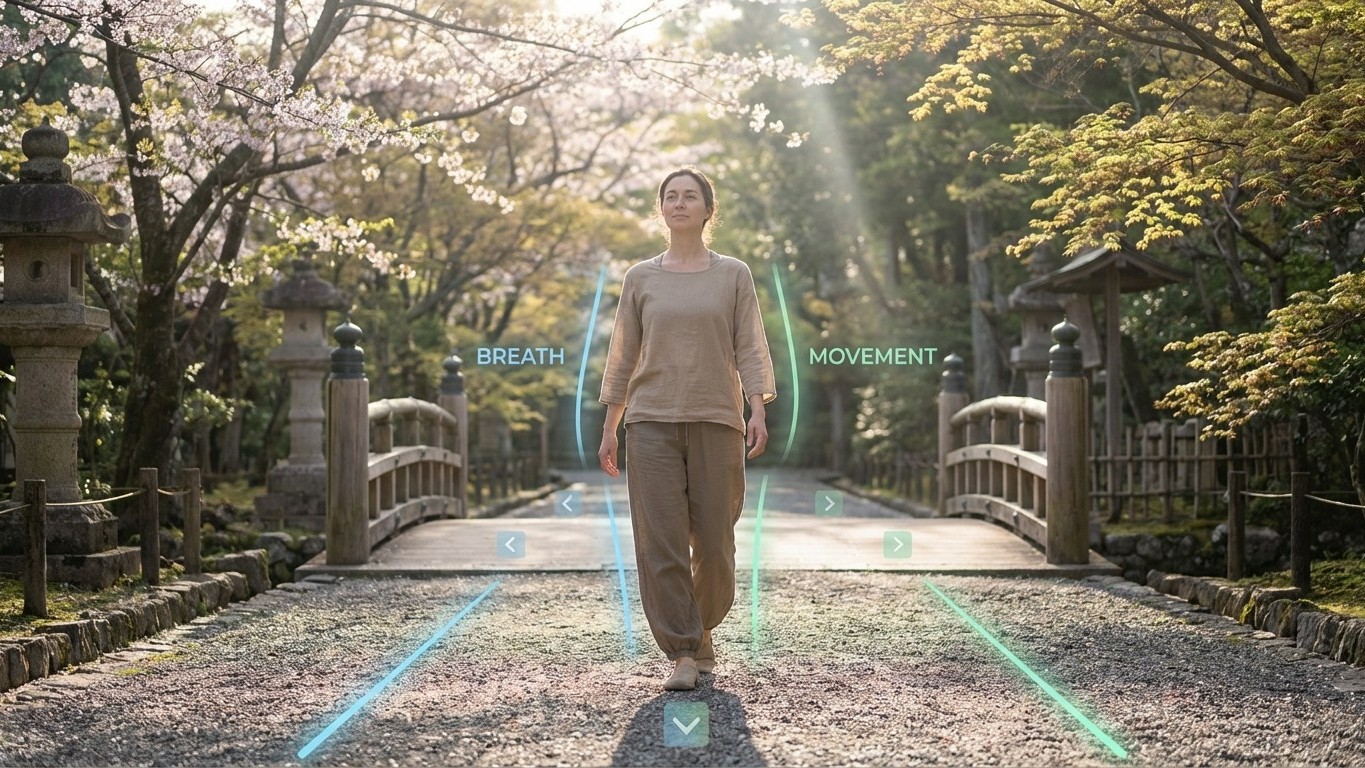
Beyond the interval structure, traditional Japanese walking emphasizes proper posture and mindful movement. This involves maintaining a tall spine with slightly tucked chin, relaxed shoulders, and gentle engagement of abdominal muscles—not a crunch, but enough to support your spine. This postural awareness contributes to the method’s effectiveness in reducing overall fatigue.
The technique incorporates breath connection, where you inhale for a few steps and exhale for the next, creating rhythm, focus, and calm. This alignment of body, breath, and mind represents the true essence of Japanese walking—it’s not aggressive, but graceful. This mindful approach helps reduce the mental fatigue that often accompanies physical exertion.
Getting Started: Your Path to Enhanced Endurance
Beginning your Japanese walking practice is straightforward. Start with a few minutes of slow walking to prepare your muscles and joints. Then alternate between three minutes of fast walking at about 70% of your maximum effort (where you’re breathing heavily but can still hold a conversation) and three minutes at 40% effort (an easy, comfortable speed). Repeat the intervals five times for a total of 30 minutes, then cool down with slow walking and stretching.
For beginners, experts recommend starting low and building slowly. Try walking at your regular pace for a few minutes, then walk briskly for 20-30 seconds, and repeat for the duration of your walk. As your body adapts to this new exercise stimulus, you can gradually increase the duration of the faster walking intervals.
The beauty of this method lies in its efficiency. If you can’t carve out a 30-minute block, you can break it into three 10-minute walks throughout the day. The routine requires only about two hours per week, compared to roughly 10 hours needed to achieve the Recommended 10,000 daily steps. Research shows an impressive 95% adherence rate among participants, suggesting this is a sustainable approach most people can maintain long-term.
The Japanese walking method represents a paradigm shift in how we think about exercise and fatigue management. By working with our body’s natural rhythms and recovery patterns, rather than against them, This Technique offers a scientifically-backed pathway to enhanced muscle endurance, reduced fatigue, and improved overall health. In a world where time is precious and results matter, Japanese walking delivers both efficiency and effectiveness in one elegant, accessible practice.