
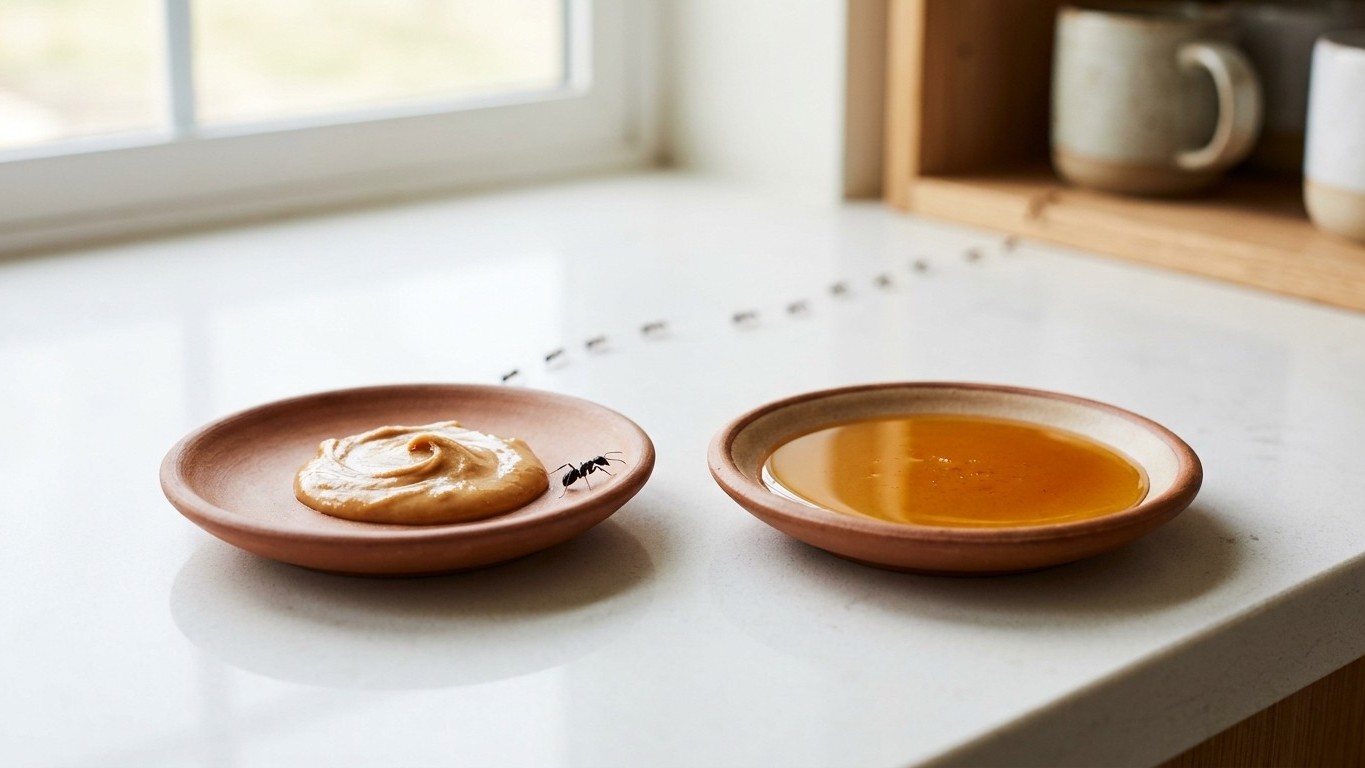
Three weeks of honey drops on a saucer. Sugar water in a bottle cap. And still, the trail of tiny black ants kept marching straight past the buffet toward the pantry, the pet bowl, the grease-splattered stovetop. Turns out the pest technician who finally solved the mystery had a one-line explanation: in August, plenty of household black ants aren’t after sugar at all. They want protein and fat.
That distinction sounds minor. It isn’t. Get the macronutrient wrong and you can leave bait sitting untouched for days while the infestation quietly grows behind the baseboards.
Key takeaways
- The ‘sugar ant’ label is misleading—most common household ants prefer grease and protein, especially in summer
- Ant colonies shift their nutritional priorities throughout the year based on brood development and colony needs
- A bait that worked perfectly in spring can be completely ignored by July, and most people never figure out why
Not every “sugar ant” actually wants sugar
The nickname is doing a lot of damage here. “Sugar ant” gets slapped on almost any small dark species that shows up in a kitchen, but the little black ant (Monomorium minimum), one of the most common culprits in U.S. homes, doesn’t fit the stereotype. According to a University of Nebraska–Lincoln extension fact sheet distributed through state agriculture programs, big-headed ants, little black ants and pavement ants prefer grease and protein, and they respond best to protein/grease baits. Honey and sugar water simply aren’t on their priority list, no matter how patiently you refill the saucer.
The broader ant world backs this up with some genuinely counterintuitive biology. Colonies don’t eat one way year-round. Research on nutrient regulation published in PLOS ONE found that summer colonies increased the amount of food collected as the protein-to-carbohydrate ratio of their food became increasingly imbalanced, while fall colonies collected similar amounts regardless of that ratio, meaning the same species can forage in entirely different ways depending on the month. Pest management professionals see this play out constantly. As one industry piece for Pest Management Professional put it, the nutritional needs of most ant colonies change throughout the year, and in spring, ants focus on colony reproduction and growth, foraging for food sources with proteins and fats to fuel the developing brood. Sugar becomes the priority mainly once that brood-rearing push slows down, which is exactly why a bait that worked beautifully in April can go completely ignored by July.
Why August throws people off
Here’s the twist that trips up most homeowners: August sits right in the messy overlap between “colony needs sugar for energy” and “colony still needs protein for late brood.” Some species genuinely do crave carbohydrates by midsummer. But others, little black ants among them, along with pavement ants and grease ants, stay locked onto protein and fat basically year-round, treating sweets as a backup rather than the main course. A New York pest control resource notes plainly that grease ants aren’t attracted to sweets like other species of ants, which is why it’s better to use meat, oil, and other greasy food when luring them out. So the honey trap wasn’t failing because it was stale or poorly placed. It was failing because it was speaking the wrong culinary language entirely.
There’s also a colony-logic reason behind the pivot. Larvae, not adult workers, are the ones driving the protein demand, because protein provides amino acids that are used predominately by larvae to grow, while carbohydrates are used as a substrate for energy. If a colony is still actively rearing brood in late summer, which happens more often than most people assume, the workers keep hauling home grease and meat scraps no matter how tempting the sugar water looks to a human observer. A New Zealand pest advisory sums up the practical fallout: ants tend to find and feed on foods dependent on the needs of the nest or colony at the time, switching from requiring protein foods to carbohydrate foods based on whether the colony needs energy for foraging or protein for brood production. Bait one nutrient, get ignored; bait the other, get devoured. There’s genuinely no way to guess right without a bit of trial and error, or without knowing exactly which species you’re hosting.
What actually works once you switch the menu
The fix, according to the technician, was almost embarrassingly simple. Swap the honey for something greasy. A dab of peanut butter, a smear of bacon fat, even canned tuna oil dabbed near the trail worked within a day where the sugar water had failed for weeks. This tracks with what extension entomologists recommend for DIY control: pairing a protein source with a slow-acting toxicant like boric acid so the ants carry it back and share it with the rest of the nest through trophallaxis, rather than just poisoning the scouts you can see on the counter.
Professional-grade advice leans the same direction. One pest control resource notes that when a bait isn’t working, if you’re using a sugar-based bait, try switching to a protein bait, and if you’re using a protein bait, switch to a sugar-based one, treating it as a genuine diagnostic tool rather than a guessing game. It’s worth running both options side by side for a few days rather than committing fully to one, since a mixed colony or a household with more than one species can make the “right” answer split down the middle.
One more wrinkle worth knowing before restocking the bait station: little black ant colonies can house multiple queens and satellite nests, which means a single visible trail in the kitchen might represent just one tentacle of a much larger, well-fed household. Switching the menu gets the ants talking to the bait again. Whether it clears the whole colony out is a different question, and often the honest answer from any technician is that it depends on how many nests are actually hiding in the walls.
Sources : issuu.com | explainthat.org