
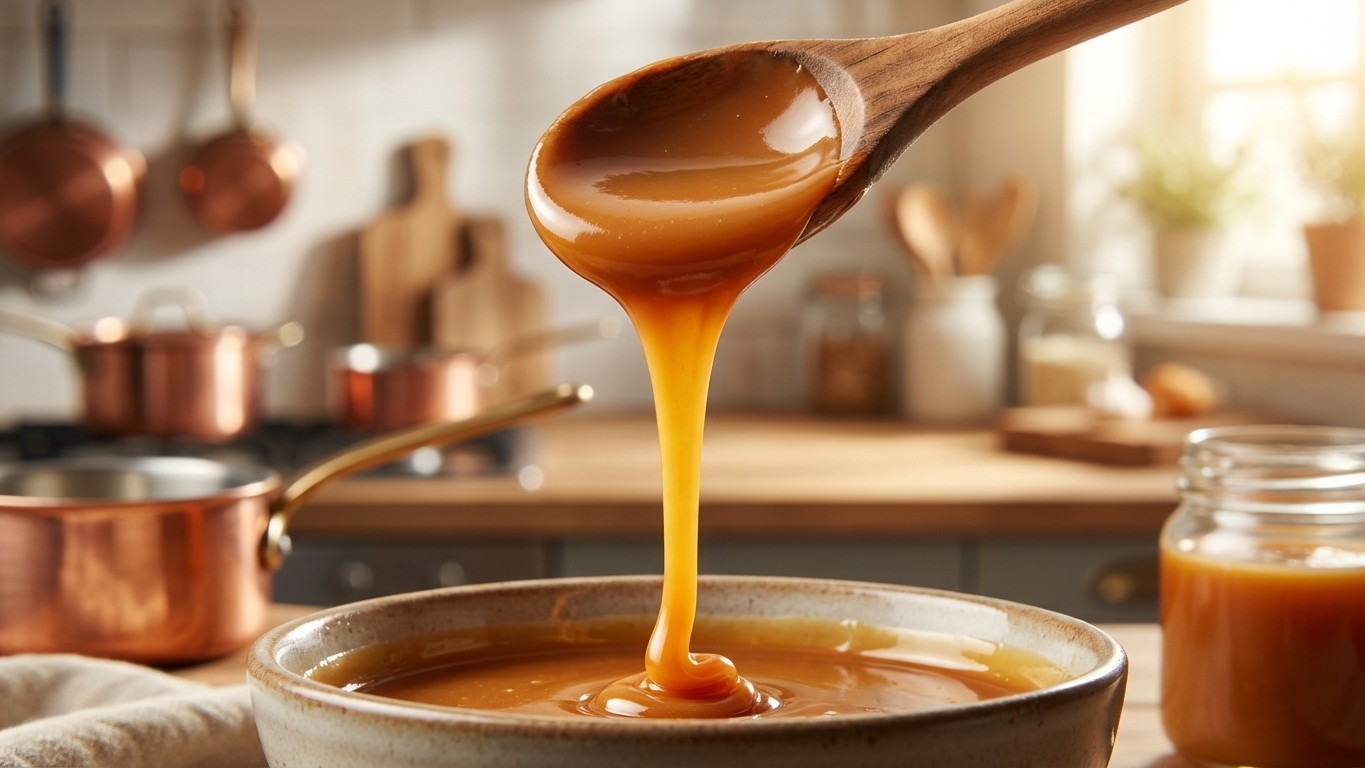
That beautiful amber liquid you carefully stirred and watched over transforms into an inedible brick within hours. Sound familiar? After countless failed attempts at silky caramel sauce that ended up resembling dental work hazards, I finally discovered the culprit behind this kitchen heartbreak. The answer isn’t what most home cooks expect, and it has nothing to do with cooking temperature or timing.
The Hidden Chemistry Behind Caramel’s Transformation
The secret lies in understanding what caramel actually wants from us. When sugar molecules heat up and break down, they’re desperate to bond with something. Most recipes focus obsessively on achieving the perfect golden color or reaching precise temperatures, but they miss the crucial moment when your caramel is crying out for moisture.
Here’s the game-changing revelation: the hardening happens because we’re not giving our caramel enough liquid to stay supple. Traditional recipes call for adding cream or butter at the end, but by then, those sugar molecules have already started forming rigid crystalline structures. It’s like trying to soften concrete after it’s begun to set.
The moisture content in your final caramel determines everything about its texture. Professional pastry chefs know this instinctively, which is why their caramel sauces remain gloriously pourable days later while ours turn into amber fossils overnight. They’re not using magic ingredients or Secret techniques—they’re simply working with caramel’s natural tendencies instead of against them.
The Technique That Changes Everything
The breakthrough moment came when I started thinking about caramel as a living system rather than a simple sugar transformation. Instead of waiting until the sugar reaches that coveted amber stage to add liquid, successful caramel-making requires introducing moisture earlier in the process, but not in the way most people think.
The technique involves creating what pastry professionals call a “wet caramel” foundation. Rather than starting with dry sugar and hoping for the best, you begin by dissolving your sugar completely in a small amount of water or cream. This creates a syrup base that maintains molecular flexibility even as temperatures climb. The sugar molecules have liquid partners from the very beginning, preventing them from forming those rigid bonds that lead to hardening.
But here’s where it gets interesting: the ratio matters more than the ingredients themselves. Too little liquid, and you’re back to the hardening problem. Too much, and your caramel never develops that rich, concentrated flavor we’re chasing. The sweet spot lies in using just enough liquid to keep those sugar molecules dancing rather than crystallizing, while still allowing for proper concentration and color development.
Temperature monitoring becomes less about hitting exact numbers and more about understanding the visual and aromatic cues that tell you when your caramel has reached optimal consistency. The mixture should coat a spoon without immediately dripping off, and the color should be deep amber without crossing into bitter territory. Most importantly, it should still move freely in the pan, indicating that molecular flexibility has been preserved.
Beyond the Basic Fix: Creating Caramel That Stays Perfect
Once you’ve mastered the moisture balance, the next level involves understanding how different liquids affect your caramel’s behavior over time. Heavy cream creates the most stable texture because its fat content provides additional protection against crystallization. Butter adds richness but can sometimes separate if the temperature fluctuates. Even the type of sugar you choose influences the final texture, with some varieties naturally retaining more moisture than others.
Storage becomes infinitely easier when your caramel has been properly balanced from the start. Instead of desperately reheating solid chunks, you’ll have a sauce that may thicken slightly when cool but never loses its essential pourability. A gentle warming in the microwave or a double boiler brings it back to perfect consistency without the stress and waste of starting over.
The transformation extends beyond just texture. Properly balanced caramel develops more complex flavors because the controlled moisture allows for even heat distribution throughout the cooking process. You’ll notice deeper notes and a more rounded sweetness that comes from sugar molecules that had time to properly transform rather than shock into crystallization.
Your New Caramel Confidence
This revelation changes everything about how you approach caramel-based desserts. Suddenly, drizzling warm caramel over ice cream becomes a spontaneous possibility rather than a planned production. Your caramel apples will have that perfect coating that doesn’t crack or slide off. Even ambitious projects like caramel-filled chocolates become achievable when you know your filling will maintain the right consistency.
The best part? Once you understand this fundamental principle, you can adapt any caramel recipe to work reliably. Whether you’re making salted caramel sauce for coffee drinks or incorporating caramel into complex pastries, the same moisture-balance approach ensures consistent results Every Time. Your kitchen confidence will soar knowing that beautiful amber liquid will stay exactly as gorgeous and usable as when you first made it.