
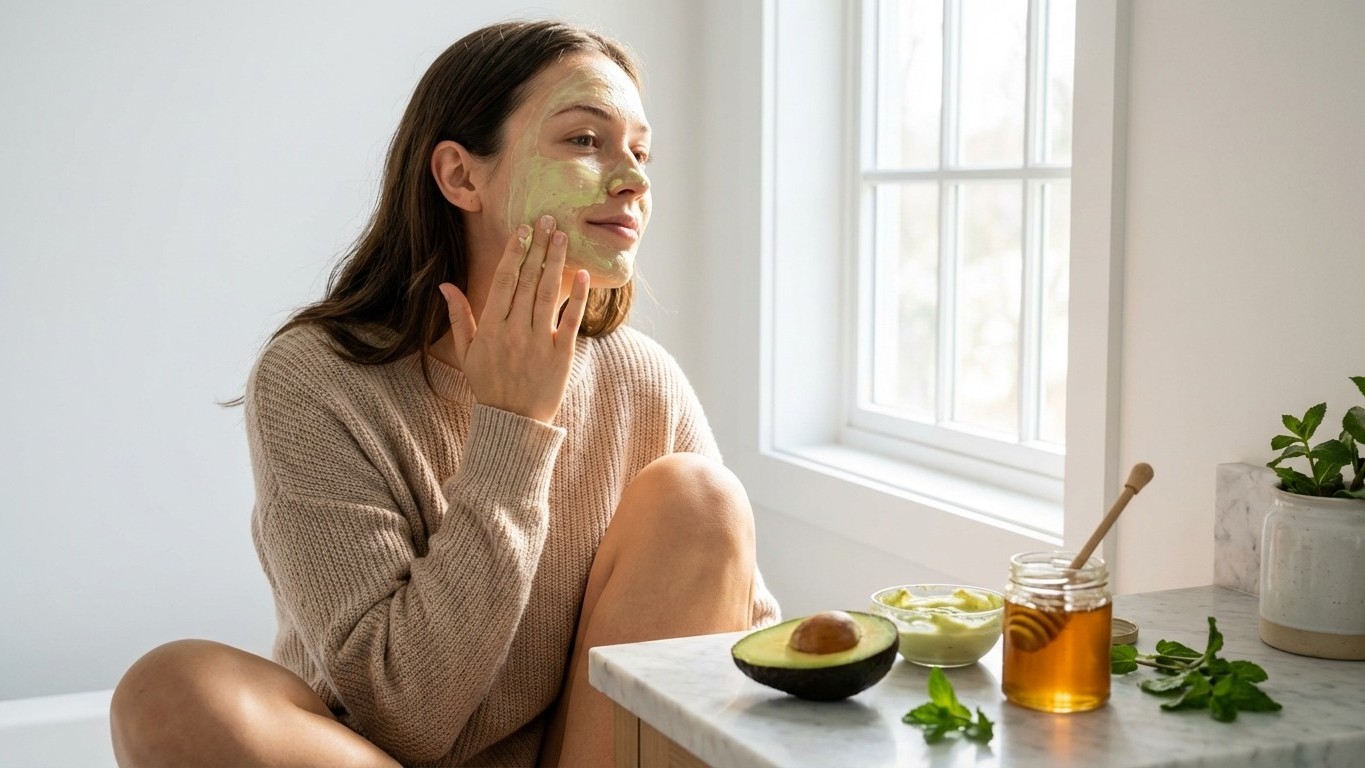
Picture this: a Sunday evening ritual, a ripe avocado sitting on your counter, raw honey in the pantry, and ten free minutes. That, right there, is the origin story of some of the most effective skin treatments you’ll ever try. Natural homemade face masks have been a beauty staple from ancient Egypt to Korean grandmother wisdom, and yet most people use them wrong, too often, on the wrong skin type, with ingredients that are more likely to irritate than illuminate.
The world of DIY skincare is rich and deeply personal.
Just like skincare products designed for different concerns and skin types, DIY face masks also need to be tailored accordingly — before diving into homemade remedies, understanding your skin type is essential.
This is the detail most “10 easy masks!” roundups skip entirely. And it matters enormously.
Why and When to Use a Natural Homemade Face Mask
The Real Benefits of Natural Masks on Skin
The goal of a face mask is to allow concentrated ingredients prolonged exposure to the skin for deeper penetration and more absorption.
A homemade version works through the same principle, with the added advantage of knowing exactly what touches your face. No mystery preservatives, no hidden fragrances.
Specific masks can boost hydration, unclog and refine pores, create even skin tone, smooth texture, remove excess oils, decrease the appearance of fine lines and wrinkles, make skin feel firmer, improve blemishes, and increase skin radiance.
That is, when the formula is matched to the skin’s actual needs. A purifying clay mask on already-dehydrated skin, for instance, is not a treat, it’s a mistake.
Face masks deliver highly concentrated actives, vitamins and nutrients to the skin to improve its overall health. What makes them unique is that they are occlusive — meaning they create a physical barrier that locks in the beneficial ingredients, allowing the skin to absorb them more efficiently.
With natural ingredients, this occlusive effect can be surprisingly powerful.
The extended contact time provided by mask application allows compounds to penetrate more deeply than they would in regular skincare applications.
When Should a Mask Actually Be in Your Routine?
A mask is not a daily ritual — it’s a targeted boost. Think of it the way a chef thinks of seasoning: not constant, but well-timed.
Although a mask may give your skin a temporary boost in hydration, improve hyperpigmentation, and help control breakouts, these results will be best maintained over time with a daily skin care routine that targets your specific concerns. Depending on the type of mask being used, once a week can be effective.
The best moments to mask: after a cleansing steam session when pores are open, on a low-stress weekend evening when your cortisol levels aren’t competing with your skincare, or when you notice a specific need, a patch of dryness, a dull complexion after a heavy travel week, or the early signs of a congestion flare. Pair your masking habit with a solid natural skincare routine skin care tips to amplify lasting results.
Choosing the Right Natural Mask for Your Skin Type and Goals
Moisturizing Masks for Dry Skin
Dry skin craves fat-soluble nutrients that don’t just sit on the surface but genuinely penetrate.
Avocados are rich in healthy fatty acids, vitamins A, D, and E, plus powerful antioxidants. The natural oils in avocados penetrate deeply to nourish dry skin, while their lecithin content helps maintain skin elasticity and may support natural collagen production.
Honey is the other essential here.
Honey is rich in sugars, vitamins, minerals, and enzymes. It’s antifungal, antibacterial, and anti-inflammatory, but most importantly, it’s a humectant — perfect for dry and sensitive skin.
A humectant draws moisture toward the skin rather than just sitting on top of it. The distinction is real. Used together, avocado and honey create one of the most reliable hydrating combinations in DIY skincare, something closer to a spa treatment than a kitchen experiment. Explore deeper natural skin care tips for acne and other concerns to understand how hydration connects to overall skin clarity.
Purifying Masks for Oily and Combination Skin
For skin that overproduces sebum, the instinct is to reach for something aggressive, a stripping formula that “gets rid of” the oil. Counterintuitive truth: over-cleansing triggers even more oil production as the skin attempts to rebalance itself.
Green clay has a unique ability to absorb excess oil without stripping the skin of its natural moisture barrier. By soaking up the excess sebum, green clay helps to regulate oil production, which in turn reduces the chances of breakouts.
There are several applications of mineral green clays in facial dermocosmetics, and some of the most important are astringency and physical exfoliation, removal of impurities, dead cells and facial skin oil.
When combined with aloe vera gel, which
is a soothing, anti-inflammatory moisturizer for all skin types,
the result is a mask that purifies without provoking.
For combination skin,
you might apply the green clay only to the oily areas of your face, such as the T-zone, while using a gentler mask on the drier areas.
That kind of zone-specific approach transforms an average mask session into something genuinely personalized.
Soothing Masks for Sensitive and Reactive Skin
Sensitive skin is not a flaw to correct, it’s a communication system. Red, reactive, tight skin after product application is the skin telling you it’s overwhelmed. The worst thing you can do is add more actives in the form of a “deep-cleansing” mask.
People with sensitive skin or easily irritated conditions like psoriasis need to be extra careful when using face masks. Overuse of drying ingredients and strong exfoliants, such as salicylic acid or retinoids, should be avoided.
Natural alternatives with genuine calming properties include plain yogurt, which contains lactic acid for very gentle exfoliation, cucumber, known for its high water content and anti-inflammatory properties, and oat flour, which forms a protective film over irritated skin. These ingredients work with sensitive skin, not against it.
Brightening and Anti-Aging Masks
For those targeting dullness, uneven tone, or early signs of aging, the kitchen offers some compelling options. Cocoa powder is dense with antioxidants. Banana provides potassium and vitamins that improve elasticity.
Turmeric contains curcumin, which has anti-inflammatory, antiseptic, antioxidant, and skin-brightening effects.
Together, these ingredients address the oxidative stress that accelerates visible aging without requiring a single synthetic compound. For persistent dark spots that masks alone won’t resolve, read about dedicated natural skincare tips for dark spots as a complement to your routine.
Four Proven Natural Mask Recipes
Honey-Avocado Mask (Dry Skin)
Mash half a ripe avocado until smooth. Add one tablespoon of raw honey and mix until creamy. Apply to clean, dry skin, leave for 10 to 15 minutes, then rinse with lukewarm water.
Honey is a natural humectant that helps attract and retain moisture on the skin. This makes avocado and honey masks ideal for dry or dehydrated skin.
Follow with your usual moisturizer.
Natural masks should ideally be used immediately after preparation to ensure their nutrients remain intact.
Green Clay and Aloe Vera Mask (Oily to Combination Skin)
Mix one teaspoon of French green clay powder with enough pure aloe vera gel to form a smooth paste. Apply to the face, focusing on the T-zone for combination skin. Leave on for 10 minutes — no more.
Avoid letting the mask dry completely, as this can lead to over-drying the skin.
Rinse with tepid water and follow with a light, non-comedogenic moisturizer.
Many people find that using a green clay mask just once or twice a week gives them a perfect balance, keeping the skin clear of excess oil without over-drying it.
Yogurt-Cucumber Mask (Sensitive Skin and Redness)
Blend two tablespoons of plain, unsweetened yogurt with two tablespoons of freshly grated cucumber (squeezed to remove excess water). Apply in a thin, even layer. Leave on for 10 to 15 minutes.
This face pack is excellent for tanned skin and sunburns. Cucumber is very soothing for irritated and sunburned skin. The high water content from it can also hydrate your skin.
The yogurt’s mild lactic acid does the faintest surface renewal without any harsh exfoliation, perfect for reactive skin that tolerates very little.
Cacao-Banana Antioxidant Mask (Radiance and Anti-Aging)
Mash half a ripe banana, add one teaspoon of raw cacao powder and a small amount of honey to bind. The banana provides emollient richness and potassium, while cacao delivers a concentrated dose of polyphenols that fight free radical damage. Apply for 15 minutes, rinse with cool water. The result: a visible glow that dermatologists sometimes attribute to improved micro-circulation at the skin’s surface.
When to Avoid Natural Homemade Masks
High-Risk Situations: Allergies, Skin Conditions, Medical Treatments
This is the part most DIY beauty content glosses over.
While masks may contain many therapeutic ingredients, they also have the potential to cause irritation, rashes, and sensitivity, especially in patients with naturally sensitive skin. Before you apply a mask, know your skin and check the ingredients.
Anyone currently undergoing treatment for eczema, rosacea, psoriasis, or active acne should exercise particular caution.
Although DIY skincare treatments can be beneficial, they shouldn’t replace professional skincare or dermatological advice. For persistent skin issues like acne, eczema, or rosacea, consulting with a dermatologist for a tailored treatment plan is strongly advised.
If you’re on prescription retinoids or active acids, adding a mask with exfoliating or potent actives is doubling up in ways your skin barrier may not be able to handle.
Natural Ingredients to Avoid Depending on Skin Type
Some “natural” ingredients carry real risk. Lemon juice and other citrus, applied directly on the skin, can cause acid burns — particularly when left on for too long or followed by sun exposure.
Using face masks too often might strip your skin of its natural oils and disrupt its pH balance. Using multiple ingredients on the skin, especially if high in active ingredients, can result in disruption of the skin barrier.
Raw egg white carries a risk of salmonella on broken or acne-compromised skin. Essential oils, even “calming” ones like lavender or tea tree, should always be diluted, when testing essential oils on the skin, always dilute them with a carrier oil, water, or lotion. Never use undiluted essential oils directly on the skin, as doing so may cause a reaction, even if you are not allergic to the ingredients.
The Patch Test, Hygiene, and Storage: Non-Negotiables
The patch test is the one habit that separates careful DIY skincare from reckless experimentation.
Contact dermatitis is a delayed hypersensitivity reaction, which can take a few days to appear. Therefore, it is important that a person does a patch test for at least 7 days before using new products fully.
Apply a small amount to the inside of the wrist or behind the ear, wait 24 to 48 hours minimum, and watch for redness, itching, or swelling before committing to a full-face application.
Hygiene is equally non-negotiable.
If you wish to store natural masks, keep them in an airtight container in the refrigerator to maintain freshness. Natural masks usually last 1 to 2 days, depending on the ingredients used.
Ensure the container is clean and dry to prevent bacterial contamination that can spoil the mask. If the mask changes texture or starts to smell bad, it’s best not to use it.
This applies especially to fresh avocado and banana-based preparations, which oxidize rapidly.
Expert Tips to Maximize Your Natural Mask Results
How Often, and With What Rhythm?
It’s recommended to use face masks once or twice a week, following proper application techniques to maximize benefits without overdoing it.
For purifying clay masks on oily skin,
if you have oily skin, feel free to use your clay face mask three times a week.
For sensitive skin, once a week, or even every ten days, is more appropriate. The skin’s needs also shift with the seasons:
you can try using natural clay masks two to three times a week on sunnier days to strip impurities and clean congested pores, then cool it down to the bare minimum in winter so your skin won’t lose its much-needed barrier and natural oil.
Pre- and Post-Mask Routine for Better Results
A mask applied to dirty, makeup-laden skin is essentially wasted. Cleanse first. Then,
toner balances your skin’s pH level and helps open your pores to receive the ingredients in the mask. Without toner, you can miss out on the nutrients and won’t reap the full benefits of the mask.
After rinsing, resist the urge to immediately layer on multiple products — let the skin breathe for a few minutes before applying a light moisturizer to seal in the treatment.
The heat from a warm environment can open the pores and allow the skin to better absorb the beneficial ingredients,
which is why a gentle face steam before masking is such a well-established pre-treatment step.
Personalizing by Season and Skin State
Your skin in February is not your skin in August. Winter air strips moisture; summer heat increases sebum production. A honey-avocado mask that felt luxurious in December may feel heavy in July. Adjust your base ingredients as the climate shifts: lighter, gel-based aloe in summer; richer, oil-based formulas in winter. And always factor in what your skin is communicating in the moment, a mask that worked beautifully last month may be wrong for a skin barrier that’s currently compromised by stress, travel, or a new product reaction.
For more targeted approaches to specific skin concerns like breakouts, natural skin care tips for acne offer a detailed roadmap for integrating masks into a broader strategy that actually works.
FAQ: Natural Homemade Masks and Natural Routines
What are the best homemade ingredients for an effective natural face mask?
Household ingredients such as oats, honey, and turmeric can all feature in natural masks.
Beyond those classics: avocado for dry skin, green clay for oily skin, yogurt for sensitive skin, and raw cacao for antioxidant benefits. The best ingredient is always the one matched to your specific skin need.
How often can you use a natural mask without risking irritation?
Once or twice a week is the most widely supported frequency for most skin types.
Results from using natural masks are not instant and require time and consistency. With regular use 2 to 3 times a week, you can start noticing changes in your skin within 2 to 4 weeks, depending on your skin’s initial condition.
Patience is not optional here, it’s part of the method.
What are the risks of DIY natural masks and how do you prevent them?
Doing a mask for the sake of doing something for your skin can be risky and lead to a surprising number of issues, including dryness, irritation, redness, and breakouts.
Prevention means: always patch-test, always match the formula to your skin type, always respect the application time (10 to 15 minutes for most masks), and never combine multiple potent actives without knowing how they interact.
A person can predict whether a product will irritate their skin or cause an allergic reaction by performing a patch test before using the product fully. This can help guide what products are suitable and what ingredients to avoid.
The kitchen counter, it turns out, is one of the most interesting places to develop a skincare practice, as long as curiosity is paired with a minimum of rigor. What would happen if you treated a DIY mask session the way a chef approaches a new recipe: with precise ingredients, the right timing, and a genuine understanding of what each element brings to the table?