
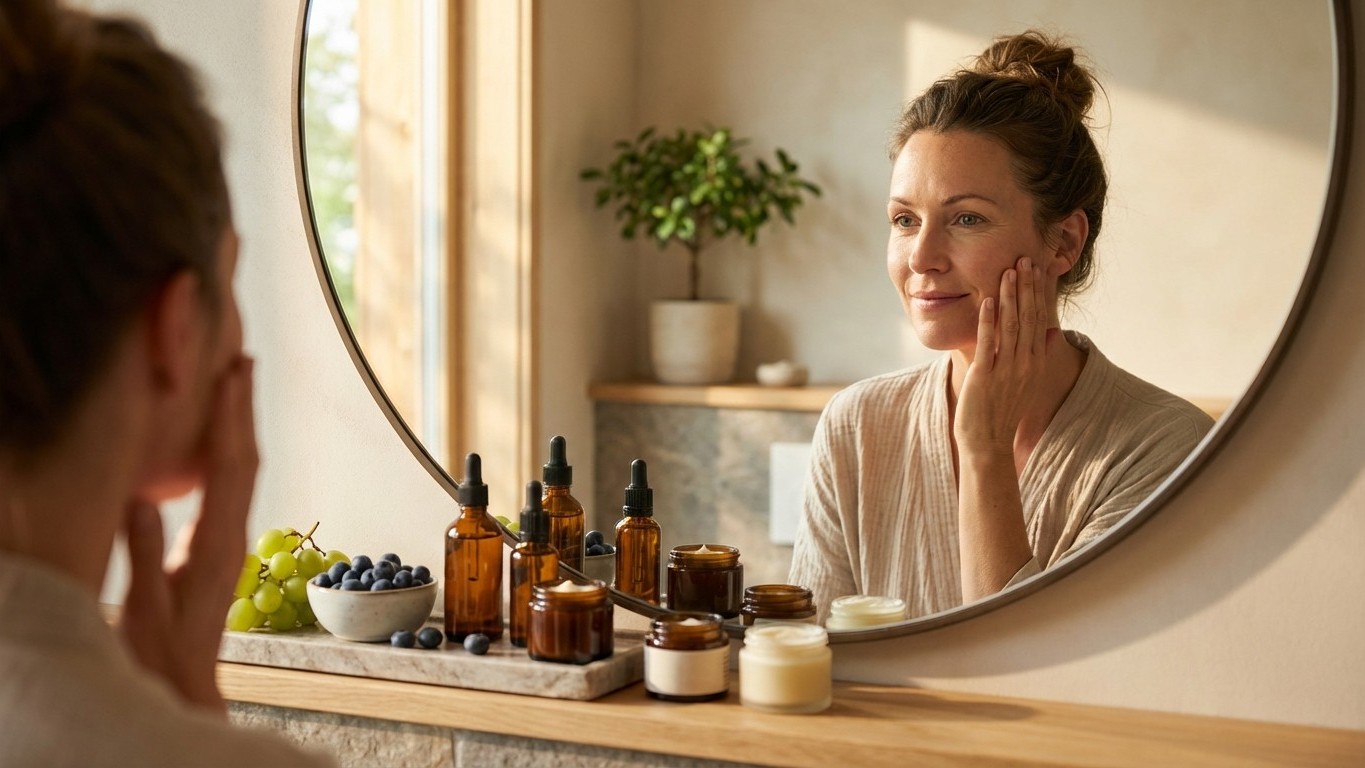
Your skin has been telling you something for a while now. A slight tightness in the morning. Lines that weren’t there last year, settling into the corners of your eyes like tiny parentheses. The instinct is to reach for a lab-heavy serum promising to “reverse” years in two weeks. But what if the most effective path to graceful, glowing skin actually runs through your garden, your pantry, and a handful of plant-derived ingredients that science is finally catching up to? A truly well-built natural anti aging skincare routine isn’t about doing more. It’s about doing the right things, consistently, with ingredients your skin already recognizes.
Why Choose a Natural Anti-Aging Routine?
The Case for Plant-Based Actives (Backed by Science)
The beauty industry has long insisted that synthetic equals powerful. But that assumption is shifting.
A 28-day clinical trial showed that pterostilbene, a natural compound found in blueberries and grapes, improved wrinkles, skin firmness, collagen, and pore size far better than a control emulsion.
This is one signal in a growing body of evidence.
The efficacy of clean, plant-based ingredients is increasingly being recognized, leading to their integration into mainstream skincare formulations.
The counter-intuitive truth here? Conventional anti-aging routines often overload the skin with actives that compete with each other, compromising the very barrier they claim to protect.
Many believe that layering multiple aggressive active ingredients like retinoids, acids, or vitamin C will speed up skin improvements. Overuse, however, can lead to irritation, redness, and compromised skin barrier function.
A natural routine sidesteps this arms race entirely.
Ingredients Worth Avoiding
Detoxifying your routine is the first act of care. Synthetic fragrances, parabens, phthalates, and certain chemical sunscreen filters like oxybenzone have raised concern among dermatologists and researchers alike.
Some synthetic chemicals and overly aggressive formulations may pose health risks, including hormonal disruption or carcinogenic effects, especially with long-term or cumulative use.
Cleaner labels, fewer unknowns. That’s the philosophy.
The Fundamentals: What Mature Skin Actually Needs
Understanding the Biology of Aging Skin
Mature skin operates under a different set of rules.
The aging process leads to reduced production of collagen and hyaluronic acid, decreased dermal water content, and damage from sun exposure and free radicals, which results in the breakdown of the extracellular matrix and visible signs of aging on the skin’s surface.
Translation: your skin loses its scaffolding, its moisture reserves, and its self-repair speed all at once. The natural routine works on all three fronts simultaneously.
Hydration as Prevention
Here’s something that gets overlooked: hydration isn’t just comfort, it’s prevention.
Hyaluronic acid attracts and locks moisture within the skin’s layers. Its humectant properties allow it to hold hundreds of times its weight in water, plumping up the skin and decreasing the appearance of fine lines.
The good news for natural-routine devotees? You don’t need to rely solely on lab-synthesized HA.
Research has shown that aloe sterols promote the production of both collagen and hyaluronic acid in human dermal fibroblasts, increasing them by approximately two-fold and 1.5-fold respectively.
Aloe vera gel, pressed from the living plant, is doing real biochemical work.
Prevention vs. Repair: Choosing Your Strategy
Starting an anti-aging regimen early can help mitigate the effects of aging and promote long-term skin health, and understanding your skin type allows for a more personalized approach.
If you’re in your late twenties or early thirties, you’re in the ideal window for prevention. Fine lines haven’t set yet; antioxidants and consistent SPF are your most powerful tools. For those navigating mature skin from the forties onward, the game shifts toward repair and deep nourishment, with richer plant oils and peptide-forward serums leading the charge.
Step-by-Step: Building Your Natural Anti-Aging Routine
Step 1 : Gentle Cleansing
The morning starts here, and the choice of cleanser matters more than most people realize. For mature, dry, or sensitive skin, a cleansing balm or oil-based cleanser respects the lipid barrier rather than stripping it bare. At night, the double-cleanse is worth adopting: a plant-based oil first to dissolve SPF and makeup, then a gentle gel or cream formula to remove residue without disrupting the skin’s pH.
Step 2 : Hydrosols and Natural Toners
Rose water, neroli hydrosol, and chamomile floral water are not throwback rituals. They’re efficient, rapid-delivery vehicles for botanical compounds that soothe and prime the skin for everything that follows. Applied to slightly damp skin with a cotton round or simply spritzed on, they bridge the gap between cleansing and serum application, improving penetration without a drop of alcohol.
Step 3 : Serums and Aloe Vera Gels
Research published in the Annals of Dermatology found that after supplementing with aloe vera for 90 days, wrinkles, elasticity, and collagen production improved. In a separate study, women who consumed aloe vera gel powder for 8 weeks experienced significant improvements in facial wrinkling. According to researchers, aloe vera contains sterols that promote the production of collagen and hyaluronic acid.
Applied topically, a well-formulated aloe-based serum delivers this same logic directly to the skin. Layer it thinly, press it in with your palms, and let it absorb before moving on.
A practical morning protocol looks like this: apply vitamin C or niacinamide serum first, then layer with hyaluronic acid before finishing with a protective day cream.
Step 4 : Plant Oils and Nourishing Balms
This is where the routine earns its depth.
Rosehip oil is rich in essential fatty acids and antioxidants, which are integral for tissue and cell regeneration in the skin. It has long been used for wound healing, scar reduction, and fine lines. A 2015 study on rosehip powder showed a significant reduction in the appearance of fine lines around the eyes after 8 weeks of treatment.
Rose hip oil is rich in vitamins A, C, E and essential fatty acids. These fatty acids are anti-inflammatory and can improve signs of aging, pigmentation and moisturize the skin. As vitamin A-rich oil, it can help stimulate collagen and improve the appearance of fine lines and wrinkles.
Argan oil brings a different profile: high in vitamin E and oleic acid, intensely nourishing without a heavy finish. Prickly pear (barbary fig) seed oil, one of the most concentrated natural sources of vitamin E, is a luxury investment that pays back in suppleness. A few drops of any of these, pressed into skin as the final PM step, works as a natural occlusive to seal in everything you’ve layered underneath.
Step 5 : Mineral Sunscreen, Every Single Day
No honest article on anti-aging skincare can skip this.
Sun exposure, or photo-aging, is responsible for around 80-90% of visible signs of aging, and this is actually preventable. By using sunscreen daily, you can shield your skin from harmful UV rays that cause premature aging, fine lines, wrinkles, dark spots, collagen depletion, loss of elasticity, and rough texture.
For a natural routine, the obvious choice is a mineral SPF.
Zinc oxide and titanium dioxide are the two mineral sunscreen filters generally recognized as safe and effective by the FDA. They form a barrier on the surface of the skin to protect from UV rays. Zinc oxide provides broad-spectrum protection against both UVB and UVA rays.
Zinc oxide sunscreen is typically well-tolerated and considered safe for all skin types, including people with sensitive skin and those allergic to active ingredients in chemical sunscreens.
The Star Natural Ingredients and Why They Work
Antioxidants: Vitamin C, Resveratrol, and Plant Polyphenols
Antioxidants like vitamin C, vitamin E, and coenzyme Q10 act as scavengers of reactive oxygen species generated by ultraviolet radiation and environmental toxins. By neutralizing these, they prevent oxidative damage to DNA, lipids, and proteins within skin cells, slowing down skin aging and reducing the formation of age spots and fine lines.
When used daily, vitamin C can help protect skin from damage caused by sun and pollution, and it may also improve skin tone.
Resveratrol, found in grapes and berries, combats oxidative stress, helping protect collagen and prevent premature aging.
Phytochemicals, including carotenoids, flavonoids, and polyphenols, complement these effects by scavenging free radicals and inhibiting enzymes like collagenase and elastase that break down the structural proteins in skin.
This last point deserves underscoring: it’s not just about adding collagen, it’s about preventing the enzymatic destruction of what you already have.
Bakuchiol: The Retinol Alternative That Actually Delivers
Bakuchiol, a plant-based ingredient, may help smooth wrinkles and reduce skin discoloration. It works similarly to retinol, but is gentler and is considered safe to use during pregnancy.
Derived from the babchi plant, bakuchiol mimics the effects of retinol, smoothing fine lines and boosting collagen, without causing irritation.
For anyone who has given up on retinol due to peeling, redness, or photosensitivity, bakuchiol is worth a serious second look. Apply it morning or night, without the restrictions that conventional retinol demands.
Gentle Natural Exfoliation: PHAs and Enzymes
Exfoliation is often the most overlooked step in a natural anti-aging routine, yet it’s what allows every other ingredient to penetrate effectively.
Hydroxy acids, including AHAs like glycolic and lactic acid, facilitate exfoliation by breaking the bonds between dead skin cells. This process improves skin texture, reduces hyperpigmentation, and enhances the penetration of other active ingredients.
For the most sensitive skin, polyhydroxy acids (PHAs) offer the same benefit with a much larger molecular size, meaning they work on the surface without causing the deep irritation associated with glycolic acid. Papaya enzyme and pineapple extract offer an even gentler alternative, digesting dead skin cells in a single weekly mask.
Limiting exfoliation to one to two times per week helps protect the skin barrier and prevents sensitivity.
Frankly, this is the most common mistake I see in natural skincare. More is not more.
Morning and Evening Routines: Concrete Examples
Here is how the above translates into a practical, bookmarked-for-daily-use structure:
Morning routine:
- Gentle cleansing milk or gel (sulfate-free)
- Rose water hydrosol mist
- Vitamin C serum or niacinamide serum
- Hyaluronic acid or aloe vera gel
- Lightweight moisturizer
- Mineral SPF 30+ (zinc oxide)
Evening routine:
- Double cleanse (cleansing balm + gentle gel)
- Hydrosol toner
- Bakuchiol or retinol-alternative serum
- Aloe vera gel (optional, on damp skin)
- Rosehip, argan, or prickly pear oil to seal
Common Mistakes to Avoid
Over-care is the silent saboteur of natural routines. More products do not mean more results.
It is recommended to patch test new products and consult skincare professionals to develop a safe, effective routine.
Mixing niacinamide with vitamin C in the same step used to be cautioned against (though recent research suggests they’re more compatible than once thought). The bigger mistake is reaching for a new ingredient every two weeks before the current one has had time to work. Natural actives often need 8 to 12 weeks of consistent use to show visible results. Patience is the active ingredient no bottle will ever list.
Adapting Your Routine Across Seasons and Skin Changes
Skin in January is not skin in July. In winter, the focus shifts to richer oils and heavier occlusives; the skin’s barrier is under stress from cold air and indoor heating, both of which strip moisture. Summer calls for lighter textures, emphasis on antioxidant protection and diligent SPF reapplication. Stress, hormonal shifts, and diet all visibly alter skin behavior too. A well-designed natural routine is a living system, not a fixed prescription. Check in with your skin monthly. Adjust the oil weight, the frequency of exfoliation, the richness of your moisturizer. The routine that serves you in your thirties will need recalibrating in your forties. That’s not failure, that’s biology.
FAQ: Natural Anti-Aging Skincare Routine
What is the best natural anti-aging routine for beginners? Start with just four steps: a gentle cleanser, a hyaluronic acid serum, a nourishing moisturizer, and mineral SPF. Add actives (vitamin C, bakuchiol, a plant oil) one at a time, spacing each introduction by four to six weeks.
Can you prevent wrinkles with natural skincare alone? Partly, yes.
Starting an anti-aging regimen early can help mitigate the effects of aging and promote long-term skin health.
Sunscreen, antioxidants, and hydration form a genuinely protective triad. Deep-set wrinkles may still develop with age, but their severity and timing can be meaningfully influenced by consistent natural care.
Which natural ingredients are most effective against wrinkles? The most research-backed natural actives include rosehip oil (vitamin A and essential fatty acids), bakuchiol (retinol-like action), vitamin C (collagen synthesis and antioxidant protection), and aloe vera sterols (collagen and hyaluronic acid stimulation). Each works through a different mechanism; combining them thoughtfully creates a layered defense.
What mistakes should I avoid? Over-exfoliating, mixing incompatible actives, and abandoning a routine too soon are the top three. Add to that list: skipping sunscreen, using too much of any one product, and not adjusting the routine seasonally.
Expand Your Natural Skincare Knowledge
Aging is never just one concern. Hyperpigmentation, breakouts, and pore visibility all intersect with the same lifestyle factors, and a truly effective skin strategy addresses the whole picture. For a broader framework of what natural ingredients do for different skin types, explore our guide to natural skin care tips for acne and other common concerns. If blemishes are part of your story alongside anti-aging goals, our article on natural skin care tips for acne offers a dedicated roadmap. Dark spots responding to sun exposure and time deserve their own deep-dive: the evidence-based approach to natural skincare tips for dark spots covers what actually works. And if you want to map out the full architecture of a natural routine before layering in anti-aging specifics, the foundational guide on natural skincare routine skin care tips is where to begin.
The skin you have today is not the skin you’re stuck with. But the more interesting question might be this: what would change if you stopped fighting time and started working with your biology instead?