
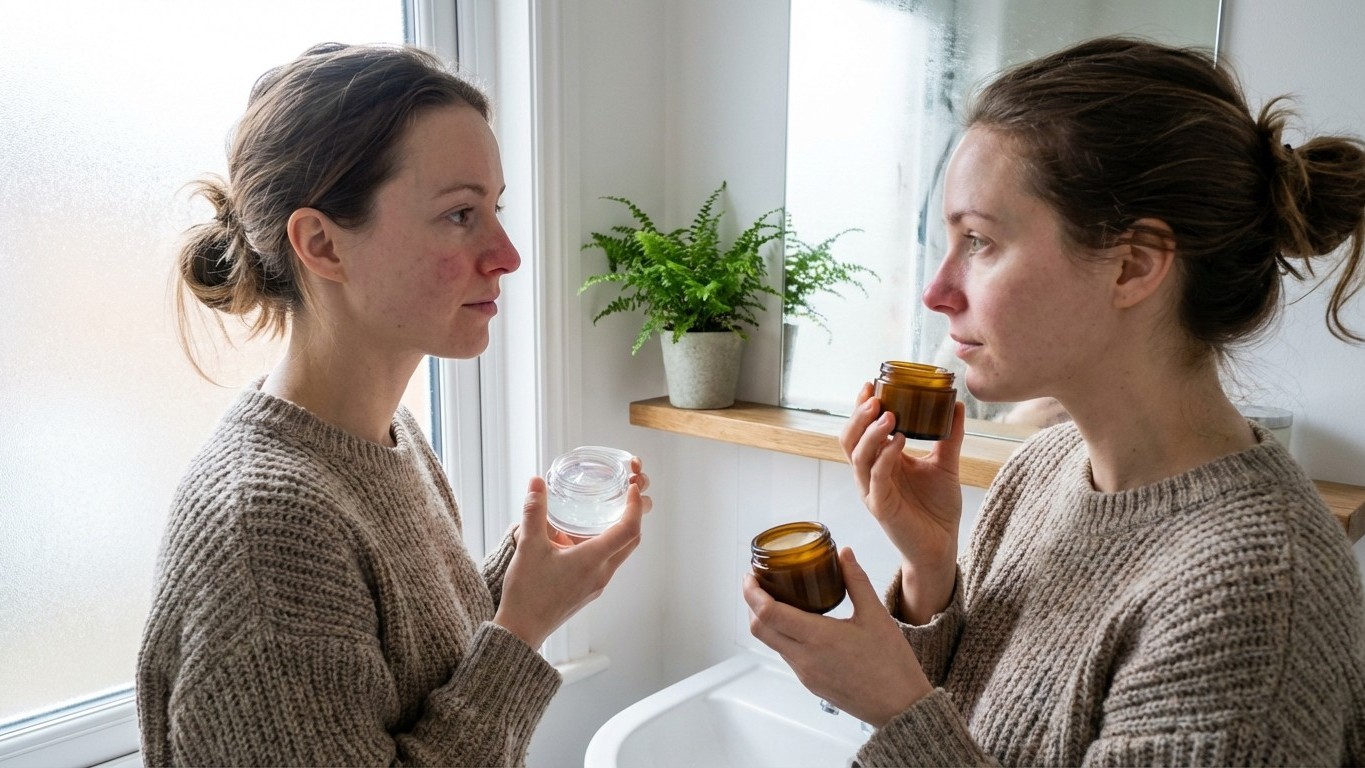
Picture this: you step outside on a January morning, breath turning to mist the instant it hits the air. Your cheeks feel tight before you’ve even reached the end of the block. By the time you’re back indoors, your skin is pulling, flushed, vaguely itchy around the nose. And yet, somewhere in a bathroom cabinet, sits the exact same moisturizer you’ve been using since August. A gel formula. Light as water. Barely there.
The disconnect is real.
As the seasons shift from the warmth of summer to the cooler fall and winter months, your skin’s needs change significantly, as the drop in temperature, lower humidity, and increased exposure to indoor heating all contribute to dryness, irritation, and other skin concerns.
The good news? You don’t need to throw out your entire routine and start from scratch every three months. What you need is something far more intelligent: the art of progressive adaptation.
This guide is for anyone who has ever felt overwhelmed by seasonal skincare advice, pulled in ten directions at once, drowning in conflicting product recommendations. The approach here is different. Rooted in natural ingredients, guided by skin biology, and built on one core principle: adjust strategically, not chaotically. Just as you might follow a natural skincare routine for summer to address heat and humidity, winter demands its own thoughtful adaptations.
Before diving into the specifics of a natural skincare routine for winter and beyond, it helps to understand why skin behaves so differently depending on the time of year, and what’s actually happening beneath the surface.
Why Skin Reacts Differently Across Seasons and Environments
The Skin Barrier: Your First Line of Defense
The skin is made of three layers, the epidermis, dermis, and subcutaneous fatty layer, forming a natural barrier that protects you from the effects of fluctuating heat and cold caused by the changing weather.
This barrier is dynamic, not static. It shifts in response to humidity, temperature, UV exposure, and even air quality. Think of it less like a wall and more like a living membrane constantly recalibrating itself.
The moisture in your skin’s outermost layer mirrors the humidity in your environment. Healthy, hydrated skin relies on natural oils (sebum) to form a protective barrier, keeping irritants out. The epidermis, made up of keratinocyte cells, stays smooth and balanced when properly moisturized.
Disrupt that balance, and everything unravels. Dullness, flaking, sensitivity, breakouts, none of these are random. They’re signals.
Seasonal changes affect skin moisture levels, oil production, and sensitivity. Cold, dry winters often lead to irritation and flaking, while hot, humid summers increase oil, clogged pores, and UV damage. In particularly humid environments, following a natural skincare routine for humid climate becomes essential to manage excess shine and prevent clogged pores. Similarly, dry climates present unique challenges that require a natural skincare routine for dry climate to prevent tightness and flaking.
The underlying mechanism is the same across all seasons: the environment is making demands on your barrier, and your products either support it or work against it.
What Cold and Heat Actually Do to the Skin
According to dermatologist S. Max Vale of UW Medicine, “colder and drier air contributes to increased transepidermal water loss, which is the process of water evaporating through the outer layer of the skin.”
That evaporation doesn’t just leave skin dry — it triggers a cascade.
Cold weather outside, and hot dehumidified air indoors, pull out skin water to damage your skin barrier. Important barrier lipids are lost and skin protein is damaged.
Meanwhile, in summer, the opposite dynamic plays out.
When the weather is hot and humid outside, your skin ramps up its oil production, which can produce an oily sheen.
Neither extreme is inherently “bad”, they simply require different responses from your routine. The trap most people fall into is treating their skin as if it has one fixed need all year round.
Ceramides are lipids that bind skin cells together, strengthening the skin’s moisture barrier, but the production of ceramides is depleted in cold weather and dry heat.
That one detail alone explains a lot. In winter, your skin is biochemically depleted in one of its most important structural ingredients. No wonder it struggles.
Building a Natural Skincare Routine for Winter: Protect, Nourish, Repair
The Steps That Actually Matter
A winter routine doesn’t need to be complicated. It needs to be intentional. The three pillars are consistent: gentle cleansing, layered hydration, and barrier-sealing nourishment. That’s it. Everything else is optional.
In colder months, it’s best to switch to a gentle, hydrating cleanser that cleanses without stripping your skin of its natural oils. Look for cream or oil-based cleansers that preserve your skin’s moisture barrier.
This single swap, from a foaming gel to a cream or oil cleanser, makes an outsized difference.
As dermatologist Joyce Davis explains, “you want to make sure your cleanser puts moisture into the skin, rather than taking it out.”
A cleanser that strips is essentially undoing every moisturizing step that follows.
After cleansing, hydration comes first, then nourishment. The sequence matters.
Hydrate by applying humectants like hyaluronic acid first, then follow up with an occlusive like plant oils to lock it in.
Layering a hydrating serum under a richer cream, rather than using one or the other, is the kind of small adjustment that transforms a winter routine.
For extra hydration, try layering a hydrating serum (such as one containing hyaluronic acid) under your moisturizer for an added boost of moisture.
For many women building a natural skincare routine skin care tips practice, the question of exfoliation in winter is a recurring one. The answer is nuanced.
A gentle exfoliant once a week can help remove dead skin cells, which improves the absorption of your other skincare products. Hydrating masks, especially those with ingredients like aloe vera or hyaluronic acid, provide a soothing moisture boost when your skin needs extra love. During winter, use exfoliating treatments sparingly to avoid over-stripping your skin, and opt for gentle, non-abrasive exfoliants that support your skin’s natural renewal process.
Natural Ingredients to Reach for in Cold Weather
The natural world offers a compelling answer to winter skin stress, and the most effective ingredients have centuries of use behind them.
Look for botanical oils that help restore lost lipids, including jojoba, sunflower, avocado, kukui, castor seed, pomegranate, rosehip, and coconut. Butters such as shea and cocoa are time-honored emollients, too.
Jojoba oil echoes the effects of the skin’s natural sebum, making it deeply hydrating without blocking pores. It’s suitable for all skin types and, thanks to its anti-inflammatory properties, is particularly beneficial for dry, flaky areas caused by harsh winter weather.
Rosehip oil brings a different kind of power:
rich in essential fatty acids and vitamins, rosehip oil helps replenish the skin and improve its elasticity. It’s particularly effective in soothing irritation caused by cold weather.
Then there’s the functional layer of active naturals.
Niacinamide, or vitamin B3, is a multitasking ingredient that supports the skin barrier, reduces redness, and minimizes sensitivity — it also improves skin hydration.
Panthenol (pro-vitamin B5) soothes and repairs the skin, making it more resilient to harsh winter conditions. It’s especially helpful for irritated or flaky skin.
Neither of these is a flashy new discovery, but both deliver reliably in cold weather conditions.
A practical winter morning-and-Evening routine built around natural ingredients might look something like this:
- Morning: Cream or oil cleanser → hyaluronic acid or aloe vera serum → niacinamide → richer moisturizer with ceramides → mineral SPF (yes, even in winter)
- Evening: Same gentle cleanser → rosehip or jojoba face oil → shea butter-based balm or cream for deep occlusion overnight
Sunscreen in winter is non-negotiable.
“No matter the time of the year, sunscreen should be your go-to skincare basic,” as one dermatologist noted. “UV rays are still present even on cold and cloudy days. Sunscreen provides the best source of protection from the sun’s UV rays and the skin damage it can cause over time.”
Adjusting Without Disrupting: The Principle of Progressive Adaptation
Here’s the idea most skincare content misses: changing your entire routine at once can backfire just as badly as changing nothing at all.
Our skin thrives on consistency, so when temperatures shift with the seasons, it can disrupt our skin barrier and shock our systems.
Introducing five new products simultaneously makes it impossible to know what’s helping and what’s causing the new breakout. The skin doesn’t get a chance to recalibrate.
What to Modify First
The highest-leverage changes are the ones closest to the barrier. Start with your moisturizer.
For winter, you want to use a thicker, cream-based moisturizer, which will fuse moisture into your skin and not strip it of the oils that are being made naturally.
That’s the first adjustment. One product, immediate difference.
Next, the cleanser, as discussed. Then, if needed, reduce the frequency of active ingredients like exfoliating acids or retinol.
Think about decreasing your use of retinols or retinoids. Some people can use their retinoid every night in the summertime but have to decrease to every other night in the wintertime. You may also wish to decrease how often you use exfoliating products, like glycolic acid and salicylic acid, since these can further damage a fragile skin barrier in the winter.
The rule of thumb: change one product at a time, wait 10–14 days to observe the skin’s response, then move to the next adjustment. This creates a stable baseline, which is exactly what the microbiome and the barrier function need to stay balanced.
Keeping a Stable Core Routine
A dermatologist at Mount Sinai reminds us that “a good skincare routine is simple, simple, simple. Often people are doing far too much to their skin. I recommend having a cleanser, what I call a ‘power product’, which can be something like a serum or an eye cream — and then a moisturizer.”
That three-step architecture remains constant year-round. What changes are the textures, the concentration of certain actives, and the degree of occlusion in the moisturizer.
The foundation doesn’t change. The calibration does. A useful analogy: a chef doesn’t reinvent the entire kitchen for each season. They shift ingredients, adjust cooking techniques, follow what’s available and needed. The infrastructure stays the same.
Specific Contexts: Travel, Stress, and Urban Living
Seasonal change is only one of the variables. Life adds several more. A week in a dry-air hotel, a period of intense work stress, a move to a different city, each creates its own specific skin challenge, often layered on top of the seasonal baseline.
Travel and Environmental Changes
Travel exposes skin to a unique combination of environmental challenges: low humidity is common on flights, in winter destinations, and in desert climates, leading to dehydration, tightness, and flaking. High humidity can increase oil production and clog pores if products aren’t adjusted. Urban pollution contributes to dullness, sensitivity, and premature aging. Temperature swings, constant transitions between air-conditioned interiors and outdoor heat or cold — weaken the skin barrier.
The smart travel approach mirrors the seasonal principle: simplify, and lean barrier-first.
Understand the environment you’re entering and make small, intentional adjustments. In dry or cold climates, prioritize barrier repair and moisture retention. In humid conditions, simplify and lighten textures.
A natural skincare routine for dry climate conditions, for instance, means doubling down on humectants and occlusive layers, while a natural skincare routine for humid climate environments calls for lighter, non-comedogenic options to prevent congestion.
Urban Pollution and Indoor Heating
City life adds another layer of complexity, and it’s one that’s often underestimated.
Pollution in cities isn’t just “dust.” It’s an entire ecosystem of micro-particles, PM2.5, smoke, fuel exhaust, metal residue, tiny enough to sneak into your pores, irritate your barrier, weaken collagen, and leave your skin looking like it slept badly for a month straight.
Because pollution is linked to oxidative stress and free radicals, antioxidants are powerful tools for combating the negative effects of pollution on the skin. Antioxidants bind to free radicals before they can disrupt skin cell function.
In a natural routine, this translates to ingredients like vitamin C, rosehip extract, and green tea, all potent free radical neutralizers that fit seamlessly into a clean beauty approach.
When outdoor temperatures drop below 10°C (50°F), humidity levels plummet, pulling moisture directly from your skin’s outer layers. Meanwhile, indoor heating systems reduce relative humidity to desert-like levels of 10–20%, compared to the healthy 30–50% your skin needs to maintain its protective barrier.
A humidifier in the bedroom isn’t a luxury — it’s a structural skin intervention.
Indoor heating can dry out your skin, so investing in a humidifier to restore moisture in the air, particularly in your bedroom, can make a real difference.
Seasonal Overview: Spring, Summer, and Autumn
A Quick-Reference Comparison by Season
The central logic of seasonal adaptation is the same across all four seasons, with the variables simply pointing in different directions. Knowing the broad strokes helps you stay ahead rather than constantly reactive.
Spring is transitional and reactive.
Spring is when cases of skin allergies uptick. It’s an especially challenging time for those allergic to pollen, which gets carried by the wind, birds, and insects. Dusts and molds also contribute to swelling, itching, and other signs of eczema. When allergens fill the air, going for unscented products minimizes irritation and allergic reactions during this transitional season.
Texture-wise, this is the moment to gradually lighten up from winter formulas:
as the skin experiences changes due to rising temperatures and increased humidity in spring, transitioning from heavy winter creams to lighter, oil-free moisturizers like gels or lotions helps prevent clogged pores and excess shine.
Summer shifts the focus to UV protection, sebum regulation, and lightweight hydration. The skin’s needs during a natural skincare routine for summer are essentially the inverse of winter: protection from dehydration caused by heat and sun rather than cold and dry air. Gel formulas, mists, and non-comedogenic plant oils like rosehip (used more sparingly) tend to perform well in warmer, more humid conditions.
Autumn is winter in preview.
When autumn sets in, the air turns crisp and chilly. You crank up the thermostat to heat up your home. But doing this also evaporates the moisture in the air. Fall is marked by worsening rosacea and temperature swings that disrupt your natural barrier. Dry air causes the skin to feel rough and tight, which is a precursor for flare-ups. During this time, it’s important to upgrade your routine to keep your skin protected.
Autumn is the season to start reintroducing richer textures before the full cold of winter arrives, rather than waiting until damage is done.
Answers to Common Questions: Adjustments, Myths, and Misunderstandings
Can You Use the Same Routine All Year?
Technically, yes. Practically, it won’t serve you well.
Using the same skincare routine year-round is ineffective.
The skin is responding to a constantly shifting environment, humidity, temperature, UV intensity, indoor air quality, and a static routine simply can’t keep up. That doesn’t mean a total overhaul twice a year. It means staying observant and making targeted swaps when the skin gives you clear signals.
Tightness after cleansing? Upgrade the moisturizer.
When dry air and low temperatures hit, our skin barrier doesn’t function as well, and we’re more likely to notice damage.
That’s your signal, not a reason to panic and buy new everything.
Should You Stop Exfoliating in Winter?
Stop completely? No. Reduce and recalibrate.
Over-exfoliating during winter can damage your skin’s protective barrier. Limit exfoliation to once or twice a week, and use gentle scrubs like sugar or finely ground oats.
In a natural routine, enzyme exfoliation (papaya, pineapple-derived) is generally gentler on a compromised winter barrier than physical scrubs or high-concentration chemical exfoliants. The goal is cell turnover without barrier erosion.
Hydration vs. Nourishment: How to Tell What Your Skin Needs
This is the question nobody thinks to ask, and it explains why so many moisturizers disappoint. They’re solving the wrong problem.
Hydration and nutrition are two key concepts in caring for our skin. Hydration is the process by which water is brought to and retained in the skin, while nutrition refers to the nutrients and lipids needed to maintain healthy skin.
Hydration is all about replenishing the moisture levels in your skin. When your skin is dehydrated, it means it is lacking water. Hydrating products, such as a serum with hyaluronic acid, help to draw and retain water deep into the skin layers. This makes your skin feel plumper and fresher, fine lines are less visible and your complexion glows.
Dehydration can affect any skin type, including oily skin. If your skin looks dull, feels tight in patches, or shows tiny superficial lines, it’s thirsty.
Nourishing goes a step further by creating a protective barrier on the skin that prevents moisture from evaporating. This is especially important for people with dry skin, where the skin barrier is weak and loses moisture more quickly.
Dryness, on the other hand, is a skin type issue, not just a water issue. It shows up as roughness, flaking, and a persistent uncomfortable tightness that a hydrating serum alone won’t fix, it requires lipids, oils, and occlusives.
A small but critical note: apply your moisturizing care just before your nourishing (oil-based) care, not the other way around. Otherwise, the barrier formed will prevent the moisturizing agents from reaching the epidermis.
Sequence is everything.
Adapting Your Natural Routine: A Mindful, Long-Term Investment
There’s an environmental argument here that often goes unspoken. Adapting your routine seasonally, rather than impulse-buying entirely new product lines every few months, generates far less waste. The same bottle of rosehip oil serves winter as a nightly occlusive and summer as a spot treatment. Shea butter lasts through two seasons. A well-chosen natural cleanser works year-round. Fewer purchases, less packaging, more intentional consumption.
The skin doesn’t ask for novelty. It asks for consistency in structure and sensitivity to change.
The changing seasons don’t have to derail your skincare routine. By making small adjustments and focusing on hydration and protection, you can keep your skin healthy, radiant, and resilient through the fall and winter months.
That’s the promise of a progressive, natural approach: stability as the foundation, flexibility as the tool.
Start with what you already have. Audit your current routine with the question: “Does each step support or stress my barrier in this season and this context?” Swap the cleanser. Add a serum layer. Upgrade the moisturizer texture. Give your skin two weeks before evaluating. And if you’re building from the ground up or overhauling a routine that hasn’t been working, the natural skincare routine skin care tips at the foundation of this silo offer a clear, evidence-based starting point.
Because the real question isn’t which season is hardest on the skin. It’s whether you’re paying close enough attention to notice what it’s telling you, before it starts shouting.