
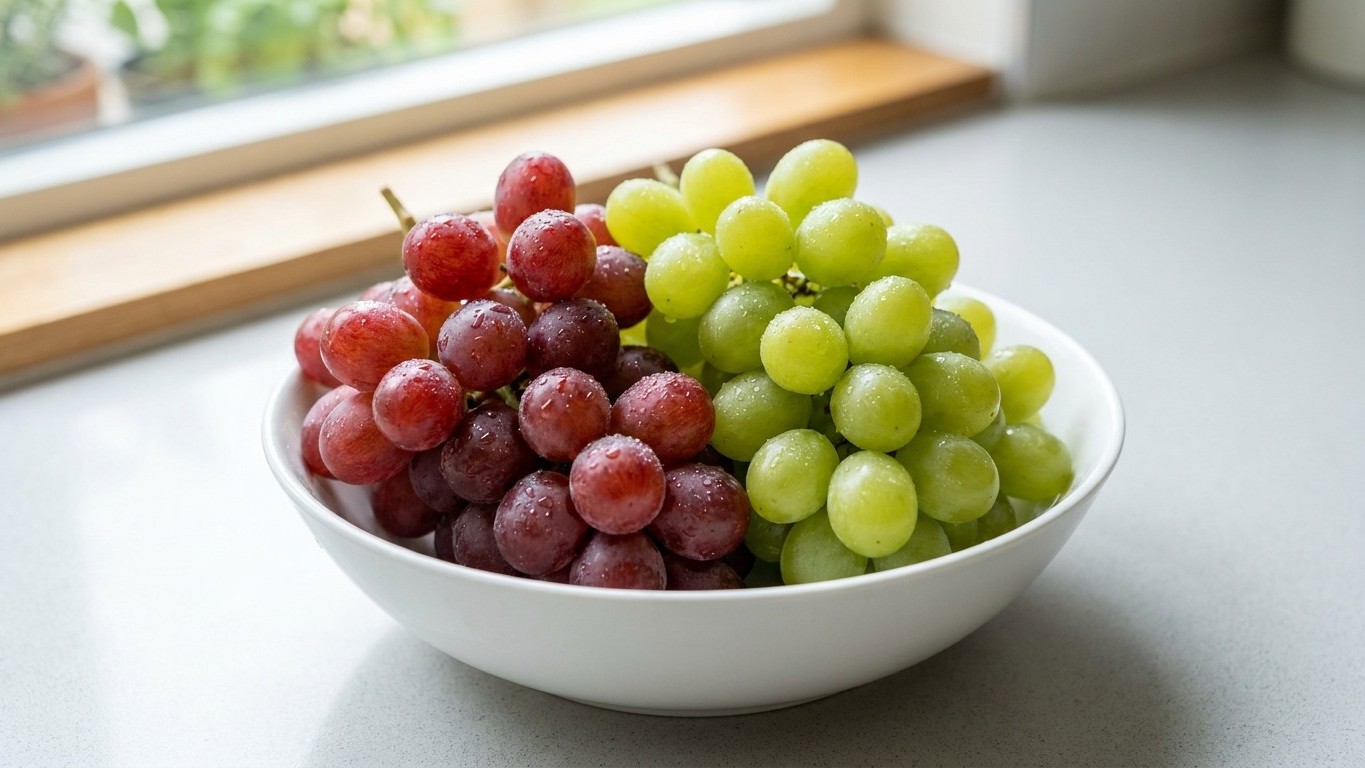
Your grandmother probably kept a bowl of them on the counter, right next to the fruit. You may have grabbed one or two as a child without thinking twice, maybe even dismissing the habit as one of those older-generation quirks with no real logic behind it. The food in question: grapes. Ordinary, affordable, available year-round at every grocery store in America. And right now, Scientists cannot stop studying them.
The research wave started building quietly over the last few years, but 2025 and 2026 have turned into what one researcher from Lallemand Bio-Ingredients described as a potential “breakthrough year” for grape science. Packed with polyphenols and backed by accumulating science, grapes are being redefined as a true superfood with body-wide, even genetic, health benefits. The pace of new studies is unusual even by nutrition science standards, and the findings are starting to reframe something most of us took entirely for granted.
Key takeaways
- A simple daily habit your grandmother kept is now backed by genetic research showing measurable changes at the DNA level
- Eating three servings of whole grapes daily reduced UV skin damage markers by reshaping how your body processes protective compounds
- This isn’t about one miracle ingredient—grapes contain 1,600+ compounds that communicate directly with your genes in ways scientists are only now mapping
What Happens to Your Skin When You Eat Grapes Every Day
The most striking recent discovery has nothing to do with antioxidants in the abstract. It goes deeper, literally into your DNA. A study published in ACS Nutrition Science found that consuming grapes daily for two weeks appeared to reduce signs of UV-related skin damage and changed the activity of genes tied to skin protection and repair. This is not a cosmetic claim. It is a molecular one.
Researchers studied 29 adults who consumed the equivalent of about three servings of grapes per day for two weeks; skin samples were collected before and after the grape diet, including areas exposed to UV light, and one major finding involved lower levels of malondialdehyde, a marker associated with oxidative stress and skin damage caused by UV exposure. To be clear about what this means: the sun’s damage was measurably reduced from the inside out, through food alone.
Grapes contain hundreds of phytochemicals, and researchers believe the effects observed result from their combined action. The team’s working hypothesis is that these compounds first interact with the gut microbiome, which then influences how they’re metabolized; the resulting byproducts travel through what researchers describe as the gut-skin axis, ultimately reaching skin tissue and altering gene activity. That phrase, gut-skin axis, is one of the most active areas in dermatology research right now, and grapes may be the most accessible food to activate it.
Clinical trials had already shown that eating grapes can help improve the skin’s resistance to UV radiation in roughly 30% to 50% of people; now, new research published in ACS Nutrition Science suggests the benefits of grapes for skin health may be much broader and could affect nearly everyone in some way. The upgrade from “some people” to “nearly everyone” is significant. It is not hype, it is a recalibration based on gene expression data.
And here is the counter-intuitive part: grape juice does not appear to deliver the same results. The study used whole grapes, so researchers cannot say juice or wine would work the same; whole grapes include the skins and seeds, where many of the protective polyphenols live, and they come with fiber that slows sugar absorption, while juice strips out much of that, and wine adds alcohol, which is known to harm the skin and overall health in other ways. The most powerful version of this food is also the simplest one.
More Than Skin Deep: The 1,600-Compound Food Scientists Are Still Mapping
Clinical trials show that grapes support brain health (helping maintain healthy brain metabolism and beneficial impacts on cognition), skin health (enhanced resistance to UV radiation and DNA damage in skin cells), and gut health (modulating the gut microbiome). Three major organ systems. One common fruit.
Grapes contain hundreds of naturally occurring plant compounds that researchers have long associated with antioxidant and anti-inflammatory effects; among them are quercetin, anthocyanins, and the now-famous resveratrol. Resveratrol, found primarily in grape skins and seeds, has generated its own parallel research explosion. The newest research is revealing that when it comes to bioavailability, the metabolites produced by the gut microbiota, after breaking down polyphenols and resveratrol, may be the “missing link” that helps explain the positive results seen in clinical studies. your gut bacteria are essentially processing grapes into medicine, and the healthier your microbiome, the more you may benefit.
There is also an emerging body of work on how resveratrol specifically affects skin pigmentation. Resveratrol from grapes reduces melanosome content in skin fibroblasts by 63%, with studies revealing how dietary compounds influence skin cell degradation pathways. For anyone paying attention to dark spots, sun damage, or uneven tone, that number deserves a second read.
The Science of a Daily Habit, Reconsidered
There is something almost frustrating about this body of research, and I say this as someone who has covered nutrition trends for years: the foods that earn the most sustained scientific attention are rarely the exotic ones. Açaí had its moment. Goji berries had theirs. Grapes have been sitting patiently in a bowl on your kitchen counter the entire time.
There is so much interest in this one fruit that scientists and industry experts have gathered annually for the past 50 years at the University of California, Davis, for a walnut conference to discuss the latest walnut health research, and grapes are generating comparable momentum in their own research circuits. Future studies are expected to explore whether long-term grape consumption could provide broader protective effects against aging and disease. The scope of those investigations is widening fast.
The practical recommendation from researchers is straightforward: grapes are not a substitute for sunscreen or sun protection, but the findings highlight how everyday foods may influence the body at the genetic level. Three servings of whole grapes a day, roughly a large cluster, is the quantity used in the skin studies. No supplements. No extracts. Just the fruit, with the skin on.
What makes the grape story genuinely different from the usual superfood cycle is the mechanism. This is not a food that adds one beneficial compound to your diet. Lead researcher John Pezzuto, Ph.D., called grapes a “superfood” that “mediate a nutrigenomic response in humans,” and suggested the effects seen in skin likely extend to other organs, including liver, muscle, kidney, and brain. Nutrigenomic. Meaning the food itself converses with your genes. That is a different category of influence entirely, and it is one your grandmother, without a single published paper to her name, seems to have understood intuitively long before the labs caught up.
Sources : en.clickpetroleoegas.com.br | nature.com