
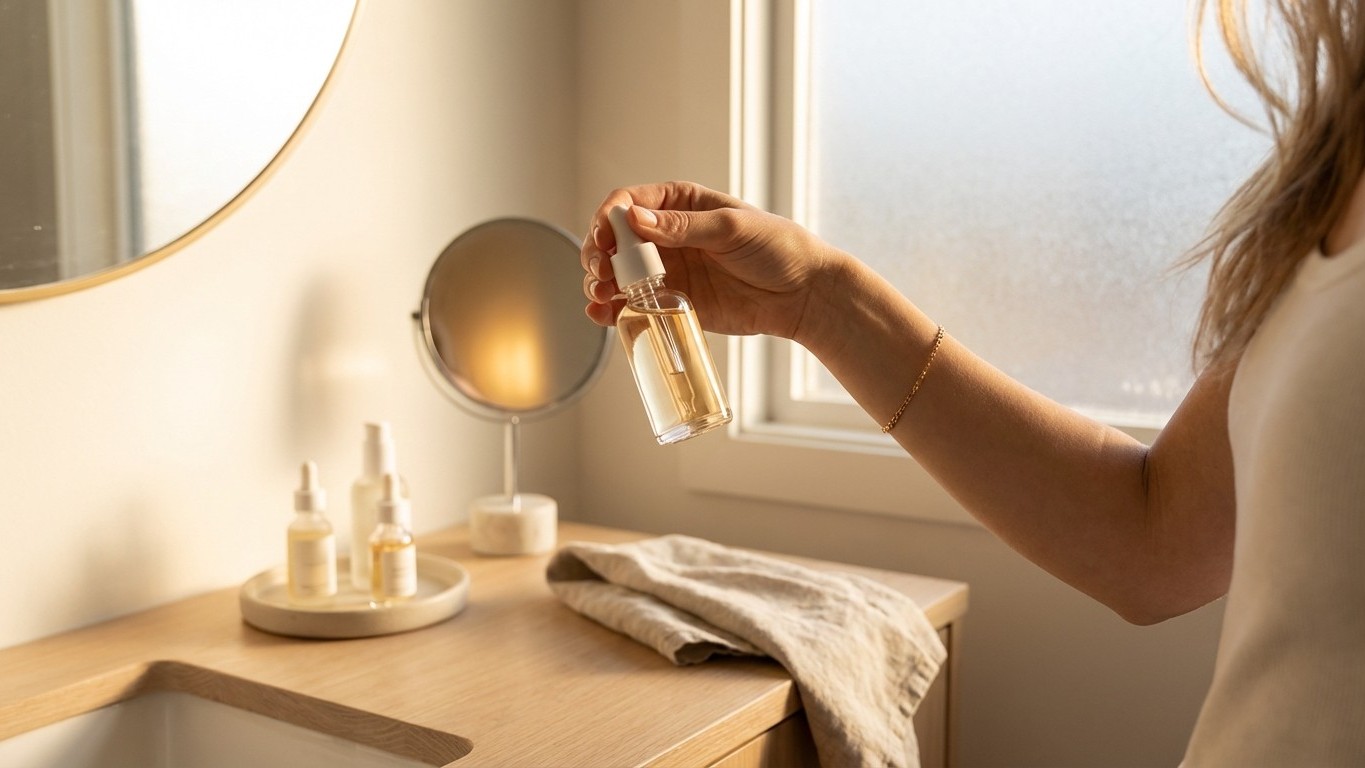
Pull out any vitamin C serum you have on your bathroom shelf right now and hold it up to daylight. What color is it? If you hesitated, even for a second, this article is for you. Natural vitamin C in skincare is one of the most coveted ingredients in clean beauty, celebrated for its brightening power, its antioxidant armor, its ability to quiet hyperpigmentation and slow collagen loss. But it comes with a catch that the marketing world conveniently glosses over: it is also one of the most unstable, temperamental, and easily wasted actives you can put in a bottle. Knowing how to choose it, use it, and keep it alive in your routine is what separates glowing results from an expensive liquid turning orange in your bathroom cabinet.
Why Natural Vitamin C Belongs in Your Skincare Routine
The Proven Benefits for Skin
Vitamin C plays a key role in regulating skin health, promoting the differentiation of epithelial skin cells while contributing to the reduction of melanin synthesis, and providing antioxidative protection against solar-related skin damage.
These are not marketing claims, this is well-documented skin biology.
As a potent antioxidant, it protects the skin from free radical damage caused by UV rays, pollution, and daily stressors, while also helping to stimulate collagen and elastin production, leading to firmer, smoother skin. One of its standout benefits is its ability to brighten the complexion and fade dark spots by slowing down melanin production.
Consistent daily use over weeks produces cumulative results that are quiet but real: a more even tone, reduced dullness, and visibly firmer texture.
The most convincing evidence for vitamin C in skincare is the prevention of free radical damage. Free radicals are molecules with an unpaired electron, making them unstable and capable of damaging cells. Antioxidants like vitamin C neutralize those radicals by donating an electron.
Think of it as your skin preemptively absorbing the hit so your cells don’t have to, every morning, before you even step outside.
The Natural vs. Synthetic Debate: What Science Actually Says
Here is where things get genuinely counterintuitive. The clean beauty world has built a considerable narrative around “natural” vitamin C being superior to synthetic. The science is more nuanced, and more honest.
Natural and synthetic L-ascorbic acid are chemically identical, and there are no known differences in their biological activity. The possibility that the bioavailability of L-ascorbic acid from natural sources might differ from that of synthetic ascorbic acid was investigated in at least two human studies, and no clinically significant differences were observed.
So why does the “natural” label still matter? Because of the matrix.
Natural fruit-derived sources provide vitamin C within a whole-plant matrix of antioxidants, flavonoids, and bioactive compounds that support brightening and skin vitality with gentle effectiveness.
These companion nutrients, antioxidants, amino acids, minerals, and bioflavonoids, help stabilize and activate vitamin C within the skin, allowing the skin to benefit from it without the irritation commonly associated with synthetic forms.
The real advantage of plant-derived vitamin C in skincare, then, is not biochemical superiority, it is tolerance, stability within the broader formula, and the synergistic benefit of naturally occurring co-factors. If you have sensitive skin, that distinction matters a great deal. If you want maximum potency with clinical-grade results, a well-formulated synthetic serum with a proven stabilizing system works equally well. Frankly, this is the kind of nuance “natural skincare” marketing rarely bothers to deliver.
For a broader overview of choosing the right actives for your skin, explore the best natural ingredients for skincare routine — it covers the full landscape with the same level of rigor.
The Best Natural Sources of Vitamin C for Skincare
Star Botanicals: Acerola, Camu Camu, Rosehip, Sea Buckthorn
Four plant sources dominate the clean skincare world when it comes to natural vitamin C delivery, and each has a distinct profile worth understanding before you buy.
Acerola cherry (Malpighia emarginata) originates from Central America and the Caribbean.
It is a rich source of vitamin C and also contains many minerals and other vitamins, including beta-carotene, lutein, thiamine, riboflavin, niacin, and pyridoxine.
The vitamin C produced by the acerola fruit is better absorbed by humans than synthetic ascorbic acid, a claim supported by studies measuring urinary excretion rates, though steady-state bioavailability remains equivalent.
Camu camu (Myrciaria dubia), the Amazonian berry, is one of the most concentrated natural sources of ascorbic acid on earth.
While many brands rely on synthetic ascorbic acid, fruit-derived vitamin C sourced from camu camu delivers brightening and antioxidant benefits in a natural form, making it ideal for sensitive, reactive, or mature skin, powerful, stable within the whole-fruit matrix, and far less irritating than traditional vitamin C serums.
Rosehip brings additional assets beyond vitamin C.
Rosehip seed oil is high in vitamin C and also contains vitamin E, which works together with vitamin C to protect.
Worth noting:
vitamin C is not present in rosehip oil as it is a water-soluble vitamin.
This is a critical distinction, rosehip oil itself delivers other actives (fatty acids, vitamin A, vitamin E), but the ascorbic acid content is concentrated in the fruit extract, not the oil.
Sea buckthorn rounds out the quartet.
The sea buckthorn berry, another natural source of vitamin C, also has moisturizing fatty acids and other nutrients like vitamin A to provide potent benefits to skin.
It also provides ferulic acid naturally, which, as we’ll explore, is one of the most effective antioxidant stabilizers for vitamin C formulas.
Choosing Extracts That Actually Deliver (Stability and Concentration)
A label declaring “acerola extract” or “camu camu” is not a guarantee of efficacy.
Even enriched plant extracts rarely contain more than 25% vitamin C, meaning a formula built around a plant extract as its primary source may deliver far less active ascorbic acid than a well-formulated synthetic serum.
The solution is not to dismiss plant-derived sources, but to read ingredient lists critically: is the botanical extract listed near the top (indicating meaningful concentration), or buried after the preservatives?
For a complete guide to sourcing and evaluating natural actives, the best natural ingredients for skincare routine resource is an excellent companion reference.
The Oxidation Problem: Understanding and Preventing It
How to Spot Oxidized Vitamin C in a Product
Oxidation is the single biggest reason most vitamin C products fail to deliver on their promises. The chemistry is simple:
for vitamin C, oxidation occurs when it interacts with oxygen, leading to a process that transforms it into dehydroascorbic acid (DHA) and eventually into other byproducts. This not only reduces the effectiveness of the vitamin but can also alter the product’s color and scent.
The signs are readable, once you know what to look for.
The biggest red flag is if the color of your vitamin C serum has changed over time. If it is completely yellow, brown, orange, or any shade other than what it looked like when you first bought it, it most likely has gone bad. If you’re still unsure, take note of any scent or texture changes, which may also be a sign that it’s time for a fresh serum.
Here’s what to monitor: a color shift from pale yellow or straw-colored to amber, brown, or orange-brown. Fresh L-ascorbic acid solutions are nearly colorless to faintly yellow. As oxidation progresses, melanoidin-like pigments form, similar to the browning of cut apples. A light amber tint signals early degradation; deep orange or rusty brown means more than 80% loss of active vitamin C.
What about scent?
An oxidized vitamin C serum may develop an off smell — it might remind you of something metallic or even like pennies.
Trust your nose. A serum that smells wrong probably is wrong, regardless of what the expiration date says on the label.
The Accelerators: Light, Air, Heat
The biggest issue with topical vitamin C is oxidation. While vitamin C has many benefits when used correctly, exposing it to air, light, or heat causes it to oxidize.
These three factors are the enemy, and they operate whether you’re being careful or not.
Heat from a bathroom filled with steam after a shower. Indirect afternoon sunlight hitting the shelf where your serum lives. A pump or dropper left slightly open. Any of these compounds the problem.
A 2022 stability study published in the Journal of Cosmetic Dermatology found that 78% of over-the-counter vitamin C serums lost over 60% of active L-ascorbic acid within four weeks of first opening — even when stored at room temperature and unexposed to direct light.
Four weeks. That is a remarkable number, and a sobering reminder that the expiration date on an unopened bottle means almost nothing once you’ve opened it.
L-ascorbic acid is unstable and, on exposure to light, gets oxidized to dehydroascorbic acid (DHAA), which imparts a yellow color.
That yellow color, if your serum started clear, is your first real warning sign.
Building an Effective Natural Vitamin C Skincare Routine
Integration: Morning, Evening, and Ingredient Compatibility
Vitamin C works best when used in the morning, as it helps protect your skin from environmental aggressors like UV rays, pollution, and free radicals throughout the day. That said, it can also be used at night if your routine calls for it, just be cautious not to pair it with stronger actives like retinol or exfoliating acids unless they’re specifically formulated to work together.
Vitamin C serums should be applied after cleansing and toning, but before moisturizer and sunscreen. This ensures the active ingredient can fully absorb into your skin without being blocked by heavier products.
The logic is the same as with all serums: thinnest texture first, heavier layers seal everything in.
Pairing vitamin C with the right supporting ingredients dramatically amplifies both its stability and its effect.
Vitamin C and vitamin E are like peanut butter and jelly — amazing together. While vitamin C neutralizes free radicals, vitamin E helps stabilize it and provides additional antioxidant protection. This duo is often found in serums and works wonders for brightening and anti-aging.
Adding ferulic acid to the vitamin C and vitamin E combination creates something remarkable: ferulic acid enhances the stability of vitamin C and E while boosting their effectiveness, creating a powerful cocktail that brightens, firms, and protects the skin.
Benzoyl peroxide is one combination to actively avoid.
Benzoyl peroxide can oxidize vitamin C, rendering it less effective.
Retinoids, similarly, work at different pH levels from L-ascorbic acid, making alternating timing (morning/evening) a smarter approach than layering them simultaneously. See the natural skincare routine skin care tips guide for a full breakdown of how to sequence your actives intelligently.
Storage and Conservation: Keeping Your Serum Alive
To prevent vitamin C degradation, always close the bottle tightly, store in a cool place, and avoid exposing the product to light or air unnecessarily.
Simple habits, real impact.
Packaging is not cosmetic — it is functional.
Choosing a vitamin C serum with a certain type of packaging can prolong the shelf life. Look for a dark, opaque glass bottle with a protective seal.
Pump bottles generally outperform droppers for minimizing air exposure.
Squirty bottle formats are a little bit better at preventing oxidation
than wide-mouth jars or standard dropper bottles where air rushes in with every use.
Use your serum up within the recommended time frame to avoid oxidation — most serums last about 3 to 6 months after opening.
Some formulas are more generous; most are not. The PAO (period after opening) symbol on the packaging, that small open jar icon with a number, tells you the actual window. Take it seriously, and write the date you opened the bottle directly on the label.
Refrigerating your vitamin C serum is worth the small inconvenience.
Cool, dark, and consistent, your fridge is actually the best place to store your vitamin C serums.
Just avoid the bathroom, which cycles through humidity and temperature extremes every single day. A drawer in your bedroom or a skincare fridge on your vanity are both genuinely better options.
Aloe vera-based serums, incidentally, pair beautifully with vitamin C as a soothing, hydrating vehicle, learn more about incorporating aloe vera in natural skincare routine if you are building a comprehensive plant-powered regimen.
Reading Labels and Navigating “Natural” Claims
The word “natural” in cosmetics is largely unregulated. A formula can call itself “natural vitamin C” while using a plant extract so diluted it contributes negligible ascorbic acid to the final product, or conversely while listing a botanical source that has been enriched with synthetic ascorbic acid post-extraction.
Very many plant raw materials are enriched with synthetic vitamin C. The bioflavonoids (plant components) do not significantly affect the bioavailability of vitamin C, but they have their own additional effect.
Neither scenario is necessarily fraudulent, but both are misleading. What to look for in practice: the concentration of the active (plant extracts should appear high in the INCI list to signal meaningful dosage), a stabilizing system (look for vitamin E, ferulic acid, or a stable derivative like sodium ascorbyl phosphate alongside the botanical extract), and packaging that protects against light and air. Claims like “brightening” and “glow” on packaging mean nothing without those underlying structural choices being sound.
FAQ: Expert Answers to Common Questions
Can You Use Natural Vitamin C Every Day Without Risk?
Yes, for most skin types.
Fruit-derived vitamin C blends beautifully into any gentle, plant-powered skincare routine and is suitable for both morning and evening use. Its natural stability and compatibility with sensitive skin make it one of the most effective brightening and antioxidant ingredients in clean beauty.
If you use a high-concentration L-ascorbic acid formula, start at lower concentrations and build tolerance gradually — some initial tingling is normal, but persistent redness or peeling is a signal to dial back frequency or concentration.
Rarely, stinging, erythema, and dryness are observed after topical usage, and these can easily be treated using a moisturizer.
Can You Make Your Own Natural Vitamin C Serum at Home?
Technically, yes. Practically, it is one of the harder DIY projects in skincare. The challenge is not sourcing ascorbic acid powder or acerola extract — it is controlling the pH (L-ascorbic acid needs to be below pH 3.5 to penetrate skin effectively) and preventing oxidation in a formula that lacks professional-grade stabilizers and protective packaging.
Vitamin C powders that come with a separate serum base for mixing at the point of use are one smart solution, as L-ascorbic acid has been found to be more stable in powder form than in serum form.
If you want to experiment at home, this format, dry powder mixed fresh just before application, is the most defensible approach.
Signs of Intolerance or Allergy to Watch For
Oxidized or reactive vitamin C can leave skin looking red and inflamed. If, after applying the serum, your skin feels like it’s sending out SOS signals, itching or burning, your serum may have crossed into problematic territory.
Mild tingling on first application of an active vitamin C formula is common and typically subsides within minutes. Persistent burning, hives, or swollen skin warrants stopping use entirely and consulting a dermatologist.
Some individuals may experience mild irritation, particularly if they have extremely sensitive skin. It is important to monitor your skin’s response when introducing any new active ingredient. If irritation occurs, discontinue use and consult with a dermatologist.
Building a Routine That Lasts
A vitamin C habit that actually produces results is less about finding the most expensive serum and more about consistent, informed practice.
Sporadic vitamin C use prevents the cumulative benefits that make this ingredient so effective. Consistent daily application produces far better results than occasional intensive treatments.
The skin rewards patience and repetition.
Buy your serum in quantities you will use within three months. Store it properly. Check its color regularly. Pair it with sunscreen every morning —
vitamin C helps protect against sun damage, but it does not replace sunscreen. Always finish your morning routine with SPF.
These are not complicated instructions. They are just the ones that most people skip.
The deeper question, though, is this: in a category flooded with “natural” labels and botanical-sounding claims, how do you know when a product is genuinely delivering, versus performing for the packaging? The answer starts with understanding what makes vitamin C actually work, and what makes it silently fail. Your bathroom shelf may hold the first clue.