
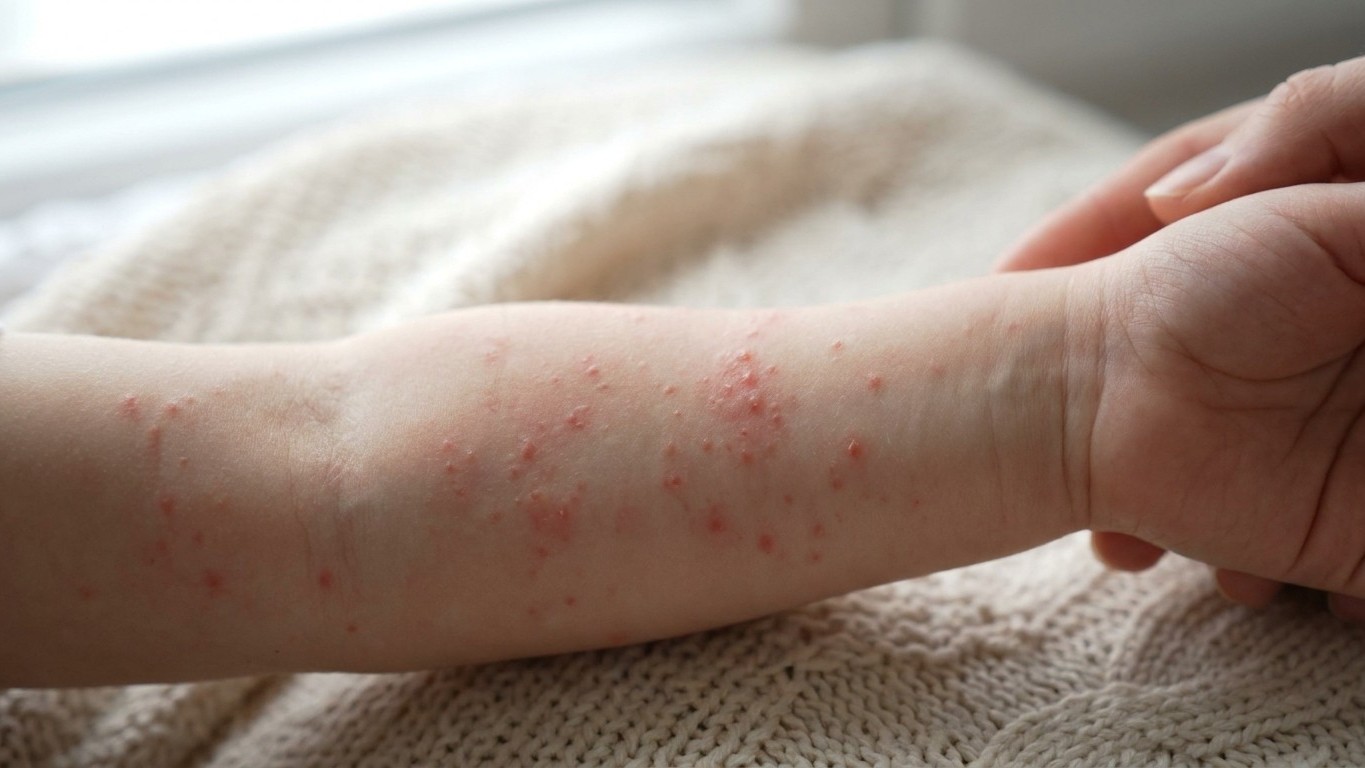
Measles feels like a rite of passage in the collective imagination, red spots, a fever, a few days on the couch, then back to normal. That perception is dangerously outdated. Researchers have shown that the measles virus wipes out 11 percent to 73 percent of the different antibodies that protect against viral and bacterial strains a person was previously immune to, anything from influenza to herpesvirus to bacteria that cause pneumonia and skin infections. The rash isn’t the real story. The real story is what happens to your immune system’s memory afterward, and it’s far more unsettling than a childhood inconvenience.
The finding comes from a landmark 2019 study published in Science, led by researchers at Harvard Medical School and Harvard T.H. Chan School of Public Health. Scientists studied 77 unvaccinated children before and two months after natural measles virus infection, and found that measles caused elimination of 11 to 73% of the antibody repertoire across individuals. Put another way: a virus we’ve spent decades filing under “annoying but harmless” can erase a huge chunk of the immune system’s hard-won memory bank in a matter of weeks.
Key takeaways
- A single measles infection can eliminate up to 73% of the antibodies protecting against other diseases
- This immune damage lasts for years, not days, leaving children vulnerable to pneumonia, flu, and other infections
- Measles cases are surging at the worst rate in 30+ years, with vaccination rates dropping below critical thresholds
How a Virus Erases Years of Immune Memory
The mechanism behind this is almost cinematic in its cruelty. The measles virus can invade the cells of the respiratory system. Also, the cells of the immune system, including the memory B cells, which are specialized white blood cells whose job is to recognize pathogens that the body has encountered and fought off before. Without those sentinels, the body essentially loses its case files on every infection it has ever survived. When alerted by memory B cells that they have come across a known pathogen, the immune system can swiftly mobilize the specific antibodies it needs, but without that early warning system, the immune system is perpetually flying blind.
Severity matters too. Children with mild cases lost a median of 33% of their preexisting pathogen-specific antibody repertoire, while those with more severe cases lost a median of 40%. And for a subset of unlucky patients, the damage was staggering: the most-affected quintile of children lost more than one-half of the pathogen-specific antibodies for most pathogens, with some losing up to 70% of the antibodies for specific pathogens. Compare that to children who never caught measles at all: antibody repertoire retention was about 90% in two age-matched control cohorts. The gap is not subtle.
What makes this discovery genuinely disturbing, rather than just academically interesting, is the timeline. This isn’t a two-week dip in immunity while you recover from a fever. Mina’s research proved that measles causes immune amnesia, when the immune system forgets how to fight off infections it successfully dealt with before, and showed that this effect lasts for years, not weeks or months. Years. A single infection in childhood can leave a person more vulnerable to pneumonia, flu, and other everyday pathogens well into their teens.
Why “Just a Rash” Has Been Killing Children for Decades
Public health researchers had actually suspected something like this for a while, based purely on death statistics that didn’t add up. Previous epidemiological research into immune amnesia suggests that death rates attributed to measles could be even higher, accounting for as much as 50 percent of all childhood mortality, if researchers factored in deaths caused by infections resulting from measles’ ravaging effects on immunity. Half of childhood deaths from infectious disease, potentially traceable back to a virus everyone thought was survivable and forgettable. That statistic alone should reframe how casually measles gets discussed at school pickup.
The animal data backs this up too, and honestly, it’s the part I find most convincing precisely because it strips away any confounding variable. In collaboration with Johns Hopkins Bloomberg School of Public Health, researchers measured antibodies in rhesus macaques before and five months after measles infection, and similar to the findings in people, the macaques lost an average of 40 to 60 percent of their preexisting antibodies to viruses and bacteria they had been previously exposed to. Same story, different species. That’s not noise, that’s a pattern.
Here’s the twist that tends to surprise people, and it’s the one piece of genuinely good news in all this: the vaccine doesn’t do this. the MMR vaccine did not produce the same negative effects on the immune system as natural measles virus. Vaccination trains the immune system against measles without triggering the memory-wiping cascade the live virus causes. In fact, some researchers now argue the opposite is true, that the measles vaccine protects in not one but two ways, preventing the acute illness with spots and fever. Also, appearing to protect from other infections over the long term.
A Problem That Is No Longer Hypothetical
This isn’t ancient history dressed up as a cautionary tale. The total number of measles cases in 2026 has already surpassed last year’s total, with at least 2,318 cases reported with more than five months left in the year. To put that in perspective, nearly 2,300 measles cases were reported the previous year, about 12 times more than the annual average since measles was declared eliminated in the US, marking the worst year in more than three decades. The comeback is real, and it’s accelerating.
The people getting sick skew young, and overwhelmingly unprotected. The vast majority of those sickened are under 20 years old and are either unvaccinated or their vaccination status is unknown. Behind the numbers sits a quieter, structural cause. A critical driver of the ongoing crisis is the erosion of MMR vaccination coverage among kindergartners, with national coverage declining from 95.2% during the 2019-2020 school year to 92.5% in 2024-2025, falling below the 95% threshold required for community immunity. That three-percentage-point drop sounds minor. It isn’t. CDC estimates this left approximately 286,000 kindergartners unprotected during the most recent school year alone.
Doctors treating the current wave already know that vaccination status is only half the equation, and the science backs one very specific, actionable idea for anyone who does get infected. Researchers say clinicians may want to consider strengthening the immunity of patients recovering from measles infection with a round of booster shots of all previous routine vaccines, arguing that revaccination following measles could help mitigate long-term suffering that might stem from immune amnesia and increased susceptibility to other infections. It’s a small, concrete step, and one worth asking your pediatrician about directly if measles ever touches your household. Because the spots fade in a week. What the virus quietly deletes from your immune system’s memory does not.
Sources : science.org | globalbiodefense.com