
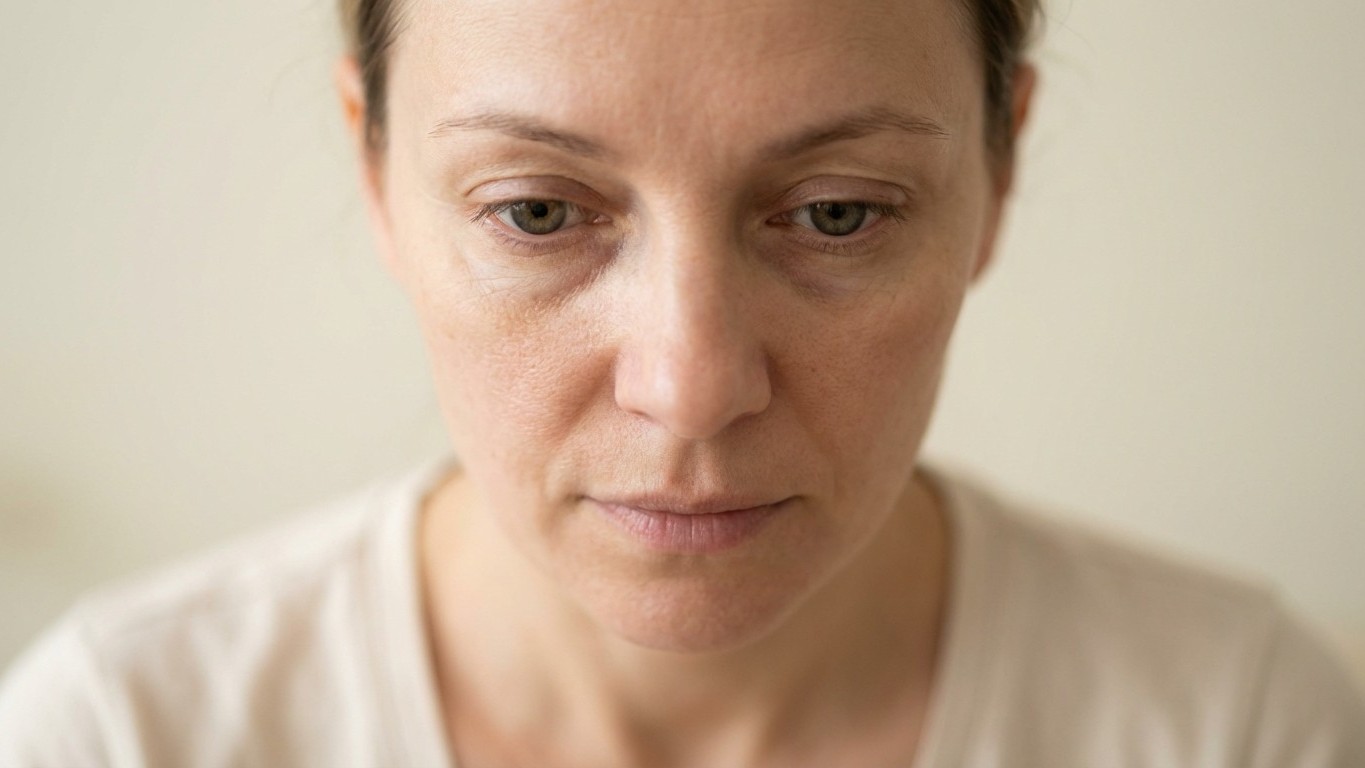
Take a close look in the mirror tomorrow morning, before coffee, before makeup, in raw, unfiltered light. That half-moon of color nestled beneath each eye? It’s not just tiredness. It’s a chromatic signal, a micro-report from your body on what’s happening underneath the surface. The color, the depth, the consistency, all of it means something different. And once you know how to read it, you’ll never look at your under-eye area the same way again.
The skin below your eyes is among the thinnest on your entire body. Periocular skin is less than 0.5 mm thick and low in adipose tissue, making underlying blood vessels visible. That’s why this tiny patch of skin acts as a kind of biological display panel, it projects what’s circulating (or not circulating) through your bloodstream with startling clarity. The common assumption is that dark circles mean one thing: you stayed up too late. Frankly, that’s a gross oversimplification, and science backs that up. Research demonstrates that dark circles under the eyes are more likely to be familial in origin and unlikely to be caused by sleep deprivation alone. A revelation — particularly for anyone who has slept a full eight hours and still woken up looking haunted.
Key takeaways
- The thin skin under your eyes acts as a biological display panel revealing circulation, hormones, and nutrient levels
- Blue-purple circles indicate vascular issues, while brown ones suggest genetic pigmentation and hormonal influences
- Pale, translucent under-eyes may signal iron deficiency anemia—a condition affecting millions of women
Blue or Purple Circles: Your Circulation Is Talking
The most common shade people notice, especially on fair to medium skin, is a blue-violet tint, the classic, almost bruised look that appears regardless of how early you went to bed. Vascular dark circles are characterized by a bluish-violet pigmentation that appears on the lower eyelid, linked to a failure of blood and lymph microcirculation in the delicate eye contour. When blood flow slows or is disrupted, blood pigments including bilirubin and hemoglobin derivatives accumulate under the eyes, giving vascular dark circles their blue-violet hue.
A simple test can confirm this: apply a cold compress to the under-eye area for several minutes, if the circles diminish, they are vascular. Sleep deprivation plays a role here, yes, but so does chronic stress, dehydration, and poor circulation. If blood pools under the eyes, it can create a bluish tint, and sleep deprivation dilates blood vessels, making them look darker. Allergies are another culprit worth taking seriously. Doctors call dark circles caused by allergies “allergic shiners” — swelling from allergic reactions slows blood flow in veins around the sinuses, creating darkness and puffiness.
Brown or Dark Circles: Pigmentation, Hormones, and Ancestry
Brown under-eye circles tell a different story altogether. Pigmentary dark circles manifest as a brown to black discoloration around the eye contour, and this hue results from an excess melanin deposition, the natural pigment responsible for skin color, driven in the majority of cases by genetic factors. This is the kind of circle that stays put whether you Stretch the skin or not, whether the light changes or not. The discoloration remains the same even while you stretch your skin, and it doesn’t go away when you press or massage the area.
Here’s the piece most people miss: hormones matter. Certain hormonal disturbances, such as those occurring during pregnancy or after contraceptive use, may induce periorbital melasma, intensifying pigmentation in this region. So if your under-eye brown tone deepened after starting the pill or during a pregnancy, that’s the mechanism at work. Sun exposure compounds everything, especially in an area most people skip when applying SPF. Sun exposure drives melanin synthesis in the skin and can worsen hyperpigmentation around the eye contour, as this thin area allows UV rays to pass through and is overlooked during sunscreen application.
Health conditions including asthma, allergies, poor circulation, hormonal shifts, malnutrition, anemia, and diseases affecting the liver or kidneys can all contribute to the appearance of darker skin in the area under the eyes. That’s a wide net, and a good argument for not dismissing what you see in the mirror.
What Pale, Washed-Out Under-Eyes Reveal
This one gets far less attention than the dark circle conversation, but it deserves a place at the table. When the skin under your eyes looks pale, almost translucent, or oddly dull rather than darkened, iron deficiency anemia can be the underlying cause. When the body isn’t getting enough iron, it hampers the production of hemoglobin, which is responsible for carrying oxygen across the tissues. Without sufficient iron, blood can bind and transport less oxygen, and the skin under the eyes, which is particularly thin and sensitive, suffers from reduced blood flow and appears paler.
Women are disproportionately affected. Groups particularly susceptible to iron deficiency include women with heavy menstruation, pregnant and breastfeeding women who share their iron stores with a baby, and vegetarians and vegans because plant-based iron is less well absorbed by the body. If pale under-eyes come with fatigue, shortness of breath, and brittle nails, a blood test measuring hemoglobin and ferritin levels is worth requesting from your doctor. The under-eye area, in these cases, is doing exactly what it should: raising a visible flag.
Shadow-Type (Structural) Circles: When It’s Anatomy, Not Chemistry
There’s a fourth category that often gets mistaken for pigmentation or vascular issues, and it’s neither. Structural dark circles are primarily characterized by a pronounced shadow under the eyes, which gives the eye a tired, aged appearance. Shadowed under-eye areas are caused by aging or weight loss and are a symptom of the loss of fat pads under the eyes, with a visible valley or groove in the under-eye area between the eyes and the cheek.
A practical trick to distinguish structural shadows from pigmented ones: use a lamp and change the direction of the light, hollow shadows are more pronounced under top lighting and less visible under frontal lighting, while pigmented shadows do not change with lighting direction. No cream in the world will fill in a structural hollow — the mechanism is entirely different. Over time, tissues around the eye gradually weaken and sag, allowing fat to shift forward into the lower eyelids and making them look puffy and swollen. Volume loss, not pigment, is driving the show.
When To Stop Self-Diagnosing and See a Doctor
Most under-eye circles are harmless. If you have dark circles under your eyes, it’s probably just a sign of aging, lack of sleep, or another common cause, and it’s usually not caused by a medical problem. That said, some patterns do warrant medical attention. If you have a dark circle or swelling under just one eye, call a healthcare provider, you may have an underlying health condition that needs to be addressed. Conditions affecting the thyroid, kidneys, liver, or heart can all lead to swelling or fluid retention, which can cause blood vessels under the eyes to expand and produce dark circles.
The basics still apply and still work. Getting at least seven hours of sleep each night helps, as does managing allergies, wearing SPF on the under-eye area, and staying hydrated. Watching your intake of salty foods, particularly ultra-processed foods, contributes to swelling that worsens the appearance of any type of circle. But if lifestyle adjustments don’t shift anything after a few consistent weeks, the color under your eyes might be pointing to something worth investigating with a blood test or a visit to your dermatologist.
The real question isn’t how to cover up what you see, it’s whether you’re curious enough to ask what it’s trying to tell you. Your face has always been more transparent than you think.