
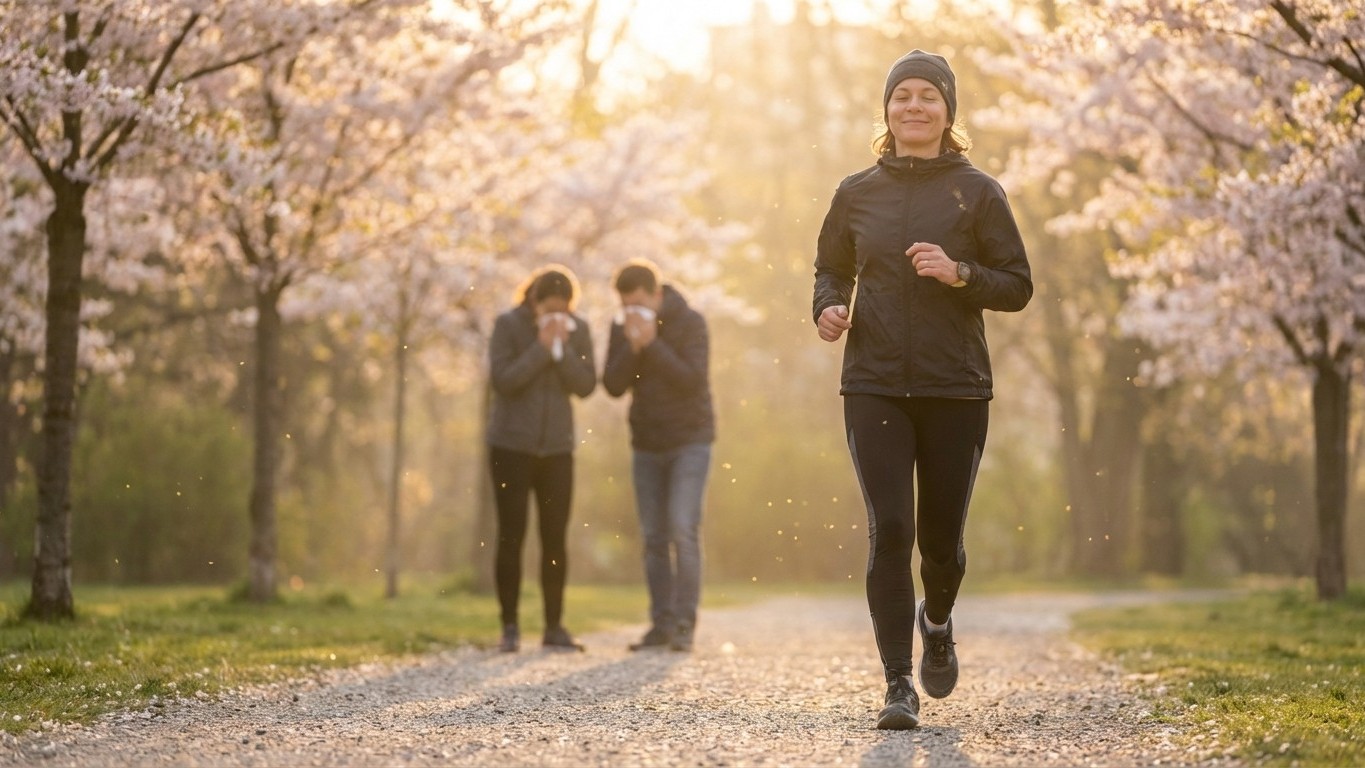
Picture yourself at 10 a.m. on a gorgeous April morning. The windows are cracked, a warm breeze is drifting in, birds are going about their business. And you are already on your third tissue. Meanwhile, the allergist who treated you last fall is out for a morning run, completely unbothered. Same air, same city, same oak trees releasing clouds of pollen. Different outcome. Why?
The answer isn’t a secret pill or a prescription you can’t access. Close to 1 in 6 people in the United States are affected by seasonal allergies, with an annual cost of more than $18 billion. Yet the specialists who study pollen for a living seem to navigate spring with surprisingly few symptoms. Their edge isn’t pharmacological. It’s structural. They’ve rearranged their day around one core insight: the clock matters more than the calendar.
Key takeaways
- Pollen levels peak in the afternoon and evening, but allergists know the 90-minute window when counts are lowest—and it’s not when most people go outside
- The medication trick nobody mentions: starting your nasal spray two weeks before allergy season even begins, not when you start sneezing
- Some allergists have essentially reprogrammed their immune systems through immunotherapy, achieving 50-70% symptom reduction—a different life entirely
The 90-Minute Window Nobody Talks About
Here is the piece of information that changes everything, and that almost never makes it onto a box of antihistamines. Real-time pollen monitoring has measured lower pollen levels between 4 a.m. and noon, with a gradual increase leading to peak pollen counts at approximately 2 p.m. to 9 p.m. That afternoon and evening surge is when most people choose to take a walk, run errands, or sit on the patio.
The clinical implication is direct: patients with pollen allergy should plan their outdoor activities in the morning when the pollen counts are lowest. Specifically, the sweet spot is roughly the 90 minutes just after sunrise, before heat builds and air currents kick pollen into full circulation. The best times to go outside are early morning (before sunrise) or late evening. It sounds almost too simple. It is almost too simple. And yet the vast majority of allergy sufferers keep scheduling their dog walks, grocery runs, and outdoor workouts for exactly the wrong hours.
There’s a wrinkle worth knowing, because allergists love a nuance. During spring and summer, when tree and grass pollen dominate, levels are highest in the evening. During late summer and early fall, when ragweed takes over, levels peak in the morning. Season-specific timing. If your September sneezes feel worse after breakfast, that’s probably why. The release of pollen also depends on the species of plant or tree, so if you’re allergic to a certain type of pollen, you may notice symptoms peak at different times.
And weather? The best time to go outside is after a good rain, which helps clear pollen from the air. Conversely, the worst days are warm, dry, and breezy with low humidity. If it’s a dry, windy Tuesday afternoon in April and you decide that’s the moment to do yard work, allergists would genuinely wince.
The Pre-Season Trick (Your Body Needs a Head Start)
Timing outdoor exposure is one half of the equation. The other half is medication timing, and this is where most people operate on the wrong assumption entirely. The common instinct is to wait until you start sneezing, then reach for something fast-acting. Allergists do the opposite.
“To prepare for spring allergies, consider starting your medication at least two weeks before symptoms start,” says allergist Gailen Marshall, MD, PhD, president of the American College of Allergy, Asthma and Immunology. “For many people, mid-February, around Valentine’s Day, is the ideal time to start your allergy medication routine.” A holiday-based medical calendar. Oddly elegant.
The science behind this is not mysterious. “Nasal steroid sprays are generally once-a-day medications, but the benefits take a little bit of time to kick in,” explains allergist Mark Aronica, MD. “Because of that time lag, you should start using them two to three weeks before allergy season starts.” Some medications, particularly corticosteroid nasal sprays, can take two to four weeks to build to their maximum effect. Starting on the day your nose starts running is a bit like putting on a raincoat once you’re already soaked.
A 2025 randomized controlled trial published in Frontiers in Allergy confirmed what allergists had long suspected: when the nasal spray was initiated approximately two weeks before the onset of pollen season, the prophylactic treatment group presented significantly lower total nasal symptom scores than the control group. Proactive beats reactive. Every time.
The Decontamination Ritual (Yes, It’s a Little Dramatic)
The 90-minute outdoor window and the early medication start are the big-ticket items. But there’s a third layer that allergists practice almost instinctively, and it feels faintly theatrical until you understand the biology behind it.
Pollen can accumulate on your skin and especially your hair. “You can collect almost a tree’s worth of pollen right on your own head if you have a lot of hair,” says Dr. William Reisacher, an otolaryngic allergist at Weill Cornell Medicine. That pollen sits on your pillow all night. Your immune system never truly gets a break. Rinsing off before bed can wash away allergens that cling to your hair, face, and body throughout the day. It also prevents you from transferring pollen to your pillow.
Pollen and other allergens can stick to your clothing, shoes, hats, and other accessories. As soon as you get home, ditching your outside clothes for a clean, pollen-free outfit is a habit allergists treat as non-negotiable. Keeping pollen outside as much as possible includes cleaning shoes before entering the house, then taking them off and storing them by the door. Your entryway, in essence, becomes a decontamination zone. Not paranoia, just physics.
Indoors, HEPA filters remove at least 99.97% of airborne particles, including pollen. Running a HEPA air purifier in your bedroom during sleep makes a measurable difference, especially during the hours when pollen may be elevated outside. A portable high-efficiency particulate air (HEPA) filter in your bedroom is the most passive, effort-free upgrade you can make to your spring setup.
The Long Game: What Allergists Actually Do for Themselves
Here is the counter-intuitive part that tends to surprise people: many allergists aren’t symptom-free simply because they avoid pollen better than you. Some of them have gone through the process of essentially reprogramming their immune system.
One of the most effective ways to treat seasonal allergies linked to pollen is immunotherapy (allergy shots). These injections expose you over time to gradual increments of your allergen, so you learn to tolerate it rather than reacting with sneezing, a stuffy nose, or itchy, watery eyes. Allergy shots can desensitize the body to the offending substances and may offer a 50% to 70% reduction in symptoms. That’s not a marginal improvement. That’s a different life in spring.
Meanwhile, the pollen problem itself is evolving. Analysis of roughly 30 years of historical data shows pollen seasons have started about 20 days earlier and lengthened by about 8 days compared to earlier decades. Annual total pollen output has increased by 46%, and peak pollen levels have risen by over 42%. “Keep in mind that allergy season tends to be longer and starts earlier than in decades past,” noted Dr. Collette Spalding of Mid-Atlantic Permanente Medical Group, writing on the topic just this year. The window of low-pollen relief is literally shrinking.
So the question isn’t really “why don’t allergy doctors sneeze?” The more useful question is: if they had your exact schedule, your exact commute, your exact morning routine, what would they change first? Probably the hour you step outside. Then what’s on your nightstand in January, waiting to be started before the first bloom appears. Then the shower you take before bed instead of in the morning. Small pivots in timing, not heroic lifestyle overhauls. The 90-minute trick isn’t glamorous. But neither is reaching for your fourth tissue before noon.
Sources : frontiersin.org | pollen.com