
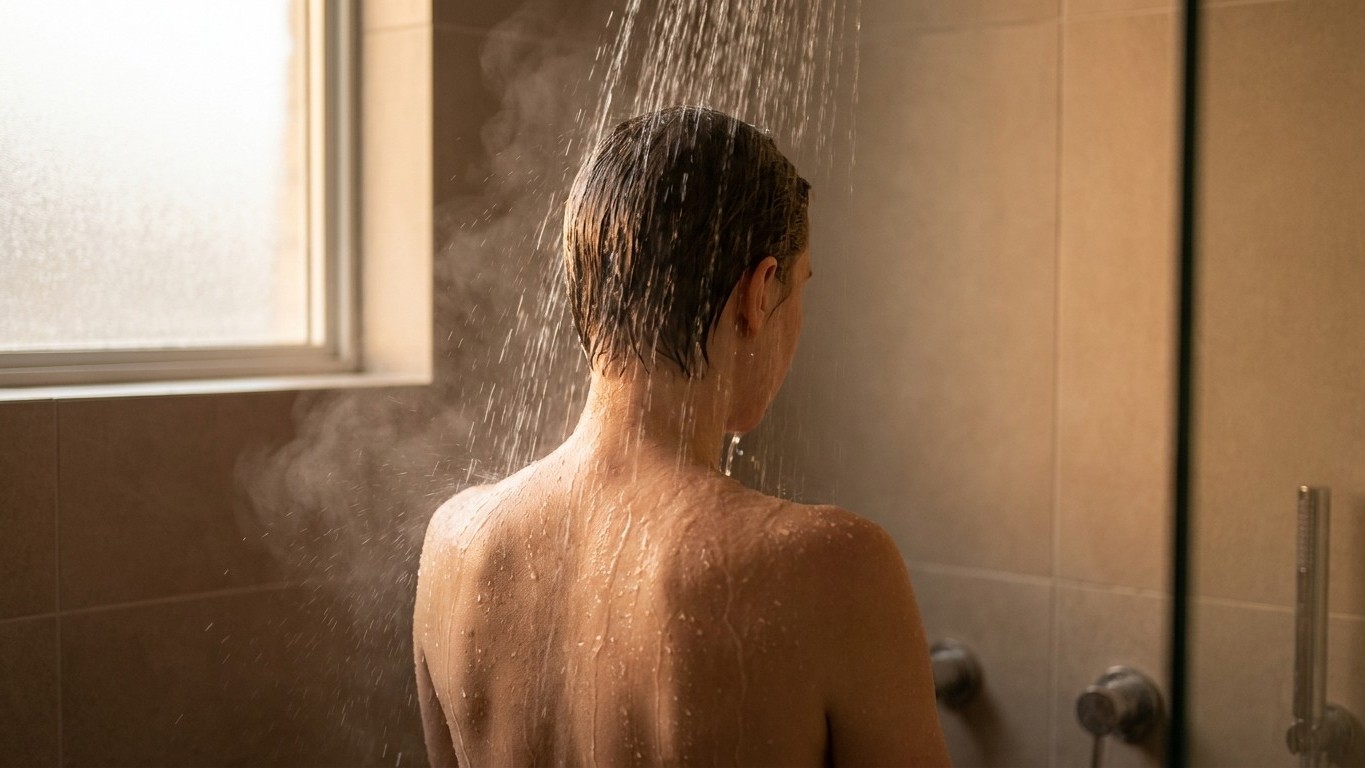
The thermostat hits 95°F, sweat pools at the small of your back, and every instinct screams: cold shower, now. Full blast, ice-cold, the works. That instant gasp of relief feels like victory. But physiologically, you just told your body to hoard heat instead of releasing it.
Here’s the paradox nobody explains at the pharmacy counter or in wellness roundups: a freezing shower During a Heatwave can make your core temperature climb faster once you step out of the bathroom. The skin cools instantly, sure. The problem lives underneath.
Key takeaways
- Cold water triggers vasoconstriction, forcing blood away from skin where heat escape happens
- Your body compensates by ramping up internal heat production, creating a rebound effect
- Lukewarm showers (68–77°F) keep blood vessels open and allow proper heat dissipation
Why cold water backfires against heat
When frigid water hits skin, blood vessels near the surface constrict almost immediately. It’s called vasoconstriction, and it’s the same reflex that keeps you from losing too much heat in winter. In summer, though, that mechanism works against you. Blood retreats from the skin toward the body’s core, and with it goes the body’s main cooling pathway.
Skin is where heat exchange happens. Blood flows close to the surface, releases warmth into the air, and returns cooler. Shut that down with cold water, and heat gets trapped exactly where you don’t want it: deep in the muscles, the organs, the blood itself.
The result. A rebound effect. Within minutes of a cold shower, many people report feeling hotter than before, sometimes flushed, sometimes oddly sweaty again. The body, sensing that its cooling system just got cut off, compensates by ramping up internal heat production to protect vital organs from the sudden temperature shock. Public health guidance from the Centers for Disease Control and Prevention on extreme heat prevention actually recommends cool, not cold, water for exactly this reason.
The temperature that actually works
Lukewarm. Tepid. Somewhere around 68°F to 77°F, roughly room temperature. Not glamorous, not dramatic, but this is the range where evaporative cooling does its job without triggering a vasoconstriction panic response.
At that temperature, blood vessels stay open. Heat continues moving from the core to the skin, then off the skin into the air, the exact process your body relies on to regulate itself in extreme heat. Add a light breeze from a fan right after stepping out, and the effect compounds: water evaporating off warm skin pulls heat away far more efficiently than any ice-cold blast ever could.
Franchement, it’s the kind of counterintuitive advice that sounds wrong until you actually try it. Skip the cold shock, take a lukewarm one instead, and stay in it a few minutes longer than you normally would. The relief builds gradually rather than spiking and crashing. No goosebumps, no shivering, no rebound sweat fifteen minutes later.
Target the pulse points, not the whole body
Full-body cold exposure isn’t the only way to cool down fast. Wrists, neck, temples, the insides of elbows and knees: these are spots where blood vessels run close to the skin’s surface, some of the closest in the entire body. Running cool (not cold) water over these zones, or pressing a damp washcloth against them, chills blood efficiently without triggering the same widespread vasoconstriction response a full shower does.
This is essentially the same principle behind ice packs placed on the neck or under the arms during athletic recovery. Localized cooling at pulse points can lower perceived body temperature within minutes, and because it’s targeted rather than systemic, the rebound effect is far milder.
A cool washcloth on the back of the neck for two or three minutes. Wrists run under a cool tap before heading out the door. Small habits, but they add up, and they don’t come with the crash that a full cold shower does.
What to actually do when the heat spikes
Hydration Matters More Than water temperature, honestly. Sweat is the body’s primary cooling mechanism, and it can’t function properly if you’re dehydrated. Water, but also electrolytes, since heavy sweating flushes out sodium and potassium that help regulate fluid balance.
Lightweight, breathable fabrics help skin actually release heat instead of trapping it against the body, something synthetic athletic wear often does despite being marketed as “cooling.” Natural fibers like cotton or linen let air circulate and sweat evaporate, which is the whole point.
Timing showers matters too. A lukewarm rinse right before bed can lower core body temperature enough to help with sleep onset, since the body naturally cools down as part of falling asleep, and giving it a head start makes a noticeable difference on sweltering nights.
One more detail rarely mentioned: after intense heat exposure, jumping straight into a cold shower can cause a brief drop in blood pressure as vessels constrict suddenly, which is why some people report feeling lightheaded or dizzy stepping out of an ice-cold shower on a scorching day. Lukewarm water simply doesn’t carry that same risk, which might be the most convincing argument yet for turning the dial down, not all the way to cold, just enough.