
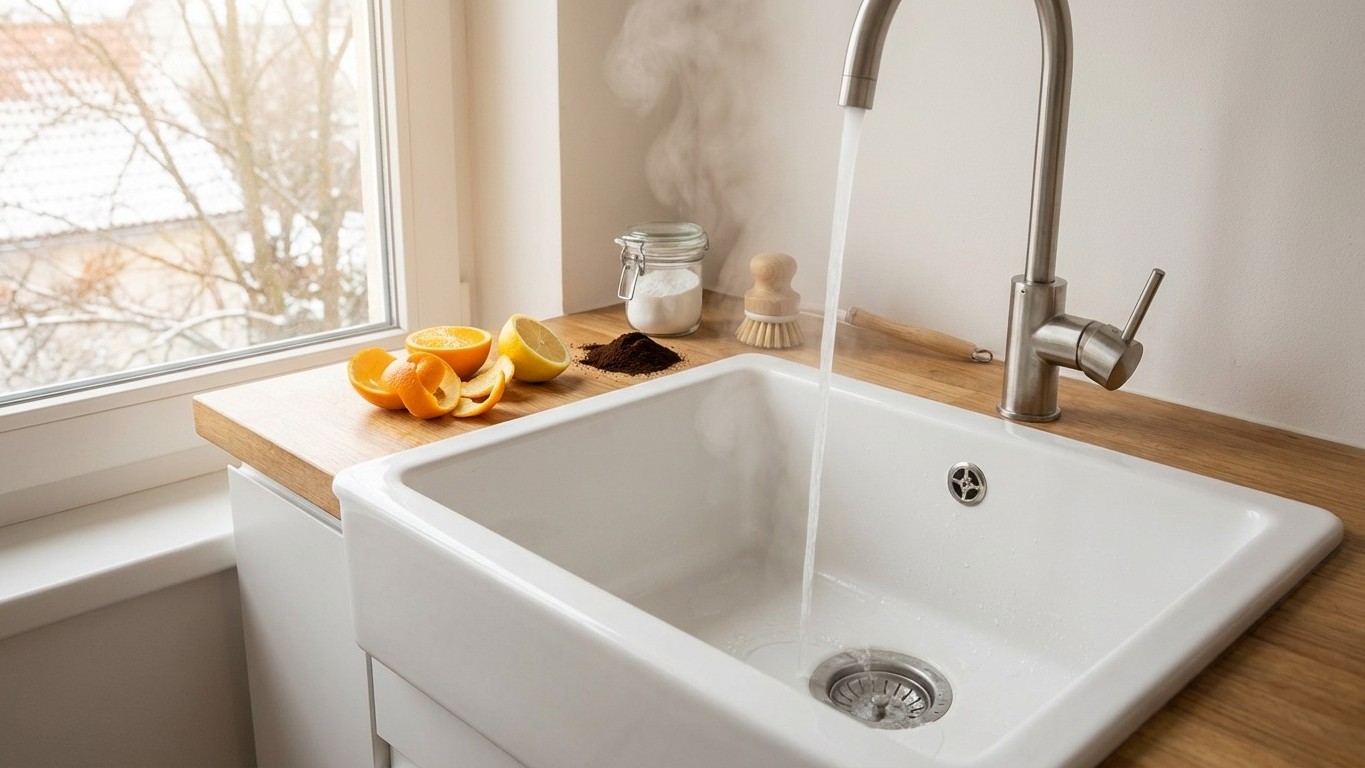
Winter‘s final weeks present a unique window of opportunity for homeowners to tackle one of the most overlooked household maintenance tasks. The kitchen scraps you’ve been tossing in the trash could actually be your Secret weapon against stubborn drain buildup, but only if you act Before February arrives. Once the coldest part of winter sets in, that accumulated grease, soap scum, and food debris transforms into a concrete-like mass that resists even professional-grade cleaners.
The science behind this timing relates directly to how temperature affects the oils and fats that accumulate in our pipes throughout the year. During warmer months, these substances remain somewhat pliable, making them easier to dislodge with natural cleaning Methods. However, as temperatures drop and remain consistently low, these materials solidify into what plumbers call “fatbergs” – massive blockages that can cost hundreds of dollars to remove professionally.
The Power of Citrus Peels in Pipeline Maintenance
Those orange, lemon, and grapefruit peels you’ve been composting hold remarkable degreasing properties that work best during January’s milder winter days. The natural oils in citrus rinds contain d-limonene, a compound that breaks down grease molecules at the molecular level. When you grind these peels in Your garbage disposal or steep them in hot water to create a drain-cleaning solution, they release concentrated cleaning agents that cut through months of accumulated buildup.
The key lies in the preparation method. Rather than simply tossing peels Down the Drain, create a powerful cleaning paste by grinding citrus rinds with coarse salt. This abrasive mixture scrubs pipe walls while the citrus oils dissolve fatty deposits. Pour the mixture down your kitchen drain, followed by steaming hot water, and let it work for thirty Minutes-since-i-started-this-nightly-habit”>Minutes-daily-since-age-50-what-her-cardiologist-discovered-after-one-year”>Minutes before flushing with cold water to solidify any loosened debris for easy removal.
Professional Simple-tool-that-unclogs-any-sink-drain-without-a-single”>Plumbers have long recognized that January represents the optimal time for preventive drain maintenance. The moderate temperatures allow cleaning solutions to penetrate buildup without the extreme cold that makes deposits nearly impossible to dissolve. Many homeowners discover that simple kitchen waste can accomplish what expensive commercial cleaners cannot, provided they Understand the proper application techniques.
Coffee Grounds: Your Unexpected Drain Ally
Coffee grounds represent another kitchen waste product with surprising drain-cleaning capabilities, though their effectiveness depends entirely on proper usage timing and technique. Contrary to popular belief, coffee grounds shouldn’t go directly down the drain in large quantities. Instead, they work best as part of a strategic cleaning routine that takes advantage of their abrasive properties and natural degreasing compounds.
Create an effective drain scrub by combining used coffee grounds with dish soap and a small amount of baking soda. This mixture provides gentle abrasion that removes buildup Without Damaging pipe surfaces. The grounds act like microscopic scrubbers, working into crevices where grease and food particles hide. When applied during January’s temperature conditions, this treatment prevents the hardening that occurs during February’s deeper freeze.
The timing element cannot be overstated. Once February arrives and outdoor temperatures plummet, the thermal dynamics within your plumbing system change dramatically. Pipes lose heat more rapidly, causing any cleaning solutions to become less effective. The buildup that seemed manageable in January transforms into stubborn blockages that require professional intervention or harsh Chemical treatments that can damage older pipe systems.
Strategic Implementation for Maximum Results
Success with natural drain cleaning requires understanding the relationship between temperature, timing, and technique. Begin your January drain maintenance routine by assessing the current state of your kitchen pipes. Run hot water for several minutes to gauge drainage speed and identify potential problem areas. Slow drainage or gurgling sounds indicate significant buildup that will only worsen once colder weather arrives.
Implement your chosen kitchen waste treatment during the warmest part of the day, typically mid-afternoon when ambient temperatures help maintain the effectiveness of your cleaning solutions. The combination of warmer air temperatures and heated cleaning mixtures creates optimal conditions for breaking down accumulated deposits. Follow each treatment with alternating hot and cold water flushes to dislodge loosened debris completely.
Remember that prevention remains more effective than correction. Establishing a weekly routine using kitchen waste products throughout January creates a foundation for year-round drain health. The natural acids in citrus peels and the abrasive action of coffee grounds work together to maintain clear pipes when used consistently during this critical window.
As January draws to a close, take advantage of these final weeks to implement natural drain cleaning methods using readily available kitchen waste. Your future self will thank you when February’s cold snap arrives and your pipes remain clear while neighbors deal with expensive plumbing emergencies. The investment of time and kitchen scraps now prevents costly professional interventions later, Making This simple maintenance routine one of the smartest home care decisions you can make.