
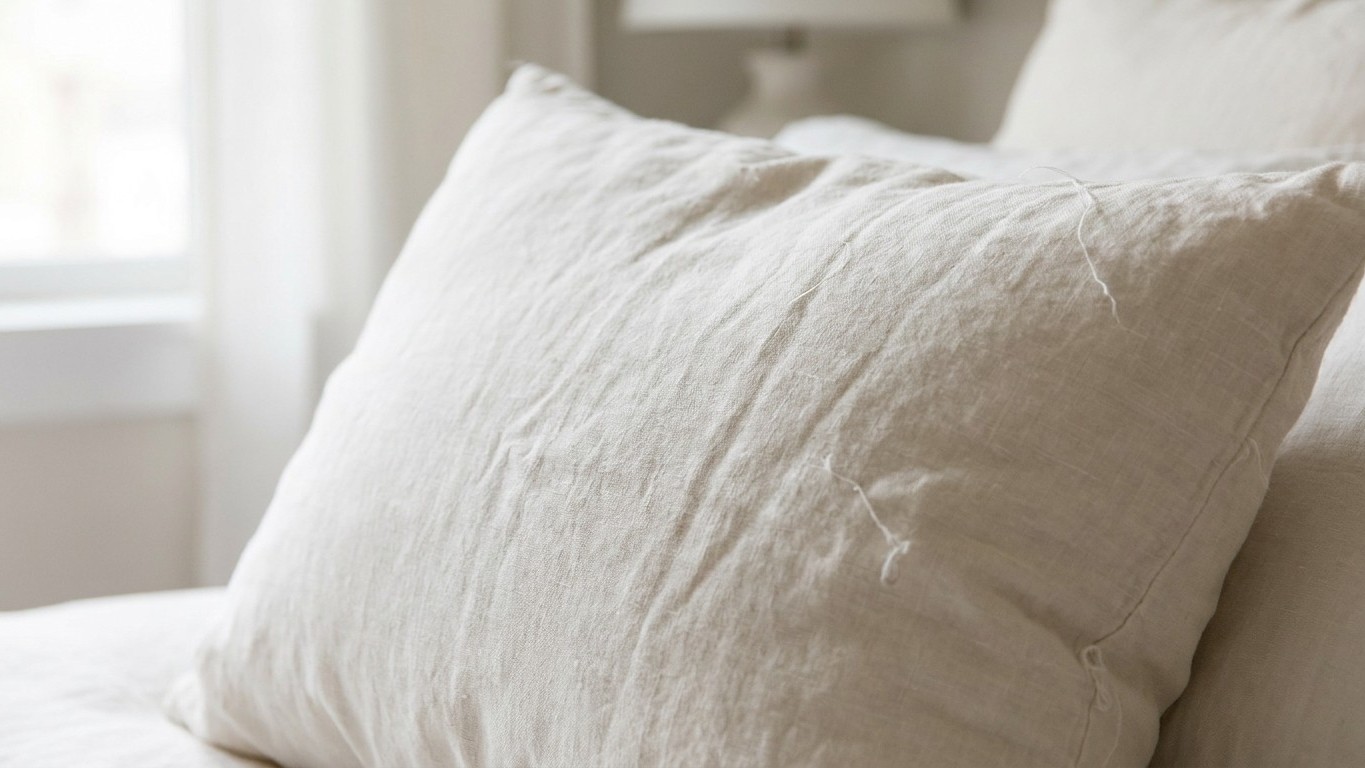
Every night, you press your face against a surface that the average person hasn’t washed in more than a week. Your mouth close to the cotton. Your skin, shedding. Your breath, warming the fabric for eight uninterrupted hours. Bed sheets can rack up a serious collection of sweat, body oils, saliva, dirt, and even trace amounts of fecal matter. Now add the habit most of us share: washing it all at 30°C, because it’s gentle on fabrics and obviously better for the planet. The problem is what actually survives that cycle.
Key takeaways
- Pillowcases washed at 30°C harbor bacteria that can survive for weeks or even months—including antibiotic-resistant strains
- Cold water washes remove bacteria through mechanical action, not by killing them; your washing machine itself harbors living biofilms that recontaminate your clothes
- Microbiologists recommend 60°C temperatures and changing pillowcases every 2-3 days—but there’s a surprising alternative most people don’t know about
Your pillowcase after a “clean” wash: the numbers
After one week of use, pillowcases and sheets contain between three million and five million colony-forming units (CFUs) per square inch. By the fourth week, that figure climbs to almost 12 million CFUs. For context, pillowcases washed just a week ago harbor over 17,000 times the bacteria found on a toilet seat. That comparison tends to silence a room.
The species found aren’t abstract lab curiosities. Take Staphylococcus aureus, which is fairly contagious and can cause skin infections, pneumonia, and worsen acne. S. aureus has been found to live on pillowcases, and research shows some strains are resistant to antibiotics. Alongside Staphylococcus, E. coli and gram-negative bacteria are also common in bed linens. Gram-negative bacteria are a serious health problem, as they’re highly resistant to antibiotics and can trigger urinary tract infections, pneumonia, meningitis, and sepsis.
Then there’s the fungal dimension, which most people skip entirely. Fungi find beds highly appealing. Species such as Aspergillus fumigatus, detected in used pillows, can cause severe lung infections, especially in immunocompromised individuals. A University of Manchester study found that each pillow contained a substantial fungal load, with four to 16 different species identified per sample, and even higher numbers in synthetic pillows. The researchers described what they found as a “miniature ecosystem” at work inside our pillows.
Why 30°C doesn’t actually clean your bedding
Here’s the part that reframes the whole eco-friendly washing movement. Washing at 30°C is not effective at killing bacteria. To eliminate bacteria from your items, you need to wash at 60°C or higher with a good detergent. The energy savings are real, the hygiene logic is not.
Washing clothes in cold water does not reliably kill most germs. Cold water cycles reduce bacteria and viruses on fabric, but the reduction comes primarily from detergent and mechanical action physically removing microorganisms, not from the water temperature destroying them. The machine is doing removal work, not disinfection work. There’s a meaningful difference.
A peer-reviewed study published in Applied and Environmental Microbiology made this clear: enveloped viruses like SARS-CoV-2 and influenza are very sensitive to detergents and can be eliminated even in cold-water washes. However, viruses and some bacteria and fungi may require hot-water washes, bleach, and high dryer settings. So your flu-season wash at 30°C handles some threats. Not others.
The survival data on cotton fabric, specifically, is bracing. On cotton, many bacterial species are able to survive at room temperature for long periods: Pseudomonas aeruginosa and S. aureus can persist for up to eight weeks, K. pneumoniae for up to eight weeks, and E. coli for up to 45 days. A warm, slightly damp pillowcase is essentially an incubator. In Europe, colored laundry is most often washed at temperatures between 30 to 40°C, offering good circumstances for bacteria to survive, or even grow.
What about Staphylococcus aureus specifically? S. aureus and S. epidermidis have been shown to survive laundry programs at 50°C. Which means even a step up from 30°C isn’t always enough for these particular pathogens.
The machine itself is part of the problem
There’s a twist most people don’t see coming. The number of living bacteria is generally not lower in the washing machine effluent water compared to the influent water. The laundering process causes a microbial exchange between influent water bacteria, skin- and clothes-related bacteria, and biofilm-related bacteria inside the machine. You’re not cleaning into an empty system. You’re cleaning into a living one.
Standard European washing cycles at 30°C are known to impair antimicrobial performance, leading to bacterial exchange among the laundry load, the washing machine, and its influent water. As a result, microbial communities that originate from both human and environmental sources persist, providing opportunity for the establishment of biofilms and posing clear negative implications for textile hygiene as well as continued malodor generation. That faint musty smell on sheets that come out of a 30°C cycle? That’s the biofilm, not just residual moisture.
Pathogenic bacteria and molds, such as Salmonella and MRSA, may survive for weeks in clothing. Washing cross-contaminates. A pillowcase thrown in with socks and gym wear can pick up bacteria it didn’t originally carry.
What microbiologists actually recommend
Microbiologist Laura Bowater recommends washing sheets and pillowcases at least once a week, at a minimum of 140 degrees Fahrenheit (60°C) to destroy bacteria and rid them of any dirt. That’s the threshold that consistently appears across expert guidance. All bed linens should be washed in warm to high temperatures, around 40°C to 60°C, in order to effectively kill germs.
For pillowcases in particular, the frequency recommendation goes further than most of us follow. Microbiologists recommend changing pillowcases every two to three days. That’s not a premium beauty tip. That’s microbiology speaking directly. If washing at 60°C every two to three days wrecks your silk pillowcases, there are alternatives worth knowing: chlorine bleach is the most effective option for whites and bleach-safe fabrics. Activated oxygen bleach, the type found in color-safe products, also significantly reduces bacteria and viruses in cooler washes. Activated-oxygen bleaches are common in detergents used in Europe, but not the United States, which partly explains why American laundry hygiene standards often lean harder on temperature instead.
Two small habits that don’t require changing your wash cycle at all: airing your sheets every morning by pulling the duvet back before making the bed allows moisture to evaporate, making the sheets and mattress a less attractive environment for bacteria and mites. And showering before bed, avoiding getting into bed while sweaty, and removing makeup before sleep can all help keep linen cleaner between washes.
One more detail worth sitting with: fungal species such as Candida albicans, which can cause oral thrush, urinary tract infections, and genital yeast infections, can survive on fabrics for up to a month. A month. That’s not the lifespan of something a gentle eco-wash is going to interrupt. It means the real hygiene gap in most households isn’t frequency of washing. It’s temperature.
Sources : quora.com | britbrief.co.uk