
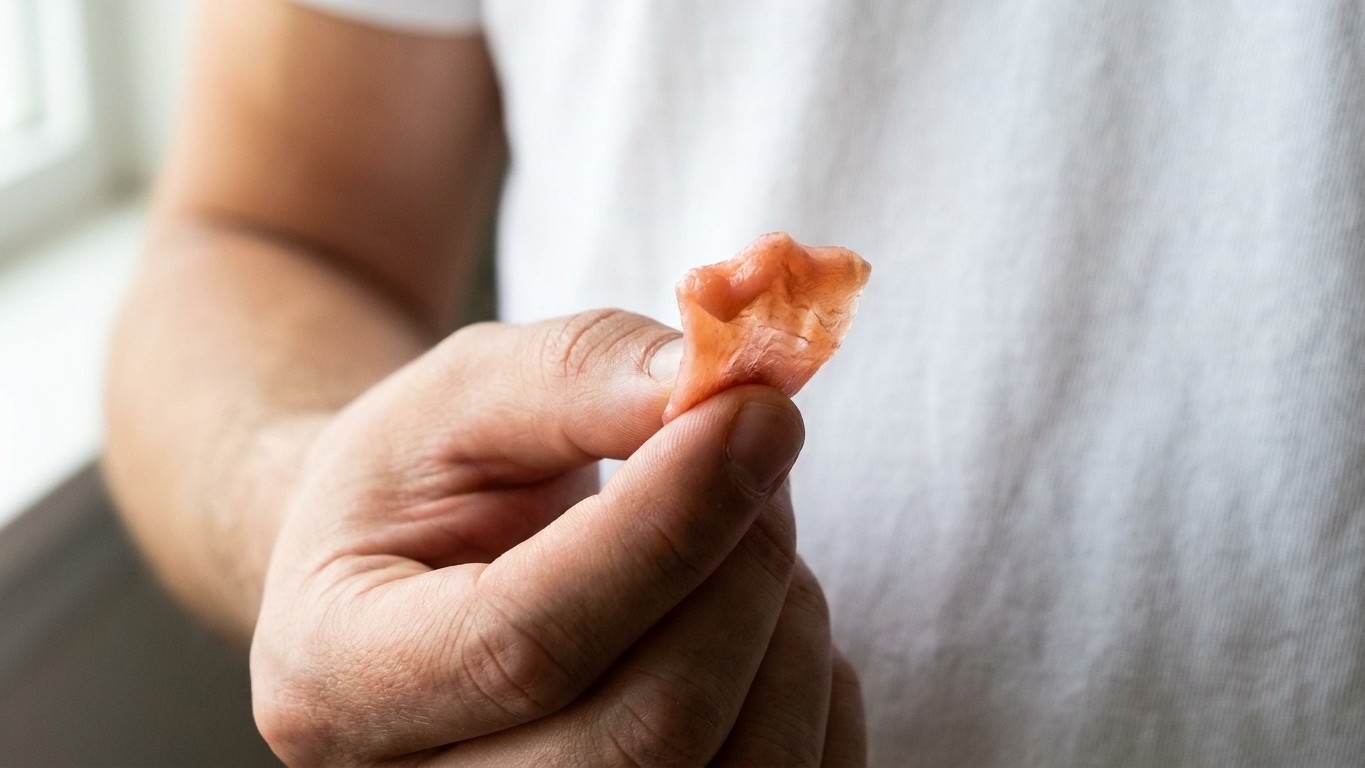
Grab a piece of gum before lunch and your stomach is already at work, acid flooding in, enzymes firing, the whole digestive machinery spinning up — for food that isn’t coming. That is the core of what gastroenterologists have been saying for years, and the science behind it is both elegant and a little unsettling.
Key takeaways
- Your brain can’t distinguish between chewing gum and chewing real food—both trigger identical digestive responses
- A single piece of gum activates your stomach acid production at 92% the level of an actual cheeseburger
- Sugar-free gum comes with its own hidden danger that causes severe digestive problems in some people
The Cephalic Phase: Your Stomach’s False Alarm
The act of chewing gum interferes with the goal of an empty stomach by stimulating the body’s digestive process, a response governed by the “cephalic phase” of digestion, which begins before any food actually reaches the stomach. This is a reflex hardwired into human physiology. The cephalic phase of gastric secretion is initiated by the sight, smell, thought, or taste of food. Neurological signals originate from the cerebral cortex and in the appetite centers of the amygdala and hypothalamus — and this enhanced secretory activity is a conditioned reflex.
Here is the problem with gum specifically: the brain can’t tell the difference between chewing a meal and chewing a synthetic rubbery square of nothing. The chewing motion Signals Your Body that you’re about to digest food, so digestive enzymes and acids are activated and released. In the absence of food, this can cause bloat, an overproduction of stomach acid, and an impaired digestive process when you actually do eat.
Chewing gum is a type of sham feeding that uses cephalic vagal stimulation to promote the cephalic phase of food digestion, and as a result, hormonal and neural mediators are released, along with an increase in glandular secretion (salivary, gastric, and biliopancreatic) and gastrointestinal motility. Research published in PubMed confirmed just how potent this mechanism is: acid output stimulated by chewing gum was 36% of pentagastrin maximum acid output, compared to 39% for a cheeseburger. A piece of gum, kicks your stomach into nearly the same gear as an actual meal.
These secretions are essential for breaking down food, but when there’s no actual food entering the stomach, the acid can accumulate and sometimes cause discomfort or a sensation of hunger, which explains why some people experience stomach growling or mild cramps after prolonged gum chewing. You’re not imagining it.
Why the “Sugar-Free” Option Doesn’t Save You
Switching to sugar-free gum feels like the responsible call. And on the dental front, it largely is, xylitol reduces cavity-causing bacteria, saliva production increases, and oral hygiene gets a modest boost. The digestive story, though, is messier than the packaging suggests.
Many sugar-free gums are made with artificial sweeteners such as sorbitol and xylitol, which have been shown to cause diarrhea. Chewing gum also leads to more swallowed air and gassiness. The dual assault, acid on one end, fermentation on the other, is what makes pre-meal gum particularly rough on sensitive systems. Many sugar-free gums contain artificial sweeteners such as sorbitol, xylitol, or mannitol. These sugar alcohols aren’t fully absorbed in the small intestine and ferment in the colon, producing gas as a byproduct, a fermentation process that can further exacerbate bloating and discomfort.
The dose-response relationship here is worth understanding. Sorbitol can cause gastrointestinal symptoms, gas, urgency, bloating, abdominal cramps, in a dose-dependent manner starting at 5 to 20 grams per day, and doses of more than 20 grams per day can cause diarrhea. This adds up faster than most people realize. And researchers at UC Davis took the investigation further: researchers identified changes in the gut microbiome that can result in an inability to digest sorbitol, a sugar alcohol used in sugar-free gum, mints, candy, and other products. Some people’s guts, it turns out, are structurally less equipped to handle it than others.
There is a clinical case study worth noting here, the kind that makes gastroenterologists quietly tell their patients to put the gum away. A 59-year-old woman was referred with a one-year history of nonbloody diarrhea and significant weight loss, along with crampy abdominal pain, urgency, and incontinence. She was found to be chewing one pack of polyol-containing chewing gum per day. After discontinuation of the gum, both her diarrhea and crampy abdominal pain resolved completely within 48 hours and did not recur during two years of follow-up. One pack a day. That’s all it took.
When Gum Actually Helps Digestion
The counter-intuitive twist: gum chewed after eating is a different matter entirely. This is where the physiology flips in your favor. Chewing sugar-free gum for half an hour after a meal can reduce acidic postprandial esophageal reflux, a finding from a controlled study published in the Journal of Dental Research. Post-meal gum chewing can stimulate the release of bile, digestive enzymes, and acids, all components needed to properly digest foods, and may help avoid indigestion after a large meal.
Chewing gum can aid in soothing acid reflux. When you chew gum, your saliva becomes more alkaline, and because of the additional saliva production that happens while you chew, it causes you to swallow more often, encouraging a reduction in acid. The timing, then, is everything. Pre-meal: you’re flooding an empty stomach with acid and setting up a digestive mismatch. Post-meal: you’re helping neutralize what’s already there.
There’s even a clinical application built on this exact mechanism. Chewing gum is a type of sham feeding that promotes intestinal motility via cephalic-vagal stimulation. In normal volunteers, chewing gum is as effective as food in stimulating cephalic-phase gastric secretion and has therefore been used as a modified form of sham feeding to investigate physiological responses. Post-surgical patients who chew gum recover bowel function faster, hospitals now use this deliberately.
What the Timing Actually Means for You
The practical takeaway isn’t “never chew gum again.” It’s more nuanced than that, and honestly, more interesting. Allowing your digestive system to rest in between meals so that it can properly digest your food matters, and chewing gum may cause digestive distress like bloating, gas, and diarrhea, but it also confuses your digestive system, making it a less efficient machine. The gastrointestinal tract functions on signals. Send the wrong ones at the wrong moment, and efficiency drops.
For people with IBS, the pre-meal gum habit is especially worth reconsidering. Sugar-free gums contain FODMAPs that can be problematic for those with IBS and other digestive conditions. Prolonged gum chewing on an empty stomach could lead to discomfort resembling indigestion or gastritis symptoms, and people with sensitive stomachs should monitor their response to frequent gum chewing on an empty belly.
The peppermint question also deserves a mention, because it complicates the “gum after meals is always fine” rule. It’s best to avoid mint-flavored gums, as they can relax the lower esophageal sphincter and potentially worsen acid reflux. So if you’re already prone to heartburn, the flavor you instinctively reach for, minty, fresh, familiar, might be the one working against you most.
The body’s relationship with something as mundane as a stick of gum turns out to be surprisingly sophisticated. Your stomach responds to the act of chewing the same way it responds to the sight of a plate of food, with urgency, chemistry, and real physiological consequences. A breath-freshening habit before your meal, repeated daily for years, is a small but persistent disruption to a system that runs on precise timing. Save the gum for after the last bite.
Sources : journals.physiology.org | pubmed.ncbi.nlm.nih.gov