
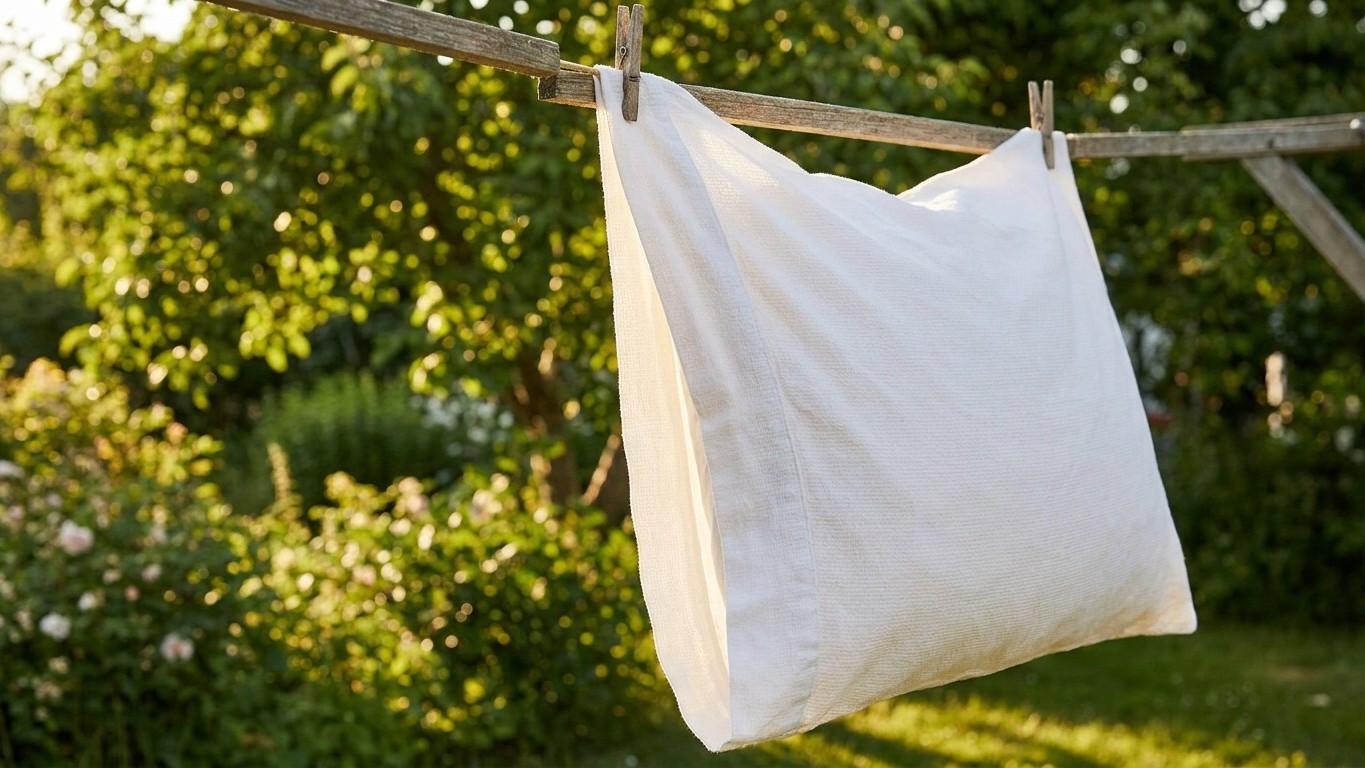
Every May, the laundry lines of America fill up with fresh whites, cotton sheets billowing in warm breezes, T-shirts catching the sun. A ritual as old as the clothespin. But somewhere in a generation before ours, grandmothers passed down a different instinct: keep the laundry inside this particular week. No explanation beyond a stubborn certainty that something in the air was wrong. Turns out, they were ahead of the science by decades.
About one in four U.S. adults has been diagnosed with seasonal allergies, and nearly one in five children has them. Yet the connection between that sneezing fit that hits the moment you pull sheets off the outdoor line, and what’s actually happening in the air above your backyard, remains poorly understood by most households. That gap between folk wisdom and immunological fact is exactly where your grandmother was quietly right.
Key takeaways
- A forgotten grandmother’s rule about May laundry is now backed by decades of allergy research
- Wet fabrics act as pollen nets, trapping microscopic allergens that get released into your home
- Climate change has extended pollen season by three weeks, making the danger window wider than ever
May is the worst possible month to air-dry laundry outside
May is what allergists call a “double whammy” month, with both trees and grasses releasing high levels of pollen simultaneously. Tree pollen, which dominates early spring, doesn’t simply stop, it tapers. On average, the tree-pollen season peaks right around late April and continues into early May, when the grasses join the party. The result is a brief, brutal overlap that makes the air unusually hostile for allergy sufferers.
Grass pollen often overlaps with the tail end of tree season, creating a double exposure that can make May particularly miserable for allergy sufferers. The invisible part, and this is what your grandmother couldn’t have articulated but clearly sensed — is that the pollen that causes allergies tends to be small, light, and dry, and is easily spread by wind over long distances. A clothesline doesn’t just air-dry your laundry. In May, it filters the atmosphere.
“When you hang clothes up outside during high pollen season, they act as a pollen net, as fabrics can trap microscopic particles easily, especially in heavier weaves like towels or bed linen,” explains allergy expert and pharmacist Deborah Grayson. The physics of it are almost embarrassingly simple: wet fabric has static charge, texture, and surface area that dry, smooth indoor air simply doesn’t offer. You’re essentially running a passive collection net for airborne allergens all afternoon.
The moment you bring laundry inside, the contamination moves with it
When these items are brought indoors, the allergens are released into the home, potentially exacerbating symptoms like sneezing, coughing, and wheezing. Sensitive items like bedsheets are particularly problematic, as they can collect a significant amount of pollen and then transfer it directly to your face and respiratory system. Think about that for a moment. You wash your sheets to remove allergens. You hang them outside in the sun for that clean, fresh smell. You bring them back inside and sleep with your face buried in them, and you’ve essentially packed the night full of whatever was floating around your neighborhood that afternoon.
“No, you shouldn’t, as the clothes can pick up pollen particles,” says Dr. Purvi Parikh, allergist and immunologist for Allergy & Asthma Network. “It’s best to dry clothes indoors with windows closed. We always recommend all pollen sufferers to change their clothes and shower when they get home.” The laundry line, in allergy terms, is simply another outdoor surface, no different from your car hood or your patio furniture, both of which turn bright yellow-green by the end of a May morning.
There’s a counterintuitive wrinkle here worth sitting with. The pollen that gets all over your car or lawn furniture is not as much of an allergy problem as the pollen too small to be seen. Bright-colored flowers actually release less pollen into the air than their drab cousins. The real offenders, oaks, grasses, birches, produce pollen grains so fine they’re essentially invisible. You won’t see them coating your sheets. You’ll just breathe them all night.
Timing, fabric softener, and the one thing that actually helps
Airborne pollen tends to be highest early in the day, just after the dew dries, and on into early afternoon. High pollen levels can sometimes last until late afternoon. If you absolutely cannot or will not give up outdoor drying, Grayson recommends drying your laundry outside earlier in the day, when the pollen count is lower. The Mayo Clinic goes further: stay indoors on dry, windy days; the best time to go outside is after a good rain, which helps clear pollen from the air. The same logic applies to your laundry schedule, overcast, post-rain days are your window, if you insist on the line.
One detail most people miss entirely: fabric softener. Avoid fabric softeners during pollen season, they make it easier for pollen to lodge deep in the structure of your clothes. The very products marketed for softness and freshness are essentially applying a light adhesive to your fibers. For allergy sufferers, that’s a significant hidden risk hiding in a pleasantly scented bottle. Washing clothes, bedding, and towels in hot water removes particles like pollen — a water temperature of at least 55°C is generally recommended for optimum allergen elimination.
The dryer, long dismissed as the less romantic, less eco-conscious option, turns out to be the allergy-smart choice during May. Change and wash clothes worn during outdoor activities, and dry your clothes in a clothes dryer or on an indoor rack. If indoor drying is the only alternative, a well-ventilated room with windows kept shut, and away from outdoor-facing vents, keeps the pollen load manageable.
Your grandmother’s rule is now backed by a warming planet
Here’s the part that would have surprised even her. The week of peak pollen she dreaded is no longer just a week. Research shows that pollen seasons now start 20 days earlier, are 10 days longer, and feature 21% more pollen than in 1990. On average, the pollen season is approximately three weeks longer now in the U.S. than compared to 50 years ago. Increased levels of atmospheric carbon dioxide contribute to an increase in the amount of pollen produced, on average, plants and trees produce about 20% more pollen than compared to 50 years ago.
The trend in trees budding and blooming earlier than usual is becoming increasingly more common due to climate change. A warming world means shorter winters and longer growing seasons, and longer growing seasons mean longer periods of pollination, ultimately leading to longer allergy seasons. Which means the grandmother rule that applied to “that one bad week in May” now needs to cover a wider window. For many parts of the country, late April through early June is the realistic danger zone for outdoor laundry.
With continued high rates of CO2 pollution, the U.S. could face up to a 200% increase in pollen production by the end of this century, according to a 2022 study. If that projection holds, the clothesline will become a genuinely seasonal hazard, not just a grandmother’s quirk, but a public health consideration factored into how we think about maintaining clean, safe home environments. Folklore has a way of outlasting the science that eventually catches up to it.
Sources : homesandgardens.com | cbsnews.com