
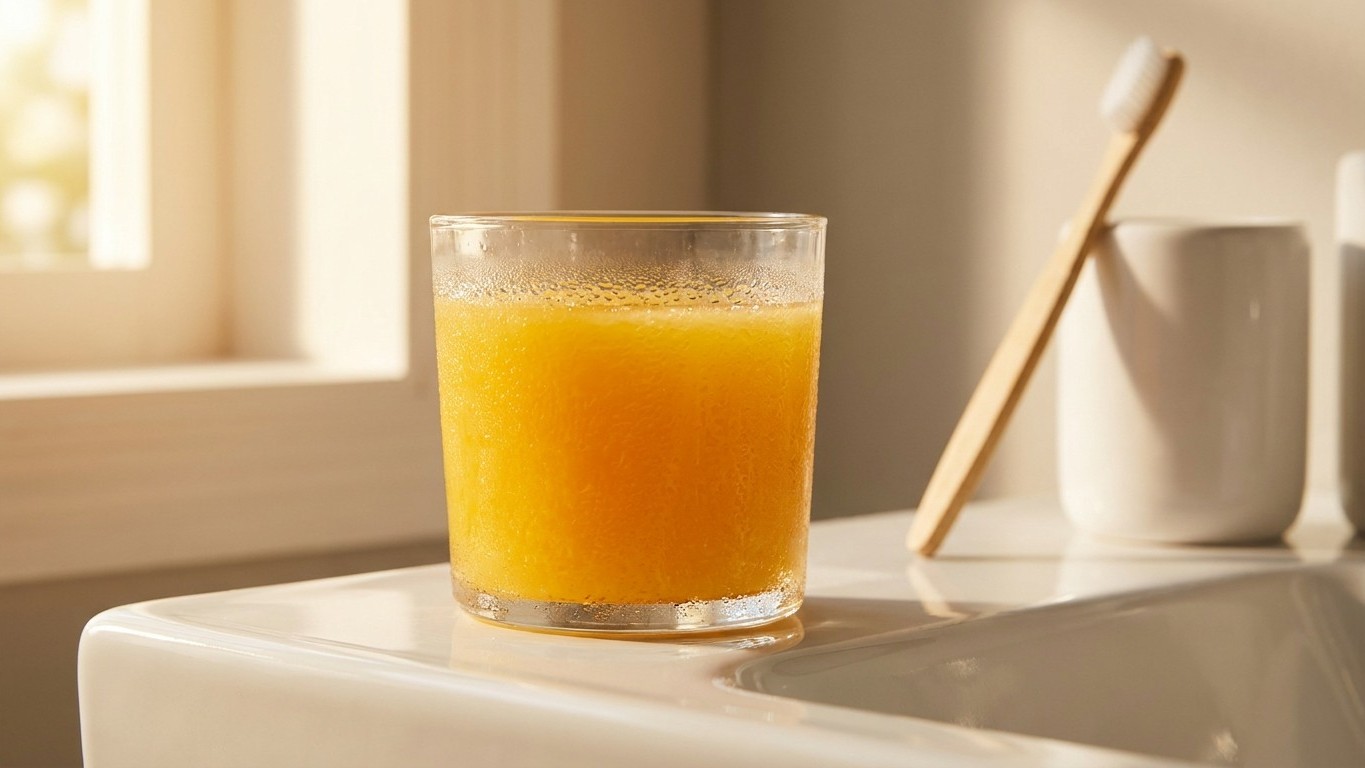
Every morning, millions of Americans pour themselves a cold glass of orange juice, drain it, and head straight to the bathroom to brush their teeth. It feels logical, almost responsible. Rinse away the sugar, freshen the breath, start the day clean. The problem is that this exact sequence, the one most of us have followed since childhood, is one of the most damaging things you can do to your teeth. And the damage, dentists are clear about this, cannot be undone.
Key takeaways
- A common breakfast habit that almost everyone does is quietly destroying teeth in a way that cannot be reversed
- The exact moment when damage happens, and why doing the ‘responsible’ thing makes it dramatically worse
- One simple change to your routine that costs nothing but could save your smile
What Actually Happens When Acid Meets Enamel
The outer layer of your tooth, known as enamel, is the hardest substance in the human body, it acts as a shield, protecting the sensitive inner layers from decay and sensitivity. But despite its strength, enamel has one critical vulnerability: acid.
Orange juice typically has a pH level ranging from 3.3 to 4.2. For context, neutral water sits at 7. When the pH in your mouth drops below 5.5, the environment becomes acidic enough to begin dissolving the mineral structure of your teeth. That glass you just drank? It dropped your mouth’s pH well into danger territory.
When you take a sip of orange juice, that citric acid washes over your teeth. It doesn’t cause a cavity instantly, but it does cause a temporary softening of the enamel surface. This is the window, the brief, vulnerable window, during which most people make their biggest mistake.
If you rush to the bathroom to start brushing while the enamel is in this softened state, you are essentially engaging in mechanical erosion. Your toothbrush bristles, which are usually helpful tools for removing plaque, become abrasive agents. Instead of polishing your teeth, you are scrubbing away microscopic layers of that softened enamel. Over time, this habit can lead to significant enamel erosion.
The counter-intuitive truth: the more conscientiously you brush right after your OJ, the more harm you’re doing.
Irreversible. That Word Matters.
Erosive demineralization can result in progressive, irreversible loss of tooth mineral substance, and that word, irreversible, is not thrown around lightly in dentistry. Unlike skin or bone, enamel doesn’t regenerate. Once it’s worn down, it’s gone for good.
Regular consumption of orange juice can significantly weaken tooth enamel, with studies indicating up to an 84% reduction in hardness. This makes teeth more susceptible to cavities and decay. That figure is striking, and rarely printed on a carton.
Research from the University of Rochester Medical Center drove this point home: “Our studies demonstrated that the orange juice, as an example, can potentially cause significant erosion of teeth.” The researchers added that “it’s potentially a very serious problem for people who drink sodas and fruit juices daily.”
When your enamel wears down, it exposes the softer, more vulnerable dentin layer underneath, which increases the risk of cavities. Eroded enamel also means your teeth are less protected from bacteria, leading to a higher likelihood of decay over time. Visually, this shows up as yellowing (the dentin underneath is naturally darker), increased sensitivity to hot and cold, and teeth that seem to round at the edges over the years.
The process of enamel erosion is gradual. You might not notice it immediately, but over time, the damage can become significant. That’s exactly what makes it so easy to ignore, until a dentist points it out and explains that the window to prevent it has already closed.
The Double Trouble: Sugar on Top of Acid
Orange juice doesn’t just attack enamel directly through acidity. It runs a second offensive through sugar. Fruit juices contain natural sugars which, while they might seem harmless, feed harmful bacteria in your mouth. These bacteria produce acids as they consume the sugars. This process leads to more enamel erosion and cavities. The cycle of sugar consumption and acid production creates a hostile environment for your teeth.
Fruit juices like orange juice are both high in sugar and citric acid. Whereas sugar feeds dental bacteria which excrete acid resulting in tooth decay, acidic foods skip the middleman and directly cause cavities, as well as enamel abrasion. Two mechanisms. One glass.
And if you’re thinking the fresh-squeezed kind from the farmers market is somehow a free pass, fresh-squeezed orange juice is better than processed OJ, but it is still acidic and sugary. The pH difference is marginal at best.
What Dentists Actually Recommend
The fix isn’t to quit orange juice forever. It’s about sequencing and timing, two things that cost nothing to change.
According to the American Dental Association (ADA), brushing immediately after consuming acidic drinks can wear away this softened enamel, leading to erosion and increased tooth sensitivity. Their guidance, echoed by dentists across the country, is straightforward: wait. The general consensus among dental Professionals is to wait at least 30 to 60 minutes after finishing your orange juice before you pick up your toothbrush.
Many dentists actually recommend brushing before breakfast. This removes the plaque bacteria that feed on the sugar in your juice, and the fluoride from the toothpaste coats your teeth, offering some protection against the acid you are about to consume. Brush first, drink after. A reversal of the childhood routine that almost no one questions.
While you wait, the most effective interim move is simple: drinking water after consuming orange juice can help wash away the acids and sugars left behind on your teeth, reducing the risk of enamel erosion. Swishing with water also helps restore a neutral pH in your mouth, making it safer to brush later.
When drinking fruit juice, using a straw can help minimize the acidity’s contact with tooth enamel, protecting your oral health. And don’t drink acidic drinks like orange juice over a long period of time, the more you sip, the longer the acid has time to break down your tooth enamel. Drink it in one sitting, not nursed across a slow morning.
Eating whole oranges is a better choice for oral health, as they provide fiber that helps reduce direct acid contact with teeth. The chewing process also stimulates saliva production, which naturally helps neutralize acids. Saliva is, quietly, one of your best defenses, and most people never think about it.
For those already noticing sensitivity or dullness, early enamel erosion can sometimes be remineralized using fluoride and calcium-rich products, but only if caught early enough, and only to a limited degree. Since dental erosion results in progressive and irreversible loss of mineralized tooth substance, the primary focus of erosion intervention is prevention and reduction. Once the damage is done, the conversation shifts from prevention to management.
There’s one more thing worth sitting with: the Journal of Dentistry reports that tooth erosion has become a growing concern, especially in areas where people regularly consume acidic foods and beverages. This isn’t a niche dental worry, it’s a widespread, lifestyle-driven epidemic hiding in plain sight, dressed up as a healthy breakfast habit.
Sources : premierdentallockhart.com | fittosmile.com