
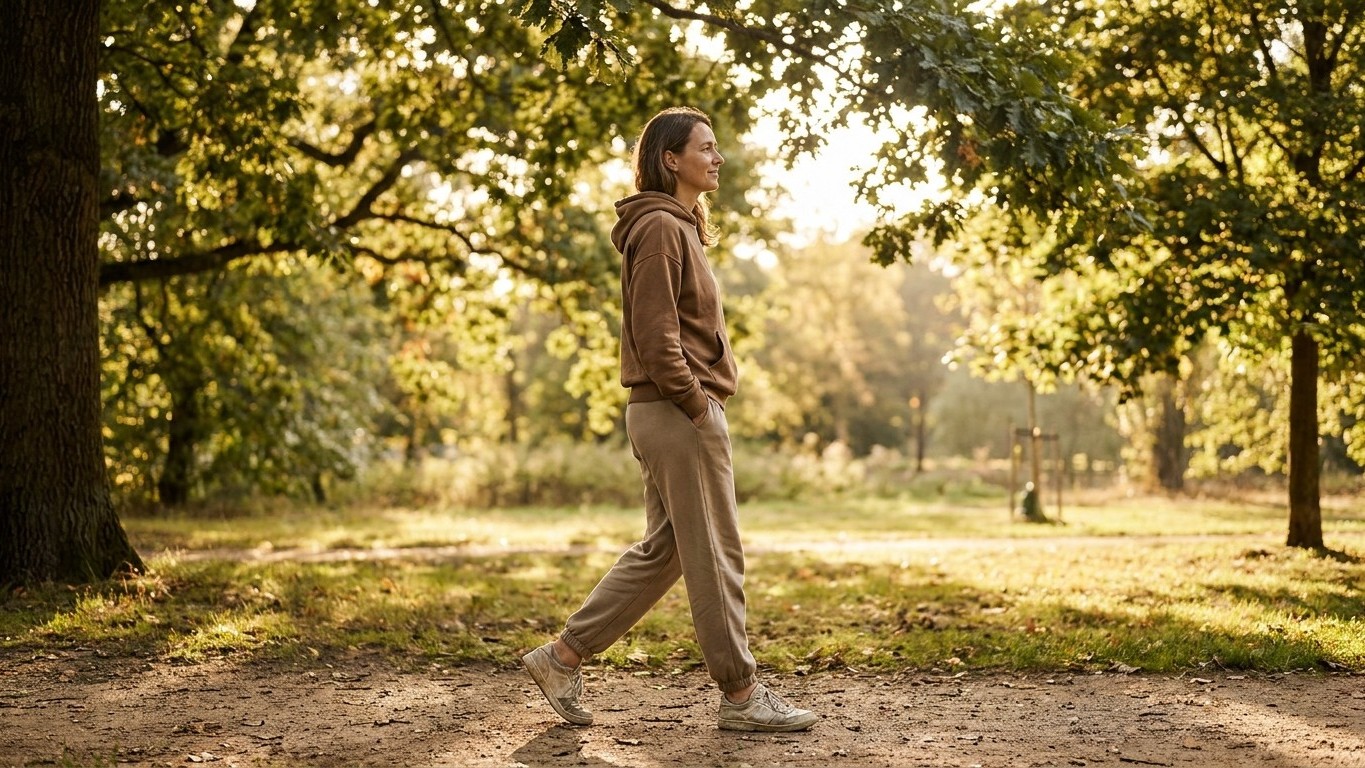
For years, the advice sounded almost like a rule of etiquette: finish your plate, let digestion settle, then head out for a walk. Turns out that pause might be exactly backwards. A team of researchers publishing in Scientific Reports found that walking for 10 minutes immediately after consuming glucose improves post-meal blood sugar control more effectively than walking for 30 minutes starting half an hour after glucose intake. Ten minutes. Right away. No waiting required.
The study was a randomized crossover trial, meaning the same participants tried both approaches so the comparison held up against their own bodies, not just averages across strangers. Both approaches improved blood sugar control compared to resting, but the 10-minute walk immediately after glucose intake was uniquely effective at reducing peak glucose spikes. And the pace wasn’t punishing. Participants chose their own comfortable walking pace, averaging a gentle 3.8 km/h (approximately 2.4 mph), which mimics how people naturally move in daily life. This isn’t a power-walking regimen. It’s the speed you’d use browsing a farmers market stall.
Key takeaways
- Scientists discovered something that contradicts decades of conventional wisdom about digestion and exercise timing
- The difference between doing it now versus later: a blood sugar spike of 164 mg/dL instead of 182 mg/dL—and that gap compounds daily
- Your muscles are waiting for glucose the moment you finish eating, and waiting means missing the window where they could intercept it
Why the first few minutes matter more than the whole hour
The logic comes down to timing physiology, not willpower. Dr. Susan (Sue) Comite, a physician frequently cited on metabolic health, explains the mechanism in plain terms: “Think about what happens after you eat a meal: your body breaks down carbohydrates into glucose, the main sugar found in your blood, and your glucose (sugar) rises steeply, peaking about 30 minutes after a meal.” That’s the window most people spend sitting at the table finishing coffee, or worse, collapsed on the couch.
Muscles change the equation entirely once they’re activated. “When you take a walk after a meal, your muscles need fuel to power your physical activity, so they act like a sponge, drawing glucose from the bloodstream into muscle cells. That effectively reduces circulating sugar in your body.” Because muscles are the body’s largest storage vessel for sugar, putting them to use means the body can more effectively clear post-meal glucose. Wait the standard half hour, and you’ve let glucose flood the bloodstream unchecked during precisely the moment your muscles could have intercepted it.
The numbers back this up with real specificity. One analysis found that a 10-minute walk right after eating can lower blood sugar peaks to 164.3 mg/dL, compared to 181.9 mg/dL in those who didn’t walk. That’s not a marginal tweak. It’s the difference between a spike and a manageable bump.
The science behind why later just doesn’t cut it
What makes this finding genuinely counterintuitive is that researchers had already established shorter walks work almost as well as long ones, provided the timing was right. One earlier study found that a 10-minute walk 30 minutes after dinner was as effective as a 30-minute walk in controlling post-meal blood glucose. So the new research isn’t just about duration, it’s specifically isolating the immediate window as its own variable. The conclusion: starting exercise immediately after eating prevents the early glucose spike that typically peaks between 30 and 60 minutes post-meal.
The effect size researchers reported wasn’t trivial either, with the 10-minute walk’s significant effect on peak glucose reduction (d = 0.731) suggesting clinical relevance for cardiovascular risk management. Why does peak glucose even matter beyond the two-hour window after lunch? Because spikes in blood sugar after eating contribute to higher glycated hemoglobin levels, a key marker of long-term glucose control, and are linked to increased oxidative stress that can damage blood vessels and impair cognitive function.
There’s a practical bonus tucked into the findings too. The immediate-walk protocol was perceived as easier and caused minimal digestive discomfort, making it practical for busy lifestyles. No cramping, no bloated sluggishness, just a stroll. Researchers even noted a parallel with Japan’s “Plus Ten” health initiative, which promotes small daily activity increases, a public health approach built on the idea that ten extra minutes, repeated daily, beats an occasional heroic gym session.
What this means if you’re not chasing a diabetes diagnosis
None of this is exclusive to people managing prediabetes or type 2 diabetes, though the stakes are admittedly higher there. The Cleveland Clinic notes that research shows a Short Walk After meals can positively impact blood sugar and insulin, and crucially, if you don’t have diabetes, you can still benefit from post-meal strolls that reduce your blood sugar spikes. Anyone who’s ever felt the 3 p.m. crash after a carb-heavy lunch has experienced a glucose spike followed by an equally abrupt crash. A short walk blunts both ends of that curve.
Real-world data from continuous glucose monitor users backs this anecdotally, with reports suggesting glucose readings can drop by about 20 to 30 mg/dL after a short walk. Franchement, that’s the kind of number that makes you reconsider the whole “let your food settle” mantra passed down for generations.
One caveat worth flagging: the flagship study behind this shift was conducted on young, healthy adults, which restricts the generalizability of the findings to other populations such as individuals with diabetes, older adults, or pregnant women, though researchers believe the mechanism should hold across groups. If you’re managing a chronic condition, this is a conversation for your doctor, not a solo experiment. For everyone else, the fix costs nothing and takes less time than scrolling through a single episode recap. Next time you push back from the table, the smartest move might be walking straight to the door instead of the couch.
Sources : ncbi.nlm.nih.gov | ncbi.nlm.nih.gov